

The Ultimate Guide to Roof Maintenance in Vancouver & Burnaby (2026)
In the Pacific Northwest, a "set it and forget it" attitude toward your shelter is actually a recipe for structural failure. We understand that the relentless Vancouver rain and heavy humidity in Burnaby aren't just weather patterns; they are constant threats to your home's integrity. It's natural to feel uneasy when you see moss creeping across your shingles or wonder if your flat roof's SBS membrane is still watertight before the next winter storm hits. You deserve the peace of mind that comes from knowing your property is fully protected.
This guide provides the professional strategies you need to master roof maintenance and ensure your investment remains secure for decades. We've tailored these insights to the specific challenges of our local climate and the latest 2026 BC Building Code standards. You'll learn how to establish a clear seasonal schedule, understand the technical nuances of perimeter flashing and torch-on systems, and distinguish between simple DIY tasks and the requirements for professional craftsmanship. By the end, you'll have a roadmap to extend the longevity of your roof and prevent hidden leaks from becoming costly structural repairs.
Key Takeaways
• Understand how Vancouver’s heavy annual rainfall and humidity accelerate wear, making preventative care vital for your home's security.
• Establish a proactive roof maintenance schedule that focuses on clearing debris and securing perimeter flashing before the wet season arrives.
• Learn to spot material-specific red flags, such as granule loss on shingles or loosened fasteners on custom metal roofing.
• Master the unique requirements of flat roofs, including how to manage ponding water and protect the integrity of your SBS membrane.
• See how consistent professional documentation can simplify insurance claims and provide long-term peace of mind for property owners.
Why Roof Maintenance is Critical in Vancouver’s Coastal Climate
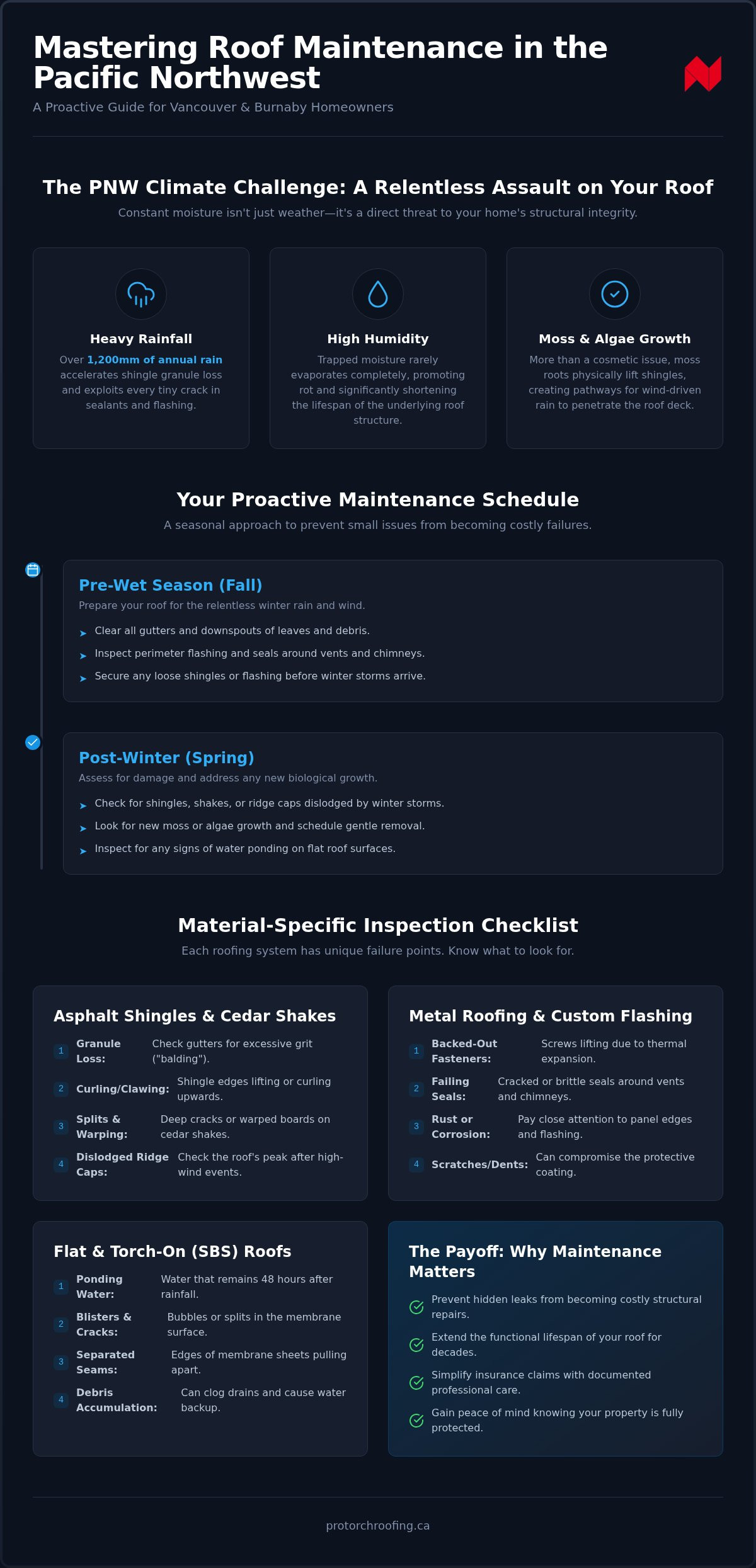
Living in the Lower Mainland means accepting that water is your home's primary antagonist. Vancouver and Burnaby receive over 1,200mm of annual rainfall; a volume that accelerates the aging process of even the most durable systems. Unlike drier regions where sun damage is the main concern, our coastal environment subjects homes to a relentless cycle of saturation and high humidity. This constant exposure requires a disciplined approach to protection.
To better understand how moisture management impacts different structures, watch this helpful video:
Many property owners fall into the "set it and forget it" trap, treating their roof as a static object. This mentality leads to premature structural rot in British Columbia because water doesn't just sit on the surface; it seeks out every microscopic path of least resistance. Investing a few hundred dollars in regular roof maintenance is a strategic financial decision. It protects you from the sudden, overwhelming expense of a full replacement, which can cost tens of thousands of dollars if the underlying deck fails.
The Impact of Constant Moisture on Roofing Materials
Continuous exposure to moisture degrades the protective granules on asphalt shingles, leaving the bitumen core vulnerable to the elements. In our coastal environment, "micro-leaks" often form around perimeter flashing, chimneys, and vents where sealants have shrunk or cracked. These small entries allow water to seep into the attic space unnoticed for months. In Burnaby, the high relative humidity ensures that once moisture enters the roof assembly, it rarely evaporates completely, significantly shortening the overall lifespan of the structure. You can learn more about the evolution of roofing materials and design to see how modern systems attempt to combat these issues.
Moss and Algae: More Than Just a Cosmetic Issue
Green growth is a signature of the Pacific Northwest, but it's a structural threat on your roof. Moss roots physically lift shingles and cedar shakes, creating gaps where wind-driven rain can penetrate. Overhanging trees exacerbate this by dropping organic debris that traps moisture against the surface. While it's tempting to use a pressure washer, this often strips away essential protective layers and damages the craftsmanship of the installation. Professional roof maintenance involves gentle, effective treatments that preserve the integrity of the material while eliminating biological growth. For specialized care, viewing our roofing services can help you identify the right preventative plan for your specific home.
Essential Inspection Points for Every Roofing Material
Effective roof maintenance starts with a clear understanding of how different materials fail in the Pacific Northwest. While asphalt shingles are common, many Burnaby properties utilize torch-on systems or custom metal work, each requiring a unique set of eyes. A disciplined inspection routine allows you to catch minor defects before they compromise your home's structural integrity.
Shingles and Cedar Shakes: The Steep-Slope Checklist
Asphalt shingles often signal their decline through "balding," or significant granule loss. If you find excessive grit in your gutters, it indicates the protective layer is thinning, leaving the bitumen core exposed to moisture. Look for "clawing" or curling at the edges, which suggests the material is reaching the end of its functional life. For cedar shakes, check for deep splits or wood that has warped away from the deck. High-wind events in the Lower Mainland frequently dislodge ridge caps, so a visual scan of the roof's peak is mandatory after any major storm.
Metal Roofing and Custom Flashing Integrity
Metal systems are incredibly durable, but they aren't maintenance-free. The primary failure points are usually not the panels themselves but the custom sheet metal details and perimeter flashing. You should check for fasteners that have backed out due to thermal expansion and ensure that the seals around vents and chimneys remain pliable. Rust or corrosion on older systems often begins at these penetration points, which are the #1 cause of leaks in residential roofing. Many state-managed roofing programs utilize these specific checkpoints to manage large-scale assets, proving that a standardized inspection list is the best way to prevent structural crises.
For modern flat roofs, the focus shifts to the integrity of the SBS membrane. Look for blisters, which indicate trapped moisture under the surface, or open seams where the torch-on application may have weakened over time. Ensure that gutters and downspouts are clear so water flows rapidly away from the foundation. If you notice "ponding" water that remains on a flat surface for more than 48 hours after a rainfall, it's a sign that the drainage system or the roof's slope requires professional attention. If you aren't comfortable climbing a ladder to check these details yourself, you can request a professional assessment to ensure your property remains watertight for the coming season.
A Proactive Maintenance Schedule for Burnaby Property Owners
A disciplined schedule is the only way to stay ahead of the moisture-heavy cycles in the Lower Mainland. Effective roof maintenance isn't a reaction to a leak; it's a rhythmic process of preparing your home for the next season. In Burnaby, our weather patterns dictate a two-phase approach that focuses on clearing debris in the spring and sealing the building envelope in the late summer. By following a consistent timeline, you ensure that small issues, like a shifted ridge cap or a clogged downspout, don't escalate into structural rot during our peak rain months.
Spring cleaning should focus on post-winter recovery. This involves flushing gutters to remove silt and checking for any damage caused by frost or wind. Late summer is the most critical window for preparation. You want to ensure your home's "envelope" is watertight before the autumn atmospheric rivers begin. Coastal roof maintenance in high-wind regions like ours also requires checking fasteners and rinsing away salt spray if your property is near the water. While heavy snow loads are rare in BC, monitoring your roof during unusual winter storms is vital to prevent weight-related stress on your trusses.
The Semi-Annual Roof Maintenance Checklist
To maintain the structural integrity of your system, follow these four essential steps twice a year:
Step 1: Clear organic debris.
Remove leaves, needles, and moss from roof valleys and the areas behind chimneys where moisture traps are likely to form.
Step 2: Inspect gutter outlets.
Ensure water flows freely. Standing water in gutters often indicates a clog or an improper slope that needs correction.
Step 3: Manage overhanging branches.
Trim limbs that are within six feet of the surface to prevent physical abrasion and reduce the volume of debris.
Step 4: Document with photos.
Take clear pictures of your roof's condition. This creates a historical record that helps track aging and simplifies future insurance claims.
DIY vs. Professional Maintenance: Knowing Your Limits
It's important to distinguish between tasks you can handle and those that require a specialist's craftsmanship. Safe DIY tasks are generally limited to ground-level visual inspections or minor gutter clearing from a secure ladder. However, walking on steep-slope shingles or sensitive torch-on membranes is inherently dangerous, especially in wet conditions. You risk not only your personal safety but also the longevity of the material; foot traffic on an SBS membrane can cause punctures if not done correctly. Professional roof maintenance provides the specialized knowledge needed to identify failing perimeter flashing or thinning membranes that the untrained eye might miss. For a comprehensive review of your system's health, you can explore our professional roofing services to keep your property secure.
Mastering Flat Roof and Torch-On Maintenance
Flat roofs are an efficient choice for modern Burnaby architecture, but they demand a more rigorous roof maintenance routine than traditional sloped structures. Gravity is less of an ally here. Water that would quickly shed off a shingle roof can easily linger on a flat surface if the drainage system isn't perfect. Because these systems rely on a continuous waterproof membrane, any breach can lead to widespread moisture ingress before a leak is even visible inside the property. Maintaining these roofs requires a disciplined focus on drainage and membrane health.
Managing Drainage and Debris on Flat Surfaces
Even a small accumulation of leaves or pine needles can act as a dam on a flat roof. This debris often migrates toward scuppers and internal drains, causing water to back up across the entire surface. Cleaning scuppers and strainers is a vital monthly task during the autumn to ensure peak flow. Ponding water is the accumulation of liquid on a roof surface that remains for more than 48 hours after a rainfall, creating hydrostatic pressure that can eventually degrade the SBS membrane and force moisture through microscopic seams. Ensuring your drainage system stays clear is the simplest way to prevent this weight-related stress and potential structural rot.
SBS Membrane and Perimeter Flashing Care
The longevity of a torch-on system depends on the integrity of its seams and the quality of the perimeter flashing. During a professional assessment, we look for "alligatoring," which is a pattern of small cracks caused by UV exposure that indicates the bitumen is drying out. You should also check for a consistent "bead" along the seams where the membrane layers overlap; if this bead is missing or separated, the seal is compromised. Custom sheet metal flashing must remain securely fastened to prevent wind from lifting the membrane edges. Professional waterproofing services and regular maintenance plans can significantly extend the life of these systems, ensuring they remain flexible and watertight through the freeze-thaw cycles of a BC winter.
If you have noticed water sitting on your roof or suspect your seams are failing, you should request a professional flat roof inspection today to protect your property's structural integrity.
Implementing a Long-Term Roof Protection Strategy
Transitioning from a reactive repair mindset to a proactive protection strategy is the most effective way to safeguard your property. Many owners only think about their roof when a leak appears, but at that point, moisture has likely already compromised the insulation or structural decking. Considering that over 85% of roofing projects in Canada are replacements of existing structures, a disciplined approach to roof maintenance ensures you aren't just reacting to crises; you're actively extending the life of your investment. This strategy is particularly valuable for insurance purposes. Comprehensive documentation of regular inspections and minor repairs provides clear evidence of due diligence, which can be a deciding factor during a claim or a future home sale in the competitive Lower Mainland market.
Professional Roof Maintenance Plans
A professional plan removes the guesswork from property management. When you choose Pro Torch Services, you're benefiting from a methodology refined over 25 years of local experience. Our maintenance visits go beyond a simple visual scan. We conduct a technical assessment of critical components, including the integrity of SBS membranes, the security of custom sheet metal flashing, and the efficiency of the drainage system. This level of expert inspection provides the peace of mind that your building envelope is prepared for whatever the Pacific Northwest climate delivers. It's a methodical process that identifies potential failure points before they become structural emergencies, ensuring the longevity of your home's most critical defense.
The Pro Torch Roofing Difference in Burnaby
Choosing a local expert who understands the unique architectural styles of Vancouver and Burnaby is essential for long-term success. As a family-owned business, we prioritize transparent communication and long-term relationships over high-pressure sales tactics. We've spent over two decades specializing in the systems that define our region, from intricate torch-on applications on modern flat roofs to traditional asphalt shingles and cedar shakes. Our in-house custom sheet metal fabrication allows us to address flashing and gutter issues with a level of precision that general contractors can't match. We invite you to book a professional assessment for the 2026 season to ensure your home or business remains secure, dry, and structurally sound. Protecting your property is our primary focus, and our regional knowledge is your greatest asset in maintaining a watertight envelope year-round.
Secure Your Property for the Seasons Ahead
Protecting a home in the Pacific Northwest requires more than just a visual check; it demands a disciplined strategy. We have explored how consistent roof maintenance prevents the degradation of SBS membranes and asphalt shingles while ensuring custom flashing remains watertight. By adhering to a proactive seasonal schedule, you shift from costly reactive repairs to long-term structural security. This methodical approach is the only way to combat the 1,200mm of annual rainfall that defines our region.
As a family-owned business with over 25 years of experience in the Lower Mainland, Pro Torch Roofing is committed to the craftsmanship and integrity of your shelter. We specialize in the unique demands of torch-on systems and custom metal work, providing the technical expertise needed to navigate Burnaby's high-humidity climate. Don't wait for the next atmospheric river to test your building envelope. Book your 2026 professional roof inspection with Pro Torch Roofing today to ensure your property remains protected and dry. Taking these steps now ensures your roof continues to perform its most vital function: keeping your family and assets safe.
Frequently Asked Questions
How often should I have my roof maintained in Vancouver?
Twice a year is the professional standard for property owners in the Lower Mainland. Given our 1,200mm of annual rainfall, a spring and fall inspection cycle ensures your building envelope is ready for seasonal shifts. Spring visits focus on removing winter debris and silt from gutters. Fall inspections are critical for preparing perimeter flashing and seals before the heavy rain of November and December begins.
Can I clean my own gutters, or should I hire a professional?
You can handle basic gutter clearing from a secure ladder, but professional service offers a higher level of security. A specialist doesn't just remove leaves; they inspect the custom sheet metal for proper slope and check that downspouts aren't backing up into the fascia. For multi-story homes or steep slopes, hiring a professional eliminates the safety risks associated with wet, slippery roofing materials common in Burnaby.
Does a new roof still need regular maintenance?
Yes, even a brand-new installation requires a disciplined roof maintenance plan to validate manufacturer warranties and ensure long-term performance. Environmental factors like wind-blown debris and moss growth begin affecting materials immediately. Early inspections confirm that the initial craftsmanship remains intact and that settling hasn't compromised the waterproofing around vents or chimneys. Establishing this routine early, often with the help of specialists like Best Chimney Services, extends the structural integrity of your home from day one.
Look for ponding water that remains for more than 48 hours or visible blisters in the SBS membrane. These indicators suggest that moisture is trapped or that the drainage system is failing. You should also check for open seams in the torch-on application or cracked perimeter flashing. If you notice interior ceiling stains or damp smells in the upper floors, your flat roof requires a professional assessment to prevent extensive structural rot.
How much does professional roof maintenance cost in Burnaby?
Costs for professional maintenance vary based on the roof's size, material, and the complexity of the drainage system. While regional demand for labor can influence pricing, property owners should request a tailored assessment for their specific structure rather than relying on general estimates. Investing in a recurring plan is always more cost-effective than a full replacement, which can reach tens of thousands of dollars if the underlying deck fails.
Will regular maintenance help my roof last longer than its warranty?
Regular care often extends a roof's functional life well beyond the manufacturer's stated warranty period. Warranties typically cover material defects, but they don't protect against environmental wear or debris accumulation. By keeping the surface clear and ensuring that sealants remain pliable, you maintain the material's original waterproofing capabilities. This proactive approach maximizes the longevity of your investment while providing daily peace of mind that your home is secure.
What happens if I ignore moss growth on my shingles?
Ignoring moss leads to the physical lifting of shingles, which allows wind-driven rain to penetrate the roof deck. Moss acts like a sponge, holding moisture against the surface and promoting the growth of fungi that cause wood rot. Over time, this biological growth degrades the asphalt granules and compromises the craftsmanship of the installation. Professional roof maintenance includes gentle treatments—such as the specialized roof soft washing provided by Atlas Exterior Solutions LLC—to eliminate moss without damaging the underlying protective layers.
Can roof maintenance prevent leaks before they start?
Yes, the primary goal of a professional plan is to identify and resolve vulnerabilities before they manifest as interior leaks. Most roofing failures begin at penetration points, such as vents or chimneys, where sealants naturally shrink over time. By inspecting these areas and reinforcing the waterproofing during a routine visit, you ensure the building envelope remains secure. This preventative mindset is the most effective way to avoid unexpected and expensive structural damage.
