

Presenting a Roofing Budget to Strata Owners in Vancouver: A 2026 Guide
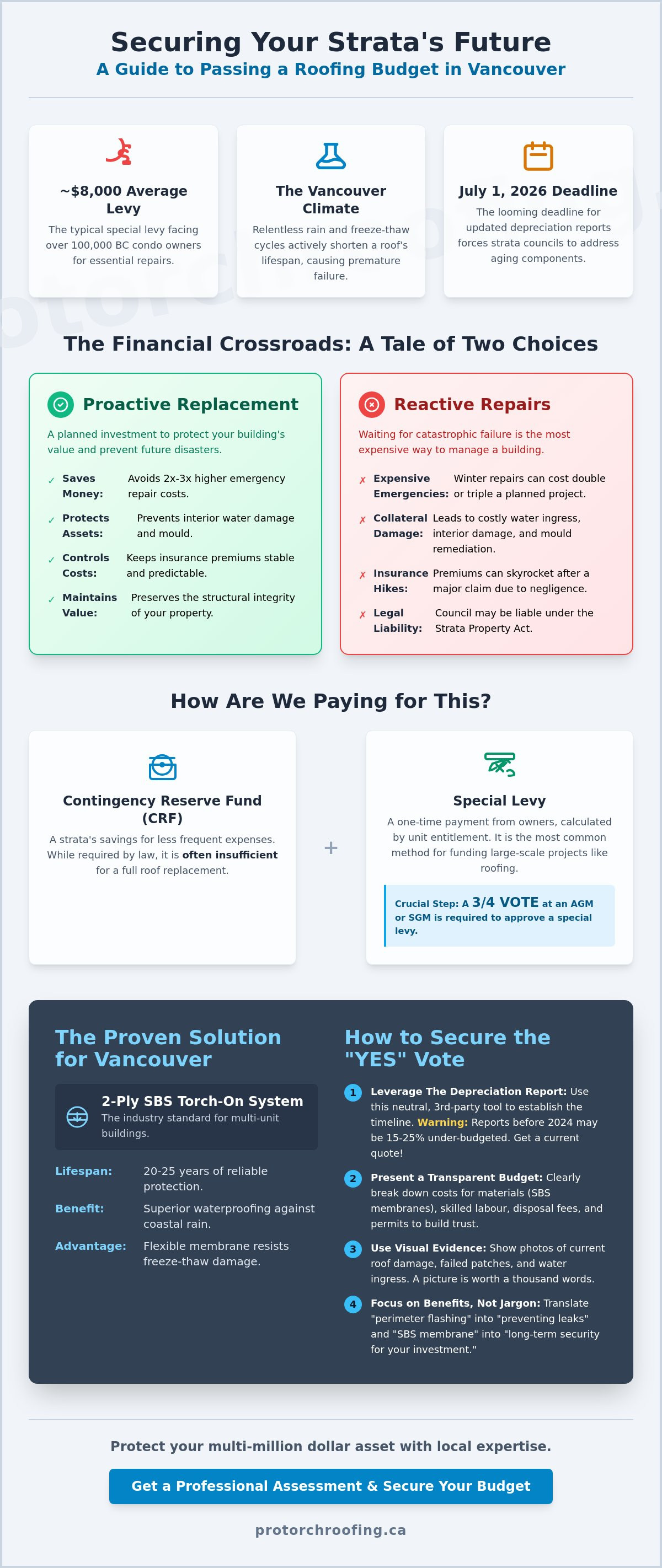
Over 100,000 condo owners across British Columbia are facing average special levies of $8,000 this year, making the atmosphere at your next Annual General Meeting feel more like a courtroom than a community gathering. If you're tasked with presenting a roofing budget to strata owners in Vancouver, you know that technical talk about torch-on systems or perimeter flashing often takes a backseat to the immediate fear of a five-figure assessment. It's a stressful position to be in, especially with the July 1, 2026, deadline for updated depreciation reports looming over Metro Vancouver stratas. We understand that your goal isn't just to fix a leak; it's to protect a multi-million dollar asset while maintaining the trust of your neighbors.
This guide will show you how to secure a "yes" vote by building a budget presentation that's as structurally sound as the roof itself. We'll explore how to translate complex building envelope needs into clear, benefit-driven language that owners can actually get behind. You'll learn how to leverage professional assessments to provide a transparent roadmap, ensuring everyone in the room feels confident that they're choosing long-term security over a temporary patch. From navigating the BC Strata Property Act requirements to explaining the longevity of SBS membranes, here's how to turn a daunting financial hurdle into a successful project for your community.
Key Takeaways
• Identify the specific environmental factors in Vancouver that shorten roof lifespans and learn how to use this data to justify a proactive replacement.
• Distinguish between the Contingency Reserve Fund and special levies to present a clear, legally compliant financial plan to your strata council.
• Master the strategy for presenting a roofing budget to strata owners in Vancouver by focusing on the technical superiority and waterproofing benefits of 2-ply SBS torch-on systems.
• Gain a step-by-step framework for your AGM presentation that uses visual evidence and clear "repair vs. replace" comparisons to build owner consensus.
• Understand why local expertise and a focus on structural integrity are the most important factors when selecting a contractor for complex multi-unit projects.
Understanding the Strata Roofing Lifecycle in Vancouver
In Vancouver, a roof is more than just a cover; it's a critical shield against relentless coastal moisture. For most multi-unit buildings, a high-quality 2-ply SBS torch-on system offers a reliable lifespan of 20 to 25 years. However, this isn't a "set it and forget it" asset. The local climate, characterized by heavy seasonal rainfall and frequent freeze-thaw cycles, puts immense stress on the membrane. Water that seeps into small cracks during the day can freeze and expand at night, slowly pulling apart the seams and perimeter flashing. Under the strata title ownership model, the corporation is legally mandated by Section 72 of the Strata Property Act to maintain and repair common property. Failing to address a degrading roof isn't just a maintenance oversight. It's a potential legal liability for the council.
There comes a specific stage in a roof's life where the cost of ongoing repairs exceeds the value of the protection they provide. We call this the "point of no return." Once the underlying insulation becomes saturated or the membrane loses its elasticity, localized patches are no longer effective. At this stage, presenting a roofing budget to strata owners in Vancouver becomes a matter of financial logic rather than just structural necessity. You are no longer just asking for money for a project; you are asking to protect the owners' largest financial investment.
The Role of the Depreciation Report
The Depreciation Report is your most valuable tool when presenting a roofing budget to strata owners in Vancouver. It provides a neutral, third-party projection of when the roof will likely fail. Be cautious, though. Many reports prepared before 2024 may be severely under-budgeted due to recent inflation in material and labor costs. By mid-2026, these older estimates might be off by 15% to 25%. It's essential to align these report timelines with a physical inspection from a qualified roofing professional to ensure your budget reflects current market realities.
Why Proactive Replacement Saves Strata Money
Waiting for a catastrophic failure is the most expensive way to manage a building. Emergency winter repairs in Vancouver often cost double or triple the rate of a planned summer installation. Beyond the immediate repair bill, a failing roof can cause building insurance premiums to skyrocket across British Columbia. Water ingress leads to interior damage and expensive mould remediation. These costs are rarely fully covered by standard policies if the council was aware of the roof's poor condition. Proactive replacement ensures the structural integrity of the building and keeps the Contingency Reserve Fund from being drained by preventable emergencies.
Breaking Down the Roofing Budget: CRF vs. Special Levies
When you're presenting a roofing budget to strata owners in Vancouver, the most critical question is always: "How are we paying for this?" Funding typically comes from two distinct sources. The Contingency Reserve Fund (CRF) is designed for less frequent, non-operating expenses. While BC law now requires a minimum 10% contribution from the annual operating fund to the CRF, these reserves are often insufficient for a full roof replacement. For a project of this scale, a special levy is usually necessary. This is a one-time payment calculated based on unit entitlement. Under the BC Strata Property Act, any special levy requires a 3/4 vote at an Annual or Special General Meeting. Securing that vote depends entirely on how clearly you break down the professional quote, which must account for materials like SBS membranes, skilled labour, disposal fees, and municipal permits.
A transparent budget does more than just list a final price. It builds trust by showing owners exactly where their investment goes. For example, disposal fees in Metro Vancouver have risen as regional landfills tighten regulations on construction waste. Likewise, labour costs reflect the specialized training required for safe torch-on applications. If you're unsure where your current reserves stand, you can review this Depreciation Reports guide to see how your funding should align with your building's long-term maintenance schedule.
Allocating Funds for Professional Oversight
Your budget shouldn't just cover the contractor. For complex strata buildings, including third-party roofing consultants ensures the project meets technical standards and provides an extra layer of accountability. You must also account for municipal permit fees, which vary between Vancouver and Burnaby. Perhaps most importantly, always include a 10% to 15% contingency buffer. This protects the strata from the "hidden" costs of deck rot or structural damage that only become visible once the old membrane is stripped away. Having this buffer approved upfront prevents the need for a second, stressful emergency vote mid-project.
Operating Fund vs. Capital Project Funding
It's vital to distinguish between routine maintenance and capital expenditures. Minor roof maintenance, such as clearing drains or replacing a few shingles, is an operating expense. However, once the scope involves a full membrane replacement, it becomes a capital project. Transitioning owners from a "patching" mindset to a "replacement" mindset requires showing them that the operating fund is being drained by repetitive, ineffective repairs. Properly tracking these expenditures in your financial statements is a legal requirement and helps justify the shift toward a long-term solution. If your council needs a clear picture of your roof's current health, we invite you to book a professional assessment to get a realistic scope of work.
Technical Justification: Why Torch-On Systems Dominate Vancouver Strata
When you are presenting a roofing budget to strata owners in Vancouver, explaining the technical "why" behind your material choice is just as important as the bottom line. Owners often ask why they should invest in a 2-ply SBS torch-on system rather than cheaper single-ply alternatives like EPDM or TPO. The answer lies in the unique demands of the Pacific Northwest. Our region faces relentless horizontal rain and high humidity that can easily bypass the seams of single-layer systems. A 2-ply system provides a redundant, fused barrier that is significantly more puncture-resistant and durable. Understanding BC's Strata Property Act requirements for reserve funds helps owners realize that choosing a system with a proven 25 year lifespan is the most fiscally responsible path for the corporation's long-term health.
While some single-ply systems are marketed as faster to install, they lack the multi-layered protection required for larger multi-unit buildings. In Vancouver, where thermal expansion causes buildings to shift slightly between seasons, the elasticity of torch-on membranes ensures the roof remains watertight. By 2026, local building standards have increasingly shifted toward materials that can handle extreme moisture levels, making torch-on the gold standard for strata flat roofs. It provides the peace of mind that owners need before they agree to a significant capital expenditure.
The Durability of SBS Membranes
SBS membranes are a rubberized asphalt that resists cracking even during the cold freeze-thaw cycles common in British Columbia winters. Because these systems utilize a base sheet and a reinforced cap sheet, they offer two distinct layers of waterproofing. If the top layer is ever scuffed or damaged by foot traffic during equipment maintenance, the underlying layer continues to protect the building. During installation, Pro Torch Roofing follows strict fire-rated safety protocols and utilizes specialized equipment to ensure the membrane is fused perfectly without compromising the structural safety of the building.
Custom Sheet Metal and Perimeter Protection
The membrane is only half of the story. Most strata roof failures occur at the edges, where wind-driven rain is forced under generic, poorly fitted flashing. Bespoke gutter repair and custom sheet metal fabrication are essential line items in any technically sound roofing budget. We fabricate custom perimeter flashing that is specifically designed to handle the drainage needs of your building's unique architecture. High-quality metalwork protects the membrane's termination points, preventing water from wicking behind the building's siding or masonry, which ultimately extends the life of the entire roofing system by several years.
Step-by-Step: Presenting the Budget at the AGM
Success at the Annual General Meeting (AGM) isn't about sales tactics. It's about providing owners with the data they need to make a responsible decision. When presenting a roofing budget to strata owners in Vancouver, you must bridge the gap between technical necessity and financial reality. Start your presentation with the "Why" by displaying high-resolution photos of actual roof degradation. Show the blistering, the failed seams, and core samples that reveal moisture trapped within the insulation. This visual evidence transforms an abstract expense into a visible threat to the building's structural integrity.
Next, present a clear comparison of three distinct paths: doing nothing, performing localized repairs, or a full replacement. Be honest about the "Do Nothing" option. Explain that it leads to emergency winter leaks and potentially higher insurance premiums. Contrast this with the long-term value of a 2-ply SBS torch-on system. To keep the conversation grounded, use simple charts to break down the special levy cost per unit. When owners see the specific number relative to their unit entitlement, the project feels more manageable and less like an insurmountable debt.
Finally, introduce your chosen partner. Highlighting the specialized expertise of an expert roofing contractor in Burnaby like Pro Torch Roofing provides the reassurance owners need. Our 25 plus years of local experience and focus on craftsmanship ensure that the project will be handled with discipline and transparent communication. Open the floor for questions, but be prepared to address objections using technical data and comprehensive warranty information.
Visual Aids That Win Votes
Technical data is more persuasive when it's tangible. Use infrared thermography photos to pinpoint areas of trapped moisture that aren't visible to the naked eye. Drone footage can provide a bird's-eye view of the entire roof area, helping owners realize the sheer scale of the protective barrier they are funding. We also recommend bringing a physical sample of a high-quality SBS membrane to the meeting. Allowing owners to touch the material helps them understand the thickness and durability of the protection they are purchasing.
Handling the "Why Now?" Objection
The most common objection is the desire to wait another year. Address this by citing current market data. Material costs in the Pacific Northwest are projected to continue rising through 2027, meaning a delay will likely result in a higher price tag. Remind owners that a new roof directly impacts property value and resale potential. A building with a healthy, warrantied roof is far more attractive to buyers than one with a looming special levy. This "peace of mind" argument is powerful. It promises a future without emergency buckets in the hallways or the stress of sudden water damage.
Choosing the Right Partner for Your Vancouver Strata Project
Selecting a contractor for a multi-unit project is a significant responsibility that extends beyond the initial price tag. Local experience isn't just a credential; it's a guarantee that the team understands Vancouver's specific building codes and the relentless coastal rain patterns mentioned earlier. With over 25 years of experience in the British Columbia roofing industry, we've seen how poorly executed projects can drain a Contingency Reserve Fund. Our family-owned approach ensures that accountability starts at the top. We don't treat your building as just another job site. We treat it as a community where people live. This perspective is vital when presenting a roofing budget to strata owners in Vancouver, as owners need to know that their daily lives and property values are in disciplined hands.
Managing the logistics of a roof replacement on an occupied strata building requires a methodical rhythm. We coordinate parking, manage noise schedules, and ensure that safety protocols are strictly followed to protect residents and visitors. Once the project concludes, our commitment to the building's structural integrity continues. We provide comprehensive warranties and long-term support, ensuring that the protection we install today remains effective for decades. This level of dependability is what transforms a stressful capital project into a successful investment for the entire strata corporation.
The Pro Torch Roofing Difference
Our specialized expertise in commercial roofing in Vancouver allows us to navigate the technical hurdles of complex flat roof systems. We go beyond the physical installation by assisting councils with the technical documentation needed for their AGM. When presenting a roofing budget to strata owners in Vancouver, having high-resolution imagery and professional reports from a trusted local expert can be the difference between a "yes" and a "no" vote. Our unwavering commitment to safety and WorkSafeBC compliance ensures that your project is handled professionally, minimizing liability for the strata corporation.
Next Steps for Your Strata Council
The path to a successful roof replacement begins with a transparent and detailed site assessment. We invite you to request a comprehensive quote that accounts for every technical requirement, from custom sheet metal fabrication to disposal fees. A Pro Torch representative can also attend your next council meeting to answer technical questions and provide the reassurance owners need. Before you finalize your roofing resolution for the AGM, use this checklist to ensure your presentation is sound:
• Confirm that the budget includes a 10% to 15% contingency for unforeseen deck rot.
• Verify that the proposed 2-ply SBS system aligns with your depreciation report's longevity goals.
• Include visual evidence of current roof degradation in the owner information package.
• Ensure the contractor has provided a clear plan for managing noise and site access.
Taking these steps ensures your community is protected and your budget is built on a foundation of technical truth. If you are ready to secure the future of your building, we invite you to contact us for a professional assessment today.
Securing Your Strata’s Future with Confidence
Navigating a major capital project doesn't have to be a source of community conflict. By moving from reactive patching to a proactive replacement strategy, you protect both the building's structural integrity and the owners' financial investments. Successful strata councils win by presenting a roofing budget to strata owners in Vancouver that is rooted in technical reality and transparent communication. When you show owners the long-term value of a 2-ply SBS system and provide a clear roadmap for the project, you replace fear with confidence.
Choosing a partner who understands the unique demands of our coastal climate is the final piece of the puzzle. As specialized torch-on experts with over 25 years of local experience, we're here to support your council with the technical data and professional reports you need to secure that "yes" vote. We're fully insured and WorkSafeBC compliant, ensuring your project is handled with the highest level of discipline and safety.
Don't wait for the next winter leak to force your hand. Request a Professional Strata Roof Assessment from Pro Torch Roofing today and take the first step toward a worry-free building. You have the tools to lead your community toward a secure, watertight future.
Frequently Asked Questions
Does a roofing budget require a 3/4 vote or a simple majority in BC?
Under the BC Strata Property Act, a special levy for a major roof replacement requires a 3/4 vote from the owners. If you're using funds from the Contingency Reserve Fund (CRF), a 3/4 vote is also typically required for any expenditure that isn't part of the annual operating budget. Clarity on these voting thresholds is essential when presenting a roofing budget to strata owners in Vancouver to ensure the resolution passes legally and without future challenges.
How much should a strata set aside in the CRF for future roofing?
Strata corporations are now legally required to contribute at least 10% of their annual operating fund to the CRF. However, this minimum is rarely enough to cover a total roof replacement. Your Depreciation Report provides the most accurate target. It projects the remaining lifespan of your current membrane and estimates the future cost. Most healthy stratas aim to fund a significant portion of the projected cost to minimize the impact of future special levies.
Can we use the CRF to pay for a roofing consultant before the AGM?
Yes, the strata council can often use CRF funds to hire a qualified consultant or building envelope professional to assess the roof's condition. This technical data is vital for presenting a roofing budget to strata owners in Vancouver with accuracy. While smaller investigative costs might be covered under the operating budget, larger consulting fees typically require owner approval via a 3/4 vote at a general meeting before the funds are released to the professional.
What happens if the owners vote down the roofing budget?
If a necessary roofing budget is defeated, the strata remains legally responsible for maintaining common property under Section 72 of the Strata Property Act. Failure to act can lead to increased insurance premiums, deductibles, or even a court-appointed administrator if a group of owners sues to force the repairs. It's often helpful to explain these legal and financial risks to owners who may be hesitant about the initial cost of replacement.
How long does a typical strata roof replacement take in Vancouver?
A typical roof replacement for a multi-unit strata building in Vancouver usually takes between three to six weeks. The timeline depends heavily on the building's size, the complexity of the custom sheet metal work, and our unpredictable coastal weather. We plan these projects in phases to ensure the building remains watertight throughout the process. This staged approach minimizes disruption to residents while maintaining the structural integrity of the roof deck during installation.
Are there any government rebates for energy-efficient roofing in 2026?
In 2026, rebates are often available through provincial programs like CleanBC for stratas that upgrade their roof insulation during a replacement. While the roofing membrane itself might not qualify, the overall building envelope improvement can lead to significant energy savings. We recommend consulting with a building energy advisor to identify current municipal or provincial grants that can help offset the total project cost for your strata corporation.
Should we choose the lowest bid for our strata roof project?
The lowest bid often carries hidden risks, such as lower-quality materials or a lack of specialized labor. In the roofing industry, a cheaper quote might skip essential steps like proper perimeter flashing or high-grade SBS membranes. Choosing a contractor based on longevity and local expertise ensures the roof lasts its full 25 year lifespan. A slightly higher initial investment frequently saves the strata thousands of dollars in premature repairs and emergency leaks later.
How do we handle owner concerns about noise and parking during construction?
Clear communication is the best way to manage resident concerns. We work with the council to establish a predictable schedule for noise-heavy tasks and coordinate material deliveries to minimize parking disruptions. Providing owners with a weekly progress update helps them understand the project's status. When residents know exactly when to expect the most activity, they're generally more patient and supportive of the necessary work being done to protect their homes.
