

Commercial Roofing Vancouver: The 2026 Guide to Durable Flat Roof Systems
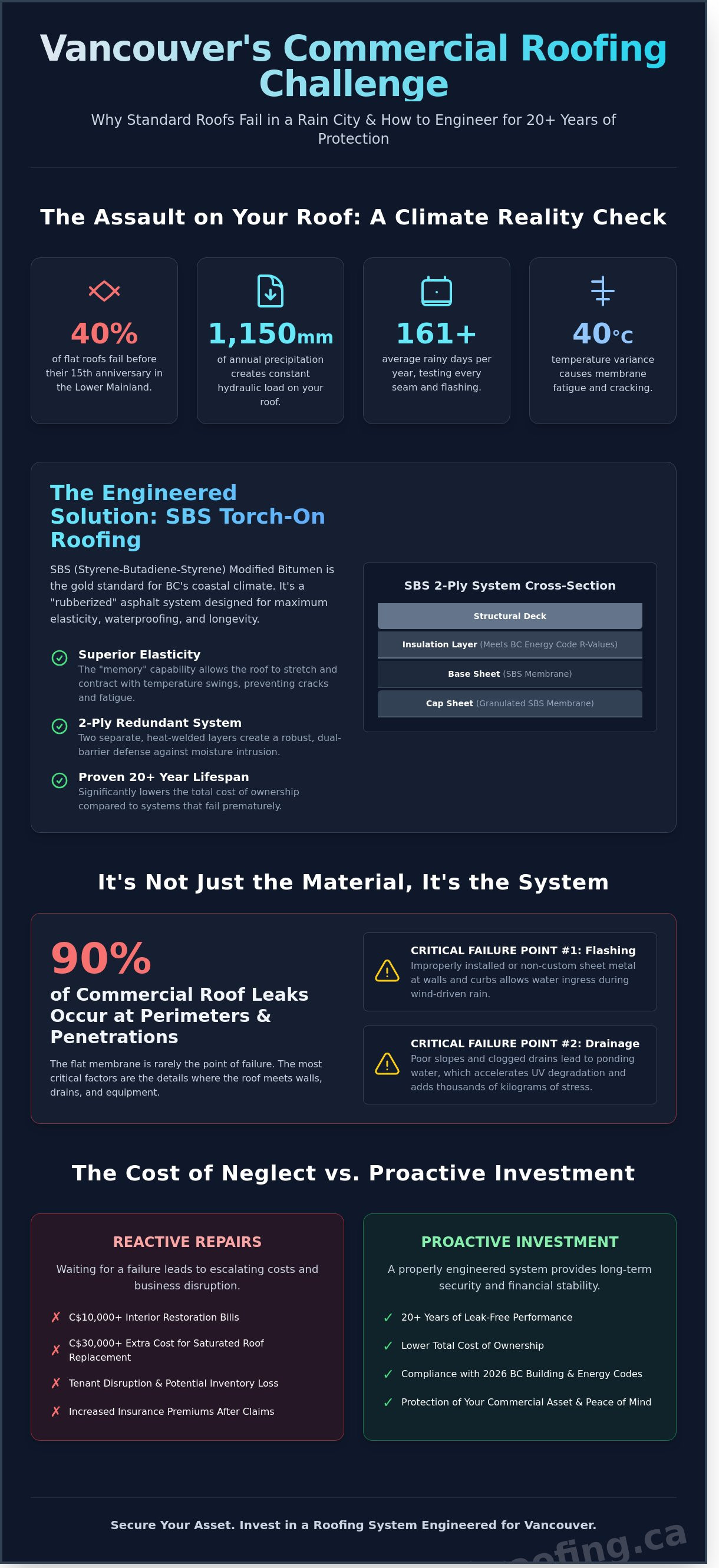
Did you know that nearly 40% of flat roof systems in the Lower Mainland fail before their 15th anniversary because they weren't engineered for Vancouver’s 1,150mm of annual precipitation? You likely already feel the stress of the autumn rainy season, wondering if this is the year a failing seam leads to a C$10,000 interior restoration bill. It's a common concern for property managers who deal with contractors that don't prioritize BC building codes or long term structural integrity. Investing in commercial roofing vancouver should provide security, not a recurring line item for emergency repairs.
We promise to show you how to achieve a leak-free building for 20 years or more by choosing resilient materials designed for our unique coastal climate. You'll learn how specialized torch-on roofing and high performance SBS membranes can significantly lower your total cost of ownership while ensuring compliance with the latest BC energy standards. This 2026 guide provides a clear roadmap through the technical details of perimeter flashing and drainage optimization to help you secure the best possible ROI for your commercial asset.
Key Takeaways
• Understand how Vancouver’s unique "Rain City" climate and temperature fluctuations necessitate specialized flat roof specifications to prevent premature membrane failure.
• Discover why SBS modified bitumen is the gold standard for commercial roofing vancouver, offering a high-performance 2-ply system designed for maximum moisture resistance.
• Evaluate the long-term ROI of different systems by comparing initial installation costs against the 20-year total cost of ownership for your BC business.
• Learn why custom-fabricated sheet metal and perimeter security are the most critical factors in preventing the leaks that plague 90% of commercial flat roofs.
• Identify the essential safety and compliance benchmarks to look for when selecting a local roofing partner with deep roots in the Lower Mainland.
The Reality of Commercial Roofing in Vancouver's 'Rain City' Climate
Vancouver receives over 1,150 mm of precipitation annually. With 161 rainy days recorded on average at YVR, standard roofing specifications often fall short of local needs. Commercial buildings in the Lower Mainland face a constant hydraulic load. This pressure tests every seam, flashing, and drain. Property owners must realize that a roof designed for Calgary or Toronto will likely fail prematurely in our coastal environment. We focus on systems that manage water rather than just resisting it.
Thermal movement presents another significant challenge. In Burnaby and surrounding areas, temperature swings can range from -10°C in January to 30°C in August. This 40-degree variance causes flat roof decks to expand and contract constantly. Without high-performance bituminous waterproofing systems like SBS torch-on, these cycles lead to membrane fatigue and cracking. We utilize modified bitumen because its elastic properties allow the roof to "breathe" with the building. This flexibility is essential for maintaining a watertight seal over decades of seasonal shifts.
Stricter requirements within the 2026 BC Building Code now dictate higher R-values and improved drainage slopes for all new commercial roofing vancouver projects. These updates aim to reduce energy loss and prevent structural overloading during atmospheric river events. Designers must now account for 1-in-50-year rainfall intensities that were previously ignored. We see many older buildings struggling to keep up with these increased loads. Upgrading to modern standards isn't just about compliance; it's about protecting the building from catastrophic failure during peak storm seasons.
Ponding water remains a primary failure point for local businesses. If water sits on a flat roof for more than 48 hours, it begins to accelerate UV degradation and increases the risk of structural deflection. Clogged drains are equally dangerous. A single blocked 4-inch drain can lead to thousands of kilograms of unexpected weight on a warehouse roof during a heavy downpour. Regular inspections of perimeter flashing and drainage paths are the only way to ensure these systems function when they are needed most.
Micro-Climates: From North Vancouver's Rainfall to Burnaby's Wind
Elevation changes everything in the Lower Mainland. North Vancouver receives nearly double the rainfall of Richmond, often exceeding 2,500 mm in the uplands. This requires specialized drainage capacities and enhanced perimeter flashing to prevent overflow. In the West End, high-rise commercial structures face extreme wind uplift pressures. We specify high-performance fasteners and specific adhesive patterns to meet these localized demands. Proper commercial roofing vancouver design ensures the structural integrity of the entire building remains intact during high-wind events. We adapt our technical approach based on the specific micro-climate of your property's postal code.
The Cost of Neglect: Why 'Minor' Leaks Are Commercial Emergencies
Neglect is expensive. When moisture gets trapped in insulation, it creates a thermal bridge that wastes energy and leads to premature deck rot. Replacing a saturated roof can cost C$30,000 more than a dry one due to increased disposal fees and structural repairs. Proactive maintenance typically pays for itself in under five years. It prevents tenant disruptions and stops insurance premiums from spiking after a major claim. A small leak today often signals a failing system that could compromise your entire inventory tomorrow. We provide clear, methodical assessments to help you plan for these repairs before they become emergencies.
Why SBS Torch-On Roofing is the Gold Standard for BC Businesses
When selecting commercial roofing vancouver property owners often prioritize durability and weather resistance above all else. SBS (Styrene-Butadiene-Styrene) modified bitumen represents the peak of flat roofing technology for our specific coastal climate. This material is essentially asphalt that has been "rubberized" through the addition of SBS polymers. This modification grants the bitumen a distinct "memory" capability, allowing the membrane to stretch and return to its original shape without cracking. SBS torch-on is a multi-layered, heat-welded membrane designed for superior elasticity and waterproofing.
The 2-ply system is the backbone of this technology. By installing two separate layers of SBS membrane, we create a redundant barrier that ensures moisture never reaches the structural decking. This redundancy is vital in a city that sees over 160 rainy days per year. The heat-welding process fuses these layers into a single, monolithic sheet, eliminating the weak points often found in glued or taped seams. This fusion creates a chemical bond that is virtually inseparable, providing a level of security that single-ply systems struggle to match in high-wind zones.
Thermal shock is a major factor in roof degradation across British Columbia. On a typical April morning in the Lower Mainland, a roof surface can jump from 3 degrees Celsius at dawn to 18 degrees Celsius by noon. This rapid expansion and contraction can cause standard materials to become brittle or pull away from flashings. Because of its rubber-like properties, SBS remains flexible even when temperatures drop below freezing, absorbing the physical stress of these temperature swings without losing its structural integrity.
Technical Breakdown: The Anatomy of a Torch-On System
A professional torch-on installation relies on the synergy between the base sheet and the cap sheet. The base sheet is the first line of defense, usually mechanically fastened or heat-welded to the substrate. The cap sheet follows, featuring a thicker profile and a granulated surface. We utilize high-tensile reinforcement materials within these sheets; polyester mats provide exceptional tear resistance while fiberglass mats ensure the roof remains dimensionally stable over decades of use. These standards align with the rigorous requirements found in the National Building Code of Canada, which dictates the safety and performance benchmarks for all commercial structures. The ceramic granules embedded in the cap sheet aren't just for aesthetics; they protect the underlying bitumen from UV degradation, which accounts for nearly 90% of premature roof failures in non-protected systems.
The Torch-On Advantage vs. Older Tar and Gravel Systems
Many older commercial properties in Burnaby and Vancouver still utilize traditional built-up roofing (BUR), commonly known as tar and gravel. These systems are incredibly heavy, often weighing up to 400 kilograms per square. Modern SBS torch-on systems are roughly 80% lighter than gravel-ballasted roofs. This significant weight reduction is a major benefit for 1970s-era structures that may have experienced settling over time. Beyond weight, maintenance is far simpler. Finding a leak in a gravel bed is like finding a needle in a haystack, often requiring hours of labor just to clear the stone. With a smooth SBS surface, our technicians can identify and repair punctures in a fraction of the time.
Longevity is where the investment truly pays off. While a poorly maintained roof might fail in 12 years, a Pro Torch installation is engineered for a 25 to 30 year lifespan. If you're concerned about the current state of your building's envelope, you can request a professional roof assessment to determine if a 2-ply SBS system is the right fit for your property.
Comparing Commercial Roofing Systems: Which is Right for You?
Selecting the right commercial roofing vancouver system requires balancing upfront expenses with the reality of our coastal climate. Vancouver receives over 1,150 mm of precipitation annually, which puts immense pressure on structural integrity. Every seam and flashing must withstand constant moisture and temperature fluctuations between 2°C and 22°C. Property owners often focus on the initial quote, but the total cost of ownership over 20 years tells a different story. A system that costs C$14 per square foot today might save you C$20,000 in emergency repairs by 2044 compared to a cheaper, less durable alternative.
Adhering to the National Building Code of Canada ensures your facility meets 2020 safety standards for wind uplift and fire resistance. In the Lower Mainland, "Cool Roof" requirements are also becoming a priority for energy efficiency. High-reflectivity surfaces can reduce peak cooling demands by 15% during our increasingly warm summers. Whether you manage a warehouse in Burnaby or a retail space in Kitsilano, your choice must account for salt air corrosion and the heavy moss growth common in our shaded corridors.
Torch-On vs. TPO: The Battle of the Flat Roofs
TPO roofing is often praised for its energy efficiency, yet its single-ply nature carries risks in heavy debris areas like North Vancouver. Falling hemlock needles and branches can compromise a 60-mil TPO membrane. In contrast, torch-on roofing utilizes multi-layer SBS membranes that provide a thicker, more resilient barrier. While TPO relies on chemical adhesives or heat-welded seams on a single layer, torch-on systems feature heat-welded bitumen that creates a monolithic, waterproof seal. This redundancy is vital for roofs with frequent HVAC foot traffic. Data shows that multi-layer SBS systems offer 40% higher puncture resistance than standard single-ply membranes, providing better security for buildings with heavy rooftop equipment.
Metal Roofing: The Long-Term Play for Sloped Commercial Sites
For sloped commercial buildings in West Vancouver, standing seam metal roofing represents the gold standard for longevity. These systems easily last 50 years, far outperforming asphalt shingles which often fail after 15 years in our wet environment. The aesthetic appeal of charcoal or slate grey metal complements the modern West Coast architecture found throughout the region. Beyond looks, the functionality of custom sheet metal work is where the real protection happens. We use 24-gauge steel to fabricate custom transitions that prevent leaks in complex valleys. Integrating heavy-duty, 6-inch metal gutters and downspouts ensures a complete water management system. This setup handles the 50 mm rainfall events that occur during November storms, directing water safely away from your building's foundation and preventing costly hydrostatic pressure damage.
Choosing a commercial roofing vancouver specialist ensures these technical details aren't overlooked. We focus on the specific SBS membranes and perimeter flashing kits that have proven to survive BC's unique environmental stressors. Our methodical approach moves from a detailed assessment to a technical remedy, giving you the peace of mind that your investment is protected for decades to come.
The Pro Torch Difference: Custom Sheet Metal & Perimeter Security
Statistics from local building inspections show that 90% of flat roof leaks occur at the perimeter and flashing points. These areas represent the transition between the horizontal roof surface and vertical structures like walls or vents. In the damp climate of British Columbia, these junctions are under constant thermal stress. Pro Torch Roofing addresses this vulnerability by maintaining an in-house custom sheet metal fabrication shop. We don't rely on generic, one-size-fits-all components that often fail during heavy coastal storms. Custom-fabricated flashing ensures a precision fit that pre-manufactured components cannot match. By controlling the manufacturing process, we provide a level of commercial roofing vancouver property owners can depend on for decades. We treat architectural metalwork not just as a trim, but as a structural component of your building's defense system.
Precision Flashing: The First Line of Defense
Custom parapet caps are the primary guards of your building's structural envelope. They prevent moisture from seeping into the wall assembly, which can lead to expensive masonry damage or mold. Transition flashing is the most critical component of a Vancouver commercial roof because it manages the interface between different building materials that expand and contract at different rates. Our team takes a methodical approach to chimney and skylight waterproofing. We use heavy-gauge metals and specialized folding techniques to create mechanical water sheds. This ensures that even if a seal fails, the metal geometry itself directs water away from the opening. We've found that this redundant layer of protection is the only way to guarantee long-term performance in the Pacific Northwest.
Waterproofing Beyond the Surface
Modern commercial buildings often have complex rooflines with numerous penetrations. While metal is excellent for straight edges, we use liquid-applied membranes for intricate penetrations like HVAC supports and electrical conduits. These membranes create a seamless bond with our custom metalwork, ensuring the roof and drainage system function as a single unit. We don't leave any part of the drainage path to chance. For example, in June 2022, our team resolved a chronic leak issue for a 12,000-square-foot Burnaby warehouse. The facility had struggled with water ingress for 5 years despite multiple repairs by other firms. We identified that the standard aluminum flashing was too thin to handle the building's vibration and thermal movement. We replaced the entire perimeter with 24-gauge custom-bent steel and integrated it with a reinforced SBS membrane. The warehouse has remained 100% dry through 36 months of record-breaking rainfall, proving that precision engineering beats temporary patches every time.
Protect your investment with a perimeter system designed for the Vancouver climate. Schedule a professional assessment with our custom metal experts today.
Choosing a Commercial Roofing Contractor in Vancouver
Selecting a partner for your commercial roofing vancouver project requires more than a simple price comparison. You need a team that understands the specific coastal climate of British Columbia. A family-owned business with over 25 years of regional experience brings a level of accountability that national chains often lack. Local experts understand how the 160+ days of annual rainfall in the Lower Mainland impact SBS membrane curing and perimeter flashing performance. They've seen how regional wind patterns affect high-rise structures and know which materials actually stand up to the salt air near the Burrard Inlet.
Every contractor you consider must maintain active WorkSafeBC coverage and comprehensive liability insurance. For commercial projects, we recommend verifying at least C$5,000,000 in liability coverage. This protects your assets against structural damage during the installation process. Don't hesitate to ask for a clearance letter directly from WorkSafeBC to ensure the crew on your roof is fully protected and compliant with provincial safety regulations.
Navigating municipal requirements is another hurdle where local knowledge is vital. A project in Burnaby might have different drainage specifications than one in the North Shore or Vancouver’s downtown core. Professional contractors handle the entire permitting process for you. They ensure your building remains compliant with the latest BC Building Code updates that took effect in 2024. This coordination prevents costly work-stop orders and ensures your final inspection passes without delays.
Evaluate your quote based on transparency rather than just the bottom line. A professional estimate should include detailed line items for materials like 2-ply torch-on systems, specific insulation R-values, and estimated labor hours. Vague quotes often lead to hidden costs once the old membrane is stripped away. Ensure the document clearly distinguishes between the manufacturer’s material warranty and the contractor’s workmanship guarantee. A 20-year material warranty doesn't help if the labor isn't covered for at least 5 to 10 years.
Questions to Ask Your Potential Roofing Partner
Ask if the company operates a dedicated sheet metal shop for custom fabrication. Custom-fitted perimeter flashing and scuppers provide a watertight seal that off-the-shelf components can't match. You should also request references for at least three commercial projects completed in the Lower Mainland within the last 24 months. Finally, confirm their emergency response time. For existing commercial clients, a 4 to 6-hour response window during a winter storm can save your business thousands of dollars in interior inventory damage.
Maximizing Your ROI with Preventative Maintenance
Proactive care is the most effective way to protect your balance sheet and extend the life of your commercial roofing vancouver system. Annual inspections focus on clearing organic debris from drains and scuppers, especially after Vancouver’s heavy autumn windstorms. Clogged drainage systems are responsible for roughly 70% of premature flat roof failures due to standing water and the resulting freeze-thaw cycles. Regular maintenance validates your manufacturer warranty and can delay a full roof replacement by 10 to 15 years. Small repairs to SBS membranes today prevent catastrophic leaks tomorrow.
Secure Your Vancouver Commercial Property Against the Elements
Navigating the complexities of commercial roofing vancouver requires a strategy built on durability and local expertise. As we head into 2026, the data remains clear; SBS torch-on membranes provide the most reliable protection against British Columbia's relentless precipitation. By combining these high-performance materials with our specialized in-house custom sheet metal shop, we eliminate the common failure points found in generic perimeter flashing. It's about more than just a quick fix; it's about structural integrity and long-term peace of mind.
Pro Torch Roofing brings 25+ years of local experience to every project. As a family-owned and operated business, we prioritize transparent communication and methodical craftsmanship over high-pressure sales. Whether you're managing a retail complex or an industrial warehouse, our team ensures your flat roof system meets the highest standards of safety and longevity. Don't leave your building's health to chance when you can rely on disciplined, regional experts who understand the specific demands of the Pacific Northwest climate.
Secure Your Building with Vancouver's Commercial Roofing Experts
We look forward to helping you protect your investment with a roof that stands the test of time.
Frequently Asked Questions
How much does commercial roof replacement cost in Vancouver?
Commercial roof replacement in Vancouver typically costs between C$12 and C$25 per square foot, depending on the material and structural complexity. For a standard 10,000 square foot warehouse, you can expect an investment ranging from C$120,000 to C$250,000. These figures include labor, disposal fees, and high-quality SBS membranes designed specifically for the coastal climate.
What is the best roofing material for a flat roof in British Columbia?
A 2-ply SBS torch-on membrane is the best choice for flat roofs in British Columbia because of its superior waterproofing capabilities. This system handles the 1,150 millimeters of average annual rainfall in the region better than single-ply alternatives. Its multi-layer construction provides the structural integrity needed to withstand local temperature fluctuations and heavy winter precipitation.
How long does a commercial torch-on roof typically last?
A professionally installed commercial torch-on roof typically lasts 20 to 25 years when maintained according to manufacturer specifications. Regular maintenance can extend this lifespan by 15 percent, ensuring the perimeter flashing and seams remain watertight. Using premium SBS materials ensures your commercial roofing vancouver investment provides long-term protection against the elements.
Do I need a permit for a commercial roof repair in Burnaby?
You need a building permit for any commercial roof replacement or major structural repair according to the City of Burnaby Building Bylaw. Minor leak repairs or replacing less than 10 percent of the roof area often don't require a permit. It's vital to check current municipal codes since 95 percent of significant commercial projects require official documentation before work begins.
Can you repair a commercial roof during the rainy season?
We can perform commercial roof repairs during Vancouver's rainy season by using temporary hoarding and specialized moisture-curing sealants. While dry conditions are ideal for full installations, our crews use specialized equipment to ensure 100 percent dry substrates during emergency patches. This prevents water ingress and protects your building's interior assets even during November's peak rainfall periods.
What is the difference between residential and commercial roofing requirements in BC?
Commercial roofing in BC must adhere to stricter fire resistance ratings and structural load requirements under Part 3 of the BC Building Code. Residential projects usually fall under Part 9 and focus on aesthetics and steep-slope drainage. Commercial systems require 25 percent higher durability standards to support heavy HVAC equipment and frequent foot traffic for mechanical maintenance.
How often should I have my commercial roof inspected in the Lower Mainland?
You should schedule a professional inspection twice a year, specifically in the spring and fall, to manage the Lower Mainland's heavy debris and rainfall. Routine checks identify 90 percent of potential failures before they become costly emergencies. Clear gutters and secure perimeter flashing are essential to maintaining the health of your commercial roofing vancouver system.
Does Pro Torch Roofing offer emergency commercial repairs?
Pro Torch Roofing provides dedicated emergency repair services for commercial clients across the Lower Mainland to address leaks and storm damage immediately. Our team typically responds within 4 hours to stabilize the situation and prevent further structural damage. We prioritize local businesses to ensure their operations continue without interruption, maintaining the safety and security of the property.
