

Managing Resident Disruption During Roof Replacement in Burnaby
What if a roof replacement could protect the building without leaving residents guessing about every bang, blocked walkway, or schedule change? Some noise and disruption are part of the work, but clear expectations make a project easier to manage. For strata councils and property managers, managing resident disruption during roof replacement Burnaby starts with a coordinated plan, not a promise of a disruption-free job.
Residents need practical information: when work is expected, where access may change, how to prepare their belongings, and where updates will be shared if plans shift. This article explains how to organize those details before work begins and keep communication consistent while the roofing crew is on site. Considerate scheduling, clear notices, and coordinated site planning can help residents feel informed and reduce avoidable inconvenience. Pro Torch Roofing is based in Burnaby and provides residential and commercial roofing services across Burnaby, Vancouver, West Vancouver, North Vancouver, and the Lower Mainland.
Key Takeaways
• Map likely sources of inconvenience, including noise, deliveries, work activity, and changing access, so residents know what to expect.
• Build the disruption plan around the roof work, site access, and local weather, and share updates when conditions affect planned work.
• Tailor notice timing, communication channels, and access information to the needs of homes, strata buildings, and commercial properties.
• Use a step-by-step communication checklist to share work areas, expected activity, access changes, and contact routes before and during the project.
• Managing resident disruption during roof replacement Burnaby starts with clear expectations and a work plan that reflects the property.
Why roof replacement disrupts residents in Burnaby, and what can be planned
Roof replacement takes place above everyday life, but its effects can reach driveways, balconies, entrances, and shared spaces. Residents may hear tools and material handling, see workers and deliveries, or need to adjust routines when an area is temporarily less convenient to use. Managing resident disruption during roof replacement Burnaby does not mean promising silence or uninterrupted access. It means identifying likely impacts early and coordinating realistic expectations with the roofing team.
Which parts of roof replacement affect daily routines?
Noise can vary as roofing materials are removed, prepared, and installed. It may be more noticeable in rooms directly beneath the work area, while rooftop activity may be visible from windows, patios, or nearby walkways. The general topic of noise pollution helps explain why repeated or unexpected sound can affect comfort, even when the work is necessary to protect the building.
Access is another consideration. A delivery or staging area may affect parking, an entry route, or patio use. In a multi-unit building, residents share these spaces, so even a temporary change needs clear communication. At a single-family home, the household can coordinate directly with the roofing team about driveway use, outdoor belongings, and which parts of the property may be affected.
The impact depends on the roof design, replacement scope, how workers and materials reach the site, and weather conditions. A flat roof replacement involving torch-on roofing may involve different activity from an asphalt shingle replacement. Discussing the project scope and site layout helps identify likely work zones and access considerations without assuming every day will unfold exactly as planned.
Who coordinates communication in a Burnaby building?
In a strata building, the strata council or property manager can act as the link between the roofing team and residents. Landlords can pass relevant updates to tenants, while residents can follow shared notices and report access concerns through the agreed contact route. For a rental home or commercial property, the owner or property manager can coordinate notices with occupants and staff.
Choose one designated contact for routine project updates and resident questions. That person can share consistent information, gather concerns, and pass relevant changes between residents and the roofing team. A single communication route helps prevent conflicting messages about parking, deliveries, or which entrance to use.
Before work begins, property decision-makers and the roofing team should discuss expected work areas, likely activity, and communication responsibilities. When applicable, check City of Burnaby requirements for the project rather than relying on assumptions about noise or permits. Pro Torch Roofing, a family-owned contractor based in Burnaby, provides residential and commercial roofing services, including roofing services. Residents may still experience inconvenience, but shared expectations make it easier to prepare and respond constructively.
How roof work, weather, and site access shape the disruption plan
A useful disruption plan follows the work itself. The roof system, replacement scope, building layout, and route for moving materials all affect what residents may notice and which shared areas need coordination. Before notices go out, property decision-makers and the roofing team can map work zones, discuss the sequence, and identify where access or deliveries could affect daily routines. That makes updates more useful than a general announcement that roofing work is underway.
How does Lower Mainland weather affect roof replacement?
Rain is a planning consideration in Burnaby, but it does not automatically mean a project will be delayed. Suitable conditions depend on the roofing system and the task being performed. The crew may need to adjust the sequence or timing if the forecast affects particular work, and the plan can change as conditions develop. Residents should rely on project-specific notices for current information rather than trying to predict a revised schedule from the forecast alone.
Weather-aware planning works best when schedule updates are clear, timely, and tied to the work residents can expect next. That gives people practical information, such as whether to adjust use of an outdoor area or allow for a change in access, without relying on a date that may no longer reflect site conditions.
How do roof type and access change the work plan?
Flat and sloped roofs involve different work methods, so their sequences and material needs can differ. If the project involves a flat roof with torch-on roofing, residents can learn how the system is installed in this torch-on roofing guide. The point is to connect the work residents may see with the project scope, not to predict an exact daily schedule.
Site access matters just as much. A delivery vehicle, material staging area, or route used by the crew could affect parking, an entrance, or a shared walkway. The property manager or project contact can coordinate delivery and staging plans with the roofing team, then tell residents about expected effects. At a home, that discussion may focus on the driveway or patio. At a strata or commercial property, shared entrances and parking may require broader coordination.
Roofing activity can also create noise. The OSHA guidance on construction noise offers general background on noise exposure at construction sites; it is not a substitute for applicable requirements in Burnaby. Clear notices can set realistic expectations about anticipated work areas and activity without promising to eliminate noise or other inconvenience.
Managing resident disruption during roof replacement Burnaby means matching updates to actual project conditions. A clear understanding of the roof scope and site layout helps identify considerations early. Pro Torch Roofing serves residential and commercial properties in Burnaby, Vancouver, West Vancouver, and North Vancouver. Property decision-makers can start with a project-specific roofing quote and discuss the property’s access and occupancy needs.
Compare resident-disruption plans by building type and project needs
A communication plan should reflect who uses the property and how roof work may affect them. A household can often receive updates directly, while a strata building needs a reliable way to reach residents across multiple units. A commercial property may also need to coordinate information for staff, tenants, and visitors. These are starting points, not fixed schedules: the roof scope, occupancy, and site layout determine what each project needs.
The comparison below can help property decision-makers identify the main planning questions. “Communication lead” means the person who gathers information from the roofing team and shares relevant updates with the people affected.
| Property type | Communication lead | Notice channels | Access and updates |
|---|---|---|---|
| Single-family home | Owner or household contact | Direct project updates | Discuss household routines, outdoor areas, and changes affecting the property. |
| Strata building | Strata council or property manager | Building notices and resident communication channels | Share updates about common areas, deliveries, and any changes residents need to know. |
| Commercial property | Owner or property manager | Staff, tenant, and customer-facing notices as appropriate | Coordinate information about entrances, operating needs, and affected areas. |
What should strata buildings coordinate before work begins?
Agree on who will distribute notices and collect resident questions, then decide how updates will reach owners and tenants. Clarify how the building will share changes involving common areas, parking, or deliveries. A single communication lead can consolidate questions and pass along project information consistently. For broader context on planning residential and commercial roofing work, consult this Burnaby roofing contractor guide.
For strata, the communication lead should consider whether residents rely on shared entrances, elevators, parking, or outdoor spaces. Notices can distinguish areas expected to be affected from those expected to remain available, while allowing for changes as work progresses. The council or property manager can also give residents a clear route for raising access concerns, rather than leaving them unsure where to direct questions.
How should plans differ for homes and commercial properties?
At a home, updates can focus on household routines, driveway or patio use, and where the crew may be working. Commercial properties may need to account for staff routines, customer access, and the entrances most important to daily operations. The property contact can coordinate relevant details with the roofing team and share information suited to the people using the site.
Neither setting calls for a universal notice schedule or a promise that routines will not be affected. Match the channel and timing of updates to occupancy and project scope, then share changes as the plan develops. For property decision-makers, managing resident disruption during roof replacement Burnaby means choosing communication that fits the building, not simply copying a checklist from another site.
Pro Torch Roofing is a family-owned contractor based in Burnaby, with over 25 years of experience in residential and commercial roofing. Serving Burnaby, Vancouver, West Vancouver, North Vancouver, and the Lower Mainland, the company provides roofing solutions for different property types. Plan communications around the building’s occupancy and access needs, rather than assumptions about how the work will affect residents.
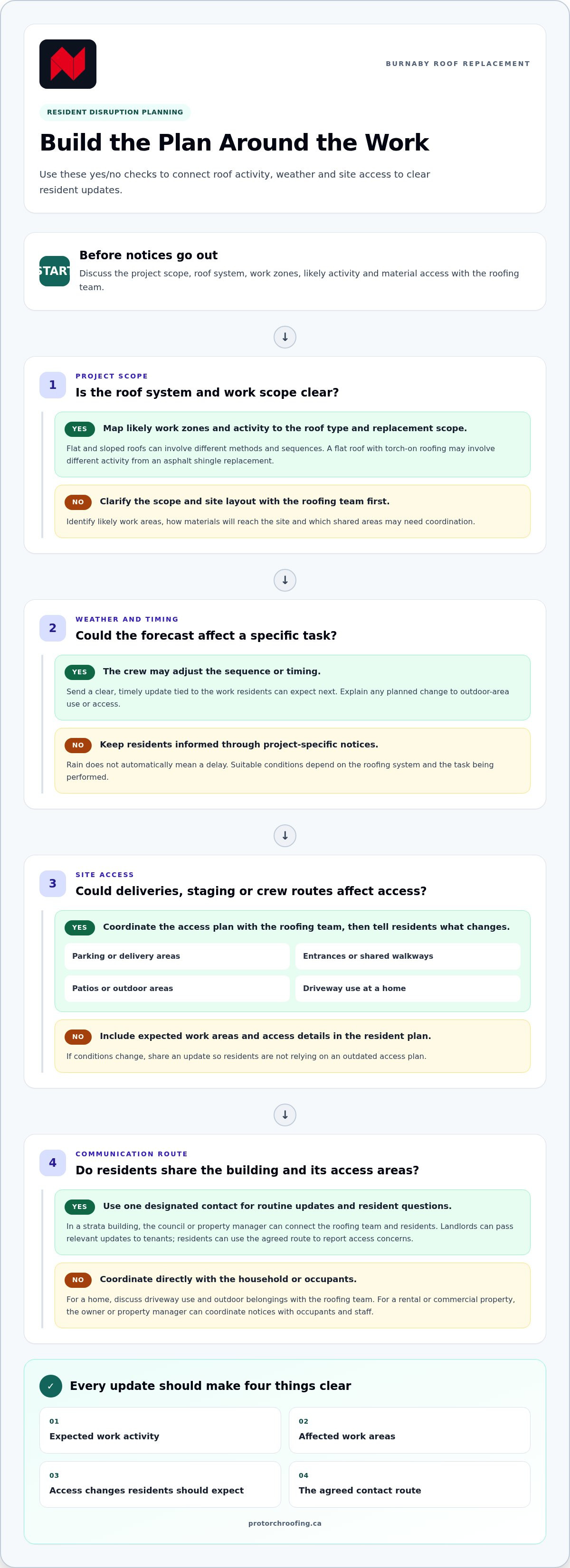
Prepare residents before roof replacement with a practical communication checklist
A clear notice helps residents prepare without overstating what can be predicted. Share the known scope and best available schedule information, explain which areas may be affected, and tell people where to direct questions. Avoid promising exact dates, noise levels, or uninterrupted access. Those details can change as the project develops.
Use this sequence to organize communication from early planning through completion:
Confirm the project scope and contact.
Coordinate with the roofing team on the planned work, expected activity, and areas that may be affected. Choose one property contact to distribute updates and gather questions, so residents know where information comes from.
Prepare the initial notice.
Describe the roof work in plain language and share the best schedule information available. Identify known considerations for entrances, parking, patios, or shared areas. Make clear that dates and plans may change as work conditions develop.
Choose how residents will receive information.
Use channels already familiar to the building, such as posted notices, email, or a resident portal where available. For a multi-unit property, consider how tenants and owners will both receive relevant updates. Keep the contact route easy to find.
Explain what residents may need to do.
If a particular area could be affected, state what residents should expect and when you will share more detail. Avoid vague instructions. For example, identify the entrance or parking area involved rather than saying only that “access may change.”
Update messages when plans change.
If weather or work sequencing affects the schedule, share the change promptly through the established channels. Keep the wording consistent across notices, email, and resident portals. Record recurring questions so the next update can address them directly.
Close the communication loop.
Once the work is complete, share a completion update and explain whether temporary access arrangements have ended. This final message helps residents understand what has changed and brings project communication to a clear close.
A useful resident notice states the work, the best available timing, affected areas, possible access changes, and the contact for questions. This checklist gives residents practical context without implying that every detail is fixed.
Keep updates useful as work progresses
Property managers and strata contacts can make each message easier to act on by separating confirmed information from possible changes. If the schedule shifts, state what changed and what residents should do differently, if anything. Do not repeat the original notice without explaining the update. This keeps expectations grounded in current project information and supports managing resident disruption during roof replacement Burnaby.
Pro Torch Roofing is a family-owned Burnaby roofing contractor with over 25 years of experience. A clear discussion of the roof scope, occupancy, and site access can help property decision-makers plan resident communication around the work. Request a roof replacement quote to start planning for your property.
Plan a Burnaby roof replacement with an experienced local roofing contractor
Resident communication works best when it is based on a clear understanding of the roof project. The property team and roofing contractor can connect the building’s needs with the work planned, the areas crews need to reach, and the information residents will need. This does not remove every inconvenience, but it gives everyone a practical foundation for setting expectations.
What should the roofing assessment clarify for property decision-makers?
When discussing the project, consider the roof’s condition and structure, the replacement scope, site access, and the roofing system selected for the building. These details help shape the work plan and what residents may see around the property. A sloped roof with asphalt shingles and a flat roof with torch-on roofing, for example, involve different systems and may call for different planning.
Property decision-makers can also clarify who will share updates, how questions will be routed, and which site constraints could affect the work. A strata council may need to consider shared access, while a commercial property may need to account for entrances and operating routines. Pro Torch Roofing provides residential and commercial roofing services, with project scope shaped around the property’s needs.
What are the next steps for a Burnaby roof replacement?
Before requesting a quote, gather the details that will help describe the property and its priorities:
Property basics
Note whether the building is a home, strata property, or commercial site, along with any relevant roof information.
Roof concerns
Describe known issues and what prompted the replacement discussion.
Occupancy considerations
Identify shared entrances, parking, outdoor areas, operating routines, and the person coordinating resident communication.
This information helps frame a focused conversation about the roof and how the project may affect people using the building. The roofing team can discuss the project scope with the property decision-maker, who can then align resident communications with the work plan. Clear roles and realistic expectations are important parts of managing resident disruption during roof replacement Burnaby, particularly in an occupied building.
Pro Torch Roofing is family-owned and based in Burnaby, serving Vancouver, West Vancouver, North Vancouver, and the Lower Mainland. With over 25 years of experience, the team brings local residential and commercial roofing knowledge to project discussions. A considered plan can protect the building while acknowledging that some noise, activity, or changes to access may be part of the work.
To discuss your property and next steps, request a roof replacement quote. Sharing the roof concerns and occupancy needs at the outset helps focus the conversation on a suitable, project-specific approach.
Set the project up for a more confident start
Before work begins, make resident communication part of the roof-replacement plan, not an afterthought. Decide who will share updates, how residents can raise concerns, and how changes will be communicated if the work plan shifts. This gives everyone a clearer point of reference while the roofing team focuses on protecting the building.
For property decision-makers, managing resident disruption during roof replacement Burnaby starts with understanding the property’s needs and turning them into a practical project scope. A focused discussion about the roof, occupancy, and site constraints can help establish what to plan for and where coordination matters most. Disruption cannot always be avoided, but thoughtful preparation can help residents feel informed and support a more orderly project.
Pro Torch Roofing works with residential and commercial properties across Burnaby, Vancouver, West Vancouver, North Vancouver, and the Lower Mainland. If you are ready to discuss your building and its roofing needs, request a roof replacement quote to take the next step.
Frequently Asked Questions
How do you reduce noise during a roof replacement in an occupied building?
Coordinate with the roofing team to understand which tasks may create the most noticeable sound, then share that information with residents. If someone works from home or has a particular noise concern, the property contact can raise it during planning. Managing resident disruption during roof replacement Burnaby means setting realistic expectations and sharing updates, not promising that roofing work will be quiet. Residents can plan calls or quiet activities around the information provided.
How much notice should residents receive before roof replacement begins?
There is no single notice period that suits every building or project. Share information as soon as the scope and useful schedule details are available, then update residents if those details change. A strata building may need more coordination to reach owners and tenants than a single household. Even if the start date is still being refined, an early notice can explain what is known, what remains subject to change, and where residents can find updates.
Can residents stay in their homes during a roof replacement?
Residents can often remain in their homes, but whether that is practical depends on the work, property access, and individual circumstances. A household with a home office, young children, or a person sensitive to noise may want to plan for periods of activity nearby. Residents should follow project-specific instructions from the property contact and raise concerns early so they can be considered alongside the work plan.
What should a strata council tell residents before roofing work starts?
A strata council should explain what the project involves, which parts of the property could be affected, and how residents will receive updates. Include the name or role of the designated contact and explain how to report an access concern. If a resident relies on a particular entrance or parking area, invite them to raise that need before work begins so the property team can consider it during planning.
What happens if rain delays roof replacement in Burnaby?
If rain affects a task or the work sequence, the schedule may need to change. The roofing team and property contact can share revised information as it becomes available, rather than guessing at a new completion date. Residents should watch for updates through the building’s usual communication channels and avoid relying on an older notice once plans have changed. The effect of rain depends on the roofing system and the work underway.
Can residents use balconies, patios, or shared areas during roof work?
Use depends on which areas are affected by the project at a given time. A balcony below a work area, a patio near material access, or a shared path may be subject to temporary changes. Follow posted or direct project instructions, and do not assume an area is available simply because work is not happening directly overhead at that moment. If access information is unclear, contact the property’s designated project representative.
Who should residents contact if roofing work affects access to their unit?
Residents should contact the strata council, property manager, landlord, or other designated building representative identified in project notices. This person can record the issue and coordinate a response with the roofing team. For example, if a resident finds their usual route affected, they should state which entrance or access point is involved and when they need to use it. That detail helps the property contact communicate the concern clearly.
