

How to Prepare Your Roof for Winter in Vancouver: A 2026 Expert Guide
A single clogged drain or a loose piece of perimeter flashing is all it takes for a Vancouver atmospheric river to turn your living room into an unexpected construction zone. You likely already know that our Pacific Northwest winters are harder on a structure than almost anywhere else in Canada. The constant cycle of freezing and thawing, paired with relentless heavy rainfall, puts immense hydraulic pressure on your roofing system. It's natural to feel a sense of dread when the first storm clouds gather, especially if you're unsure whether your home is truly ready for the seasonal deluge.
This 2026 expert guide will show you exactly how to prepare your roof for winter in Vancouver, moving beyond basic maintenance to ensure your home remains a dry, secure sanctuary. We'll provide you with the professional knowledge needed to avoid emergency leaks and the high costs of reactive repairs. From the specialized benefits of SBS membranes and torch-on systems to the critical importance of custom sheet metal, we'll preview the essential steps that protect your structural integrity. This guide offers the clarity you need to achieve a leak-free winter and the peace of mind that comes from a well-protected home.
Key Takeaways
• Identify the specific risks posed by the 2026 rainfall forecast and how to "harden" your home against intense moisture and temperature fluctuations.
• Follow a comprehensive checklist on how to prepare your roof for winter in Vancouver, focusing on critical tasks like flushing gutters and clearing organic debris.
• Learn the technical differences between flat and sloped roof drainage, including why torch-on membranes are a superior solution for our coastal climate.
• Understand the role of custom sheet metal flashing and attic ventilation in preventing ice dams and maintaining your roof's structural integrity.
• Recognize how professional maintenance catches small vulnerabilities early, ensuring peace of mind and preventing the need for emergency repairs.
Understanding Vancouver’s Winter Roofing Risks: Rain, Snow, and Wind
Winterizing is the methodical process of hardening your roof against the extreme moisture and temperature fluctuations common in the Pacific Northwest. It's not merely a seasonal chore; it's a strategic effort to ensure the structural integrity of your home remains intact before the first major storm hits. Knowing how to prepare your roof for winter in Vancouver starts with understanding that our coastal climate is uniquely aggressive toward building materials. A roof that performs well in July can easily fail in December if it hasn't been properly reinforced for the months ahead.
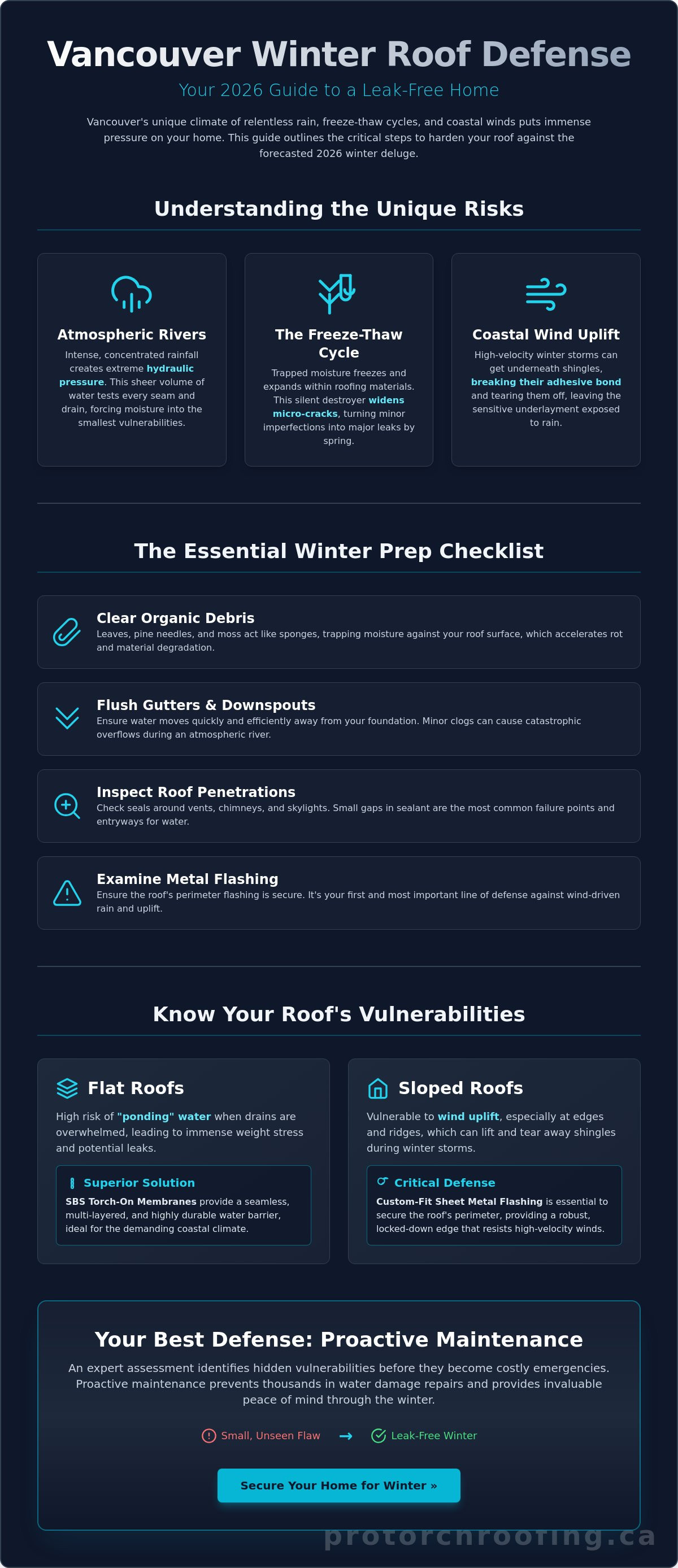
The 2026 winter forecast for the Lower Mainland indicates a significant increase in rainfall intensity. We're seeing more concentrated weather events that dump massive amounts of water in very short windows. This creates a heavy hydraulic load, where the sheer weight and volume of water test every seam, seal, and drain on your property. When this volume of water hits a surface, it doesn't just flow; it exerts pressure that can force moisture into the smallest vulnerabilities in your roofing materials and construction.
When temperatures dip below zero, any moisture trapped in tiny crevices or within the roofing system begins to expand. This "Freeze-Thaw" cycle is a silent destroyer of local properties. It physically widens existing cracks in asphalt shingles or aging membranes, turning minor imperfections into major leaks by the time the next thaw arrives. Without a professional assessment, these micro-cracks are almost impossible for a homeowner to spot until they become an interior problem.
The Impact of Atmospheric Rivers on Local Drainage
Atmospheric rivers are narrow corridors of concentrated moisture that essentially act as fire hoses pointed at the BC coast. These extreme rainfall events can easily overwhelm standard gutter systems that aren't perfectly clear. On flat roofs, the pressure placed on scuppers and drains is immense during these storms. If water cannot exit the roof fast enough, it pools, creating "ponding" that can breach even a high-quality SBS membrane. Atmospheric rivers specifically challenge Vancouver roof integrity by delivering a volume of water that exceeds the design capacity of traditional drainage systems, turning minor clogs into catastrophic failures.
Wind Uplift and Shingle Damage
Winter windstorms, particularly in exposed areas like West Vancouver and North Vancouver, pose a different threat to your home's safety. High-velocity winds create "wind uplift," which can get underneath shingles and break their adhesive bond. Once a shingle is lifted, it's easily blown off, leaving the sensitive underlayment exposed to the rain. This is why perimeter flashing is so vital; it acts as your first line of defense, securing the edges of your roof where wind speeds are highest. Ensuring your flashing is secure and your shingles are bonded is a key part of how to prepare your roof for winter in Vancouver.
The Essential Winter Prep Checklist: Gutters, Debris, and Moss
Preparation is the difference between a dry home and a midnight emergency. When homeowners ask how to prepare your roof for winter in Vancouver, the first step always begins with a thorough removal of organic debris. Accumulated leaves, pine needles, and twigs do more than just look untidy; they act as a biological sponge that traps moisture against your roofing material. This constant dampness accelerates rot and can degrade even the most durable shingles or membranes over time. Clearing this material allows the surface to dry between rain events, which is vital for long-term structural integrity.
Beyond debris, you must examine every roof penetration. Chimneys, plumbing vents, and skylights are the most common failure points during a heavy freeze. Check the sealants and flashing around these areas for signs of cracking or pulling away. A small gap that seems insignificant in September can easily become a major entry point for water when snow sits on the roof and begins to melt. Maintaining these transitions is a core part of protecting your home from the seasonal hydraulic load.
Professional Gutter and Downspout Maintenance
Simply scooping out handfuls of leaves isn't enough to secure your home against an atmospheric river. A functional system requires proper slope and alignment to ensure water moves quickly away from the structure. If your gutters are sagging or pulling away from the fascia, they can't handle the volume of a coastal storm. Engaging in expert gutter repair ensures that water is directed safely to the ground rather than overflowing into your soffits or foundation. It's also critical to flush the entire system to ensure downspouts are clear all the way to the underground drain connection. Many local drainage issues stem from blockages at the perimeter drain level, a detail often overlooked in basic DIY cleaning.
Managing Moss and Algae Before the Freeze
Vancouver's damp climate makes moss and algae growth almost inevitable. While it might look harmless, moss roots can physically lift the edges of shingles or work their way into the seams of SBS membranes. Once the freeze hits, these roots expand, causing permanent damage to the waterproofing layer. According to BC Housing's roof maintenance guide, keeping the roof clear of such growth is essential for preventing premature failure. You should avoid high-pressure washing, as it strips the protective granules from your roof. Instead, use safe, professional removal techniques and preventative treatments that inhibit growth throughout the winter months. If you're concerned about the health of your roofing system, a professional roof maintenance assessment can identify these vulnerabilities before they escalate into costly repairs.
Flat Roof vs. Sloped Roof: Specific Winter Vulnerabilities
The strategy for how to prepare your roof for winter in Vancouver depends heavily on the pitch of your structure. While sloped roofs use gravity to shed rain and snow, flat roofs rely on a sophisticated waterproof membrane and a perfectly clear drainage path. Each system faces distinct challenges when the temperature drops. Understanding these mechanical differences allows you to focus your maintenance efforts where they matter most, ensuring your home or business remains secure throughout the season.
Ponding water is the primary threat to flat surfaces during a coastal winter. When water pools on a roof and goes through a freeze cycle, the resulting ice can physically expand and tear at the material. This is why torch-on roofing is the industry standard for Vancouver flat roofs. These systems utilize heat-welded SBS membranes that create a seamless, durable barrier capable of withstanding standing water. In contrast, sloped roofs using asphalt shingles rely on overlapping layers. While effective for shedding water, they're more vulnerable to wind uplift and shingle curling, which can expose the underlayment to the elements.
Winter Care for Torch-On and SBS Membranes
Before the heavy rains begin, you should inspect your torch-on system for "fish-mouthing," which refers to seams that have begun to lift or open. These small openings are prime targets for water ingress during an atmospheric river. It's equally vital to ensure all drains and scuppers are free of debris. If water can't exit the roof, the weight of the ponding water can cause structural stress. Maintenance for commercial roofing often involves checking larger-scale drainage systems and ensuring that perimeter flashing remains tightly sealed against high winter winds.
Sloped Roof Concerns: Shingles and Cedar Shakes
For sloped roofs, look for signs of granule loss or shingles that are brittle and curling at the edges. These symptoms indicate that the material is nearing the end of its lifespan and might not survive a harsh winter. Cedar shakes require even closer attention; they're highly susceptible to rot and moss growth in our damp climate. If your shakes stay saturated for months at a time, they'll eventually soften and fail. Many homeowners are now looking at metal roofing as a low-maintenance winter alternative for the Lower Mainland, as it sheds snow easily and won't support organic growth. Correctly identifying these issues is a fundamental part of how to prepare your roof for winter in Vancouver.
Beyond the Surface: Attic Ventilation and Custom Metal Flashing
While the visible roofing material acts as your primary shield, the components beneath and at the edges of your roof determine how well your home handles the winter. Understanding how to prepare your roof for winter in Vancouver requires looking at the systems that manage heat and seal complex joints. Many property owners focus solely on shingles or membranes, but attic airflow and custom metalwork are often what separate a dry home from one plagued by hidden moisture damage.
One common objection we hear is that a small, occasional leak isn't a priority until the spring. In our coastal climate, this is a dangerous assumption. A minor drip in December can saturate insulation and foster mold growth long before the weather warms up. By the time you see a stain on the ceiling, the structural rot may already be significant. Addressing these vulnerabilities early is the only way to maintain the long-term health and structural integrity of your property.
The Importance of Attic Airflow in a Damp Climate
Proper attic ventilation is essential for preventing ice dams and internal condensation. When heat is trapped in your attic, it creates a warm roof surface that melts snow from the underside. This water then runs down to the cold eaves and refreezes, creating a dam that forces water back up under your shingles. In Vancouver's damp air, poor ventilation also leads to "attic rain," where warm interior air hits the cold underside of the roof deck and condenses into droplets. Look for signs like frost on the rafters or peeling exterior paint near the roofline. A balanced system of intake and exhaust vents ensures your roof stays at a consistent temperature, protecting your home from these thermal stresses.
Custom Flashing: The Secret to a Leak-Free Winter
Generic, store-bought flashing often fails to provide an adequate seal against Vancouver’s wind-driven rain. Standard components simply can't account for the unique angles and transitions found on many local homes. Utilizing custom sheet metal allows for bespoke protection that is fabricated to fit your specific chimneys, valleys, and wall-to-roof transitions perfectly. Custom-fitted metal is superior for waterproofing high-risk areas because it eliminates the gaps and excessive caulking that typically fail during extreme weather events. This precision craftsmanship ensures that even the most complex architectural features remain watertight during an atmospheric river. If you're unsure about the state of your roof's transitions, you can book a professional assessment to identify areas where custom metalwork could improve your home's security.
Why Professional Maintenance is Your Best Winter Defense
While a basic visual check is a great first step, it can't replace the seasoned eye of a specialist. When considering how to prepare your roof for winter in Vancouver, professional intervention provides a level of security that DIY methods simply can't match. Our team brings over 25 years of local experience to the Burnaby and Vancouver markets, focusing on the long-term health and structural integrity of your property. We move away from high-pressure sales, prioritizing clear communication and transparent remedies that give you true peace of mind before the clouds roll in.
Investing in scheduled roof maintenance is significantly more cost-effective than dealing with a midnight emergency. Small vulnerabilities, like a hairline crack in a seal or a slightly loose piece of custom sheet metal, are easily fixed when caught early. If left until an atmospheric river arrives, these minor issues often lead to extensive roof repairs that involve interior damage and restoration costs. Proactive care ensures your home remains a dry sanctuary regardless of the weather outside.
What to Expect from a Pro Torch Inspection
A professional assessment is a methodical process. We conduct a detailed walk-through of all membranes, flashing, and drainage points to ensure every component is functioning as intended. You'll receive a transparent report on the current health and projected lifespan of your roof, allowing you to plan for the future without surprises. Additionally, we provide priority scheduling for our maintenance clients during extreme weather events, ensuring you aren't left waiting when the local demand for services peaks during a storm.
Protecting Your Investment and Structural Integrity
Your roof is one of the most significant investments in your property. Beyond immediate protection, a well-documented history of professional care adds measurable value to your Vancouver home or business. It demonstrates craftsmanship and a commitment to longevity that resonates with future owners. Don't wait for the first freeze to test your defenses. Contact Pro Torch Roofing today for a professional winter assessment and secure your property before the first major storm hits.
Secure Your Home Before the First Storm
Protecting your property from the relentless Pacific Northwest winter requires a disciplined, proactive approach. We've covered the essential steps on how to prepare your roof for winter in Vancouver, from clearing moss and organic debris to ensuring your attic ventilation is balanced. These technical remedies are critical for managing the hydraulic load of atmospheric rivers and preventing the destructive freeze-thaw cycles that can compromise your structure. By focusing on high-risk areas like custom sheet metal flashing and SBS membrane integrity, you ensure the long-term health and security of your home.
Pro Torch Roofing brings over 25 years of local Vancouver experience to every assessment. As a family-owned and operated business in Burnaby, we specialize in durable torch-on and SBS systems designed to withstand our specific coastal climate. Our methodical inspections provide the transparency and craftsmanship you need for total peace of mind. Don't wait for a leak to alert you to a problem. Get Your Roof Winter-Ready with a Professional Inspection from Pro Torch Roofing today. We're here to help you move into the winter season with confidence and security.
Frequently Asked Questions
When is the best time to prepare my roof for winter in Vancouver?
The ideal window for winterization is between late September and early November. You want to complete your maintenance before the first sustained atmospheric river or freeze cycle arrives. Clearing debris after the majority of leaves have fallen but before the rains become relentless ensures your drainage system is fully functional when it's needed most to protect your home's structural integrity.
Can I clean my own gutters, or should I hire a professional?
You can clean your own gutters if you have the proper safety equipment, but hiring a professional offers a more comprehensive assessment. A specialist doesn't just remove leaves; they check for proper slope, inspect downspout connections to the perimeter drain, and identify loose fasteners. Professional maintenance ensures the entire system can handle the heavy hydraulic load of a typical British Columbia winter storm without failing.
How do I know if my flat roof is ready for heavy winter rain?
Your flat roof is ready when all scuppers are clear and the SBS membrane seams are perfectly sealed. A key part of how to prepare your roof for winter in Vancouver is checking for "ponding" water. If water remains on the surface for more than 48 hours after a rainfall, your drainage is likely insufficient. This standing water can lead to leaks when it freezes and expands.
What are the signs that my roof needs repair before the first snow?
Look for brittle or curling shingles, cracked perimeter flashing, and granules accumulating in your gutters. Inside the home, check for water stains on ceilings or dampness in the attic. These signs indicate that your waterproofing layer is already compromised. Addressing these vulnerabilities now prevents a minor issue from becoming a major structural failure during a heavy snow load or a sudden thaw.
Are ice dams a common problem for homes in the Lower Mainland?
Ice dams are a frequent issue in Vancouver during cold snaps followed by snowfall. They occur when heat escapes into the attic and melts snow on the roof, which then refreezes at the cold eaves. This ice barrier forces melting water back up under your shingles or shakes. Ensuring your attic has balanced ventilation is the best way to keep the roof surface at a consistent temperature.
Does a new roof need winter maintenance?
Yes, even a brand new roof requires seasonal maintenance to ensure longevity. While the materials are in peak condition, organic debris can still clog drains and gutters within a single season. Regular checks prevent these environmental factors from causing overflows or moisture traps. Maintaining a clean roof surface is also often a requirement to keep your manufacturer's warranty in good standing through the winter months.
How often should I have my roof inspected in Vancouver?
You should have a professional inspection at least once a year, preferably in the autumn. Our coastal climate is uniquely aggressive, and an annual check is the most effective way to identify small issues before they become emergency repairs. This methodical approach is the most reliable strategy for how to prepare your roof for winter in Vancouver and extend the overall lifespan of your system.
What should I do if I find a leak during a winter storm?
If you discover a leak, clear the area of valuables and use a bucket to catch the water to prevent floor damage. Never attempt to climb onto your roof during a storm, as wet and icy surfaces are extremely dangerous. Contact a professional roofing company immediately for an assessment. They can often provide a temporary waterproofing remedy to protect your home until the weather allows for a permanent repair.
