

Flat Roof Ventilation Options in North Vancouver: A 2026 Property Owner's Guide
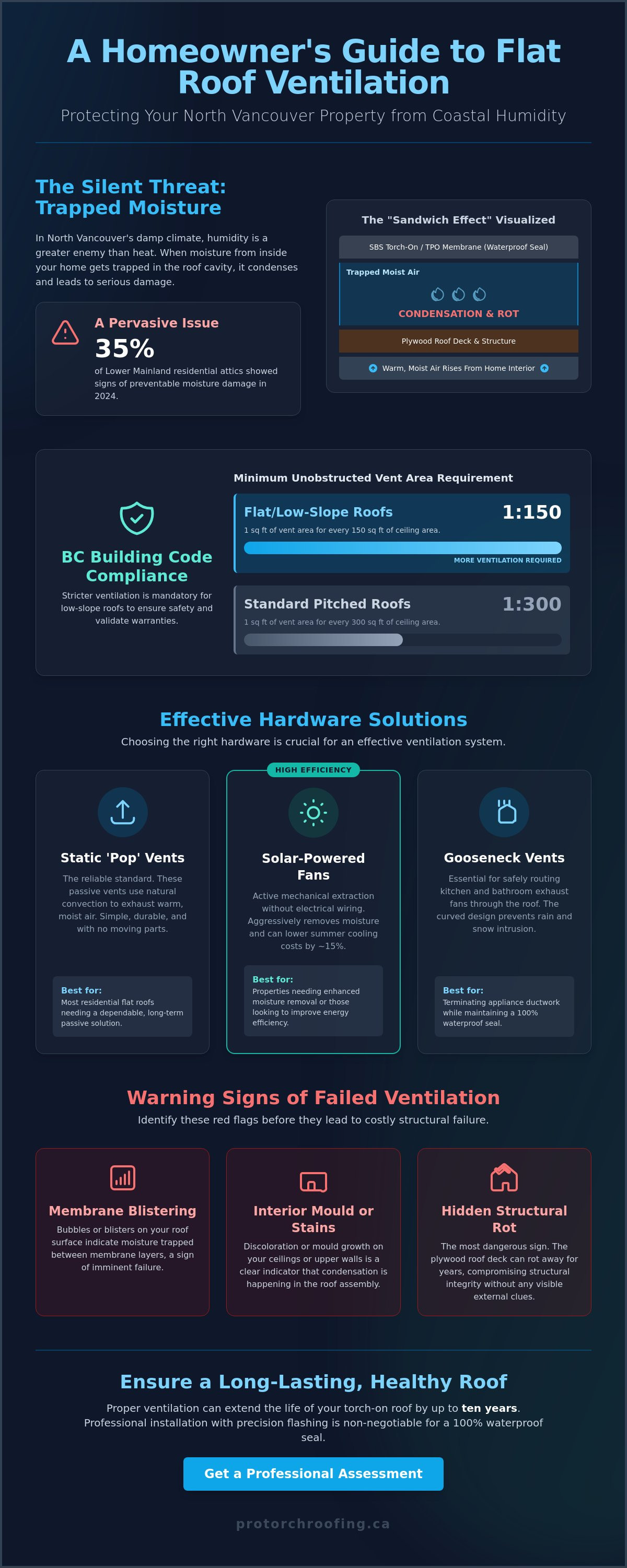
Did you know that nearly 35% of residential attics in the Lower Mainland showed signs of preventable moisture damage in 2024? For property owners in our damp coastal climate, trapped humidity is a silent threat that can lead to roof rot long before your membrane reaches its expected lifespan. It's common to feel hesitant about cutting into a perfectly sealed surface, but choosing the right flat roof ventilation options North Vancouver experts recommend is the only way to ensure long-term protection and structural integrity.
You likely want a roof that stays dry and mould-free without the constant worry of leaks from new penetrations. We understand that the technical differences between standard attic vents and specialized low-slope hardware can be confusing. This guide clarifies the most effective systems for our unique environment, helping you stay compliant with the 2026 BC Building Code's 1:150 ventilation ratio. We'll examine how specialized hardware like SBS-compatible passive vents and solar-powered systems can extend the life of your torch-on roof by up to ten years.
Key Takeaways
• Learn why North Vancouver's coastal humidity makes moisture management more critical than temperature control for your roof deck's health.
• Compare the most effective flat roof ventilation options North Vancouver owners use to satisfy the latest BC Building Code standards.
• Identify the specific red flags of trapped moisture, including membrane blistering and interior mould, before they lead to costly structural rot.
• Discover how to select hardware that integrates seamlessly with your specific roofing material, whether it's SBS torch-on or TPO.
• Understand the importance of precision flashing and custom sheet metal to maintain a 100% waterproof seal during any new vent installation.
Why Flat Roof Ventilation is Critical in North Vancouver's Climate
Flat roof ventilation is the process of creating continuous air exchange within the unconditioned cavities of your roof structure. In our region, this isn't just a recommendation; it's critical in North Vancouver's climate. Unlike pitched roofs with large attics, flat roofs have tight, confined spaces where air can easily stagnate. When air stops moving, moisture starts building up.
When we install a high-quality SBS torch-on membrane or a TPO system, we create a perfect waterproof seal. However, that seal works both ways. If moisture from your home's interior migrates into the roof cavity through small bypasses, it becomes trapped between the warm ceiling and the cold roof deck. This is often called the 'sandwich' effect. Without the specific flat roof ventilation options North Vancouver homes require, this trapped humidity condenses into liquid water. It eventually soaks the plywood deck, leading to structural damage that stays hidden until it's too late.
Our local geography makes this problem worse. North Vancouver sits in a mountain shadow that keeps humidity levels elevated throughout the year. This constant dampness creates a unique condensation risk that isn't as prevalent in drier parts of the province. When the temperature drops at night, the air inside your roof cavity reaches its dew point quickly. Without proper airflow, your roof is essentially sitting in a permanent damp state, even during the summer months.
Managing Humidity vs. Heat
Many property owners associate vents with cooling a hot house in July. On the North Shore, our primary concern is actually moisture management rather than heat relief. Effective ventilation works alongside your vapour barrier to ensure that any stray humidity is purged before it can settle. If moisture lingers, it leads to structural deck rot. This decay weakens the roof's integrity and can eventually cause your SBS membrane to blister or delaminate, significantly shortening the lifespan of your investment.
BC Building Code Requirements for Low-Slope Roofs
Compliance with the BC Building Code is essential for both safety and warranty protection. For low-slope roofs with a slope less than 1:6, the code requires a minimum unobstructed vent area of at least 1/150 of the insulated ceiling area. This is a much stricter requirement than the 1:300 ratio allowed for standard pitched attics. Meeting these standards for flat roof ventilation options North Vancouver ensures your property remains up to code and that your roofing membrane warranty stays valid. Local municipal bylaws also require specific penetration seals to prevent leaks, making professional installation a necessity for long-term security.
Top Hardware Options for Flat Roof Ventilation
Choosing the right hardware is the next step in protecting your roof deck from the coastal humidity described earlier. There are several flat roof ventilation options North Vancouver property owners can utilize, ranging from simple passive pipes to advanced solar-powered extraction units. Each piece of hardware serves a specific purpose in maintaining the structural integrity of your SBS or TPO membrane.
Static 'Pop' vents are the dependable standard for most residential flat roofs. These passive units rely on the natural rise of warm, moist air to exhaust humidity from the roof cavity. While they lack moving parts, their simplicity makes them highly reliable over decades. For multi-layer systems, we also utilize breather vents. These small, low-profile units are designed specifically to release moisture trapped between membrane layers, which prevents the blistering and bubbling that can lead to premature failure of torch-on systems.
For properties requiring more aggressive moisture removal, solar-powered attic fans are an excellent choice. These units provide active mechanical extraction without the need for complex electrical wiring. In our region, solar vents can help lower cooling costs by approximately 15% during summer heatwaves while providing consistent airflow during the damp winter months. If you are unsure which hardware fits your specific structure, our team can help you select the right system during a roof maintenance assessment.
Static Vents and Goosenecks
Gooseneck vents are essential for routing kitchen and bathroom exhaust through a flat roof. These vents feature a curved neck that prevents rain from entering the ductwork. In North Vancouver, we pay close attention to installation height. Vents must be tall enough to remain unobstructed by heavy snow loads during our winter storms. We prioritize aluminum hardware over galvanized steel for North Shore properties. Aluminum provides superior resistance to the corrosive salt air that drifts inland from the Burrard Inlet, ensuring your flashing and vent hoods don't rust prematurely.
High-Efficiency Aura and Turbine Vents
Aura ventilators are a high-performance alternative to standard static vents. These units use the Venturi effect to create active suction whenever the wind blows, pulling damp air out of the roof cavity without using electricity. Their unique design is particularly effective at preventing rain back-drafting during the intense wind and rain events common on the North Shore. For modern architectural homes, Aura vents offer a low-profile aesthetic that provides the necessary flat roof ventilation options North Vancouver building codes require without disrupting the clean lines of a contemporary roofline. Turbine vents offer similar wind-driven benefits, though they require more frequent maintenance to ensure the internal bearings remain quiet and functional in our wet climate.
Choosing the Right System for Your North Shore Property
Selecting the most effective setup for your building involves more than just picking a product off a shelf. It requires a strategic look at how your structure breathes. The flat roof ventilation options North Vancouver owners choose must account for the specific volume of air trapped within the roof assembly. Residential homes with smaller cavities often thrive with high-quality passive systems, while larger commercial structures usually require mechanical assistance to move air across vast, flat expanses.
Your choice of roofing membrane also dictates your hardware needs. For example, SBS torch-on systems require specialized perimeter flashing and custom sheet metal details to ensure the vent base is perfectly integrated into the bitumen layers. TPO or EPDM membranes use different heat-welding or adhesive techniques. Beyond the membrane, your insulation type plays a major role. If your roof uses Rockwool, which has a higher vapour permeability than closed-cell Polyiso, your ventilation system must be robust enough to handle the increased moisture transfer through the assembly.
A cost-benefit analysis is another vital factor. Passive vents are cost-effective and require zero maintenance. However, active solar-powered vents are often the better long-term investment for North Shore properties sitting in high-humidity mountain shadows. They provide the consistent extraction needed to prevent deck rot, even when there's no wind to drive a turbine or Aura vent.
Residential Flat Roof Considerations
In residential settings, we typically distinguish between 'hot roof' and 'cold roof' designs. In North Vancouver's climate, a 'cold roof', which features a ventilated air space, remains the gold standard for preventing condensation. We often use custom sheet metal to create low-profile vent housings that match your home's trim. This provides a clean, architectural look while maintaining structural integrity. We also consider acoustics. In quiet North Van neighbourhoods, solar-powered fans are preferred because they operate almost silently compared to older mechanical units.
Commercial and Multi-Family Requirements
Commercial buildings face higher internal moisture loads, particularly if they house laundry facilities, commercial kitchens, or high-occupancy offices. These buildings require large-scale airflow patterns to ensure no "dead zones" exist where moisture can settle. For industrial-scale projects, we design systems that utilize a combination of intake and exhaust points to create a balanced pressure environment. For a deeper look at large-scale flat roof assemblies, see our commercial roofing Vancouver guide for system-wide details.
Warning Signs of Failed Flat Roof Ventilation
Identifying a ventilation failure isn't always straightforward. Most property owners on the North Shore assume a wet ceiling indicates a puncture in their membrane. While leaks are common, many issues actually stem from internal condensation. When airflow is restricted, the unconditioned space beneath your roof deck becomes a breeding ground for wood-destroying fungi. If you notice a "musty" smell on your top floor or inside storage closets, it's a strong indicator that humidity is lingering where it shouldn't.
During North Vancouver cold snaps, watch for unusual ice patterns along the roof edges. While flat roofs don't have the same slopes as shingles, poor air exchange allows heat to escape and melt snow. This water then refreezes at the perimeter, potentially damaging your custom sheet metal flashing and perimeter seals. A "spongy" feel when walking on the roof is another critical red flag. This softness suggests the plywood deck has lost its structural integrity due to prolonged dampness, often referred to as roof rot. At this stage, evaluating the flat roof ventilation options North Vancouver specialists provide is essential to prevent a total structural failure.
Membrane Blistering and Delamination
Blisters are a classic sign of failed ventilation in SBS systems. When water vapour is trapped under the membrane, it expands as the sun warms the roof surface. This internal pressure forces the bitumen layers apart, creating visible bubbles or "blisters" in the torch-on material. If you see these, simple surface patches won't solve the problem because the moisture is coming from beneath the deck. It's vital to address the airflow before the membrane delaminates completely. You can learn more about torch on roofing maintenance to understand how these systems should behave when properly ventilated.
Condensation and Mould Audits
We often use thermal imaging during our inspections to identify hidden moisture pockets that haven't yet caused a visible drip. This technology is vital because North Vancouver's high rainfall often masks ventilation issues. You might think a dark spot on the ceiling is a leak from last night's storm, but it could be "roof sweat" caused by stagnant, humid air. A mould audit can confirm if the spores are growing due to external water entry or internal humidity. If your roof is sweating, we can help you determine the best path forward with a professional roof maintenance assessment to protect your property's long-term health.
Professional Installation: The Pro Torch Advantage
The right hardware is only half the battle. Even the most advanced flat roof ventilation options North Vancouver property owners select will fail if the installation isn't handled with technical precision. At Pro Torch Roofing, we treat every roof penetration as a potential vulnerability that requires expert craftsmanship to remain 100% waterproof. Our approach centers on integrating new hardware into your existing SBS or TPO membrane without compromising the system's structural integrity.
We utilize custom sheet metal solutions to create seamless transitions between the vent and the roof surface. Standard off-the-shelf flashing often fails to meet the rigorous demands of North Vancouver's rain-heavy climate. By fabricating our own perimeter flashing and vent bases, we ensure a perfect fit that prevents water ingress even during wind-driven storms. Our methodical process includes a 25-point ventilation audit. This assessment looks at your entire roof assembly to ensure airflow is balanced and meets current building codes, providing you with peace of mind for decades.
Our Specialized Torch-On Expertise
Installing a vent in an SBS torch-on system is a high-stakes task. The 'burn' or heat-welding process around the vent flange is the most critical part of the installation. If the membrane isn't heated correctly, the seal will eventually delaminate, leading to hidden leaks. Our technicians are disciplined experts in managing these heat-welded connections. We ensure the bitumen flows perfectly around the base of your chosen flat roof ventilation options North Vancouver, creating a permanent, monolithic bond. You can trust our roofing contractor Burnaby team to bring this same level of specialized regional knowledge to every project on the North Shore.
Next Steps for North Vancouver Property Owners
Protecting your investment starts with a clear understanding of your roof's current health. If you've noticed any of the warning signs mentioned earlier, such as musty smells or membrane bubbling, it's time for a professional assessment. We don't believe in high-pressure sales. Instead, we provide a transparent technical remedy based on a thorough inspection of your roof and attic spaces. Our goal is to ensure your property remains a safe, dry, and secure environment for years to come.
Once the audit is complete, you'll receive a detailed quote that outlines the necessary hardware and installation steps to ensure your roof deck stays dry and rot-free. We're committed to the long-term safety of your home or business and the craftsmanship of every seal we make. Schedule your professional ventilation assessment with Pro Torch Roofing today.
Secure Your Roof's Future with Expert Ventilation
Managing humidity is the most critical step you can take to protect your property's structural integrity. We've seen how the unique North Shore climate turns trapped moisture into a silent threat, making the right flat roof ventilation options North Vancouver experts recommend essential for every building. Whether you're upgrading an existing system or installing a new SBS torch-on membrane, proper airflow ensures your roof deck remains dry and your warranty stays valid under the 2026 BC Building Code.
As family-owned local North Vancouver experts with 25 plus years of Lower Mainland experience, we focus on craftsmanship and technical precision. Our team specializes in custom sheet metal and specialized torch-on systems designed to withstand our heavy coastal rainfall. Don't leave your home's safety to chance or wait for visible signs of rot to appear. Request a Professional Flat Roof Ventilation Audit today to receive a methodical assessment of your roof's health. Proactive care is the best way to guarantee the longevity and security of your investment for years to come.
Frequently Asked Questions
Does a flat roof really need ventilation if there is no attic?
Yes, flat roofs absolutely require ventilation to prevent the 'sandwich' effect where moisture is trapped between the ceiling and the roof deck. Even without a traditional attic, humidity from your home's interior migrates into the small roof cavity. Without consistent airflow, this condensation leads to structural rot and mould. In North Vancouver's damp climate, this air exchange is the only way to protect the plywood deck beneath your membrane.
Can I add more vents to an existing torch-on roof without replacing it?
You can certainly add vents to an existing torch-on roof without a full replacement. This process involves precision cutting through the SBS membrane and deck, followed by the installation of new hardware with custom sheet metal flashing. The key is ensuring the new 'burn' around the vent base creates a monolithic, waterproof seal with the existing layers. This maintains the system's integrity while immediately improving moisture extraction.
How many vents do I need for a 1,000-square-foot flat roof?
Under the 2026 BC Building Code, low-slope roofs require a minimum 1:150 ventilation ratio. For a 1,000-square-foot roof, you need approximately 6.67 square feet of net free vent area. The exact number of units depends on the specific flat roof ventilation options North Vancouver property owners choose, as different hardware models provide varying levels of airflow capacity. We calculate this precisely to ensure your building remains fully compliant.
Will installing vents in my flat roof cause it to leak during North Vancouver's heavy rains?
Vents won't cause leaks if they're installed with professional perimeter flashing and specialized torch-on techniques. We use custom sheet metal to ensure every penetration is taller than local snow load requirements and perfectly sealed against wind-driven rain. A properly flashed vent is just as waterproof as the rest of your SBS membrane, providing security even during the most intense North Shore storms.
What is the difference between a breather vent and a static vent?
A static vent focuses on exhausting air from the main roof cavity, while a breather vent is designed specifically to release moisture trapped between the layers of the roofing membrane itself. Breather vents are essential for preventing the blistering and delamination often seen in multi-layer torch-on systems. Using a combination of both ensures that your structural deck and your waterproofing layers remain dry and functional over the long term.
Is solar-powered ventilation worth the extra cost for a flat roof?
Solar-powered ventilation is often worth the investment because it provides active extraction without complex electrical wiring. These units can reduce cooling costs by approximately 15% during summer heatwaves and offer consistent moisture removal during damp winter months. For North Vancouver properties in mountain shadows where natural wind is limited, active solar fans are highly effective at preventing the premature roof failure that occurs when air stagnates.
How does poor ventilation affect my roofing manufacturer's warranty?
Poor ventilation can completely void your roofing manufacturer's warranty. Most major brands require proof that the roof assembly meets local building codes, including the required ventilation ratios, to honour a claim. If trapped moisture causes the membrane to fail 7 to 10 years earlier than expected, the manufacturer may attribute the damage to improper installation rather than a product defect, leaving you responsible for the repair costs.
Can I use standard shingle roof vents on my flat roof?
You shouldn't use standard shingle vents on a flat roof. Shingle hardware relies on a steep pitch to shed water and isn't tall enough to prevent water ingress on a flat surface. Specialized flat roof ventilation options North Vancouver experts use feature higher profiles and specific flanges designed to be heat-welded into SBS membranes. This ensures a 100% waterproof seal that standard shingle vents simply cannot provide on a low-slope surface.
