

Flat Roof Repair vs. Replacement in North Vancouver: The 2026 Property Owner’s Guide
Does a single persistent drip after a Lynn Valley downpour mean your entire roofing system has failed? Property owners on the North Shore often face the frustrating cycle of clearing debris from heavy tree cover only to find another leak during the next storm. Deciding on flat roof repair vs replacement North Vancouver requires more than a guess; it demands a technical understanding of how your roof handles our specific microclimate. You've likely heard conflicting opinions from various contractors, leaving you unsure if a patch is a permanent solution or just a temporary bandage for a failing structure.
We understand that your primary goal is the long-term protection and security of your home or business. This 2026 guide helps you accurately diagnose your roof's health using the industry-standard 25% rule and current RCABC guidelines. You'll learn how to evaluate your current SBS membranes and perimeter flashing to determine if a targeted repair can restore your peace of mind or if a full replacement is necessary to maintain structural integrity. We'll provide a clear technical roadmap so you can make an informed decision before the next heavy rain season arrives.
Key Takeaways
• Differentiate between a simple nuisance leak and critical structural saturation caused by the North Shore's unique hydraulic load.
• Use the 10-Year Rule to evaluate if your existing SBS membrane is a candidate for a cost-effective restoration rather than a full tear-off.
• Recognize the visual red flags of membrane failure, such as alligatoring and granule loss, that indicate a roof has reached the end of its functional lifespan.
• Evaluate how elevation and heavy evergreen debris impact the timeline for flat roof repair vs replacement North Vancouver on your specific property.
• Learn why a professional assessment of your perimeter flashing and insulation is the only way to guarantee long-term protection during the rainy season.
The North Shore Challenge: Why Flat Roof Decisions Are High-Stakes
North Vancouver isn't just another rainy suburb; it's a unique "hydro-zone" where precipitation levels often exceed 2,500mm annually. This intense volume of water puts immense pressure on every square inch of your property, but flat roofs bear the heaviest burden. Unlike sloped systems that shed water instantly, flat roof construction relies on perfect seals and precise drainage to prevent water from ingress. For many local property owners, the dilemma of flat roof repair vs replacement North Vancouver comes down to a race against the next atmospheric river. There's zero margin for error when the clouds open up over the mountains.
It's vital to distinguish between a "nuisance leak" and structural saturation. A nuisance leak is often localized, perhaps caused by a small puncture or a minor seal failure around a vent. Structural saturation, however, occurs when water has bypassed the SBS membrane entirely and begun to soak into the insulation and timber decking below. Once moisture is trapped within the roofing assembly, it doesn't just evaporate; it begins a slow process of degradation that can compromise the safety of your entire building. This is why property owners feel a justifiable sense of urgency. A flat roof is the most vulnerable component of a North Shore structure, and a single failed seam can lead to thousands of dollars in hidden damage.
The Hydraulic Load of the North Shore
Atmospheric rivers test the integrity of SBS torch-on seams like nothing else in British Columbia. In neighborhoods at higher elevations, such as the British Properties or Lynn Valley, the hydraulic load is even more severe due to increased snowfall and rapid freeze-thaw cycles. When water pools on a roof, known as "ponding," it exerts constant pressure on the membrane. If your perimeter flashing is damaged or improperly installed, wind-driven rain can be forced underneath the roofing material, bypassing your primary defenses entirely. We focus on ensuring these critical junctions remain watertight under the most extreme coastal conditions.
Financial Implications of Waiting Too Long
Delaying a necessary replacement often leads to a cascade of financial consequences. When a membrane fails, the resulting wet insulation loses its R-value, which can cause your energy bills to skyrocket as heat escapes through the roof. More importantly, persistent moisture leads to rot in the plywood decking. Replacing a membrane is a standard procedure, but rebuilding a rotted structural deck is a significantly more expensive undertaking. As a local British Columbia business, we've established ourselves as experts in Expert Roof Repair in Burnaby and North Vancouver, helping clients identify these risks before they turn into structural emergencies. Our goal is to provide a technical justification for every recommendation, ensuring you invest in the long-term health of your property rather than just a temporary fix.
When to Opt for Flat Roof Repair: Saving Your SBS Membrane
Not every leak demands a full tear-off. If the core SBS membrane remains flexible and well-adhered, a targeted repair can offer years of additional service. When weighing flat roof repair vs replacement North Vancouver, the "10-Year Rule" serves as a helpful technical benchmark. Most high-quality torch-on systems have a projected lifespan of 20 to 25 years. If your roof is still in its first decade and the issues are localized, a professional repair is often the most fiscally responsible choice for your property's longevity.
Minor flashing failures are frequently mistaken for total system failure. Perimeter flashing and custom sheet metal components can loosen over time due to thermal expansion or wind uplift. Replacing these specific components or resealing a single seam can restore the system's structural integrity without the expense of a full replacement. Adhering to FORTIFIED Roof standards ensures that these repairs meet rigorous resilience benchmarks. Consistent roof maintenance is the most effective way to catch these minor issues before they escalate into structural saturation. If you're unsure about the current state of your system, you can always request a professional assessment to get a clear picture of your roof's health.
Signs Your Roof Is a Candidate for Repair
Your roof is likely a candidate for repair if the damage is isolated rather than systemic. Common indicators include small punctures from fallen evergreen branches or mechanical service workers. You might also notice minor seam lifting that hasn't yet allowed water to reach the insulation. Often, what looks like a failing membrane is actually a clogged drain causing temporary backups. In these cases, clearing the debris and reinforcing the area around the drain can solve the problem entirely. We focus on identifying these specific "nuisance" issues to save you from unnecessary replacement costs.
The Professional Repair Process
A professional repair involves more than just a quick patch. We use specialized SBS patches that are thermally fused to the existing membrane for seamless integration. This process reinforces critical points like skylight curbs and vent stacks where leaks are most likely to occur. Many property owners attempt "DIY" liquid coatings, but these often fail in the North Vancouver climate. Our high humidity and constant rainfall prevent many retail products from curing properly. A torch-applied SBS patch provides an immediate, waterproof bond that can withstand the North Shore's heavy hydraulic load from the moment it's installed.
Knowing When It’s Time for a Full Roof Replacement
While a targeted patch can resolve minor issues, systemic degradation requires a more decisive approach to protect your property's structural integrity. When assessing flat roof repair vs replacement North Vancouver, we look for indicators that the membrane has reached the end of its functional life. Widespread "alligatoring"—a pattern of deep cracking that resembles reptile skin—and significant granule loss are clear signs that the bitumen has oxidized and become brittle. At this stage, the material can no longer expand and contract with North Shore temperature swings, leading to inevitable fractures. Water always wins eventually.
One of the most critical warnings is the presence of "spongy" or soft spots underfoot. This indicates that water has penetrated the membrane and saturated the insulation below. Trapped moisture creates a breeding ground for mould and causes the timber decking to rot from the inside out. In a professional context, commercial roofing Vancouver standards often mandate a full replacement once saturation is detected to mitigate liability and ensure the safety of occupants. Continuing to patch a saturated system is a temporary fix that ignores a growing structural threat.
Markers of a Failed Flat Roof
A roof is typically considered failed when it exhibits multiple active leaks across different areas of the building. This suggests the entire membrane is compromised rather than just a single seam. You should also watch for significant blistering or "bubbling" across the main field of the roof, which happens when air or moisture is trapped between layers. Internal signs like ceiling stains, persistent mould growth, or sagging drywall are often the final indicators that the external barrier has completely failed.
The Advantage of Modern Torch-On Systems
Modern 2-ply SBS systems offer vastly superior protection compared to older tar and gravel roofs. These membranes are engineered for flexibility and durability in the Pacific Northwest climate. During a replacement, we can also improve your roof's drainage by installing tapered insulation, which creates a slight slope to direct water toward the drains. The long-term ROI of a new torch on roofing installation is found in reduced maintenance costs and significantly lower energy bills due to better thermal performance.
Repair vs. Replace Decision Matrix
Investing $2,000 in a repair for a 20-year-old roof is often poor economy when that same capital could serve as a down payment on a system with a fresh 20-year warranty. Your decision should be based on the age of the system, results from a professional core sample, and your future plans for the property. Structural saturation occurs when the insulation and decking have absorbed so much moisture that they can no longer be dried out, making it the ultimate deal-breaker for any repair attempt.
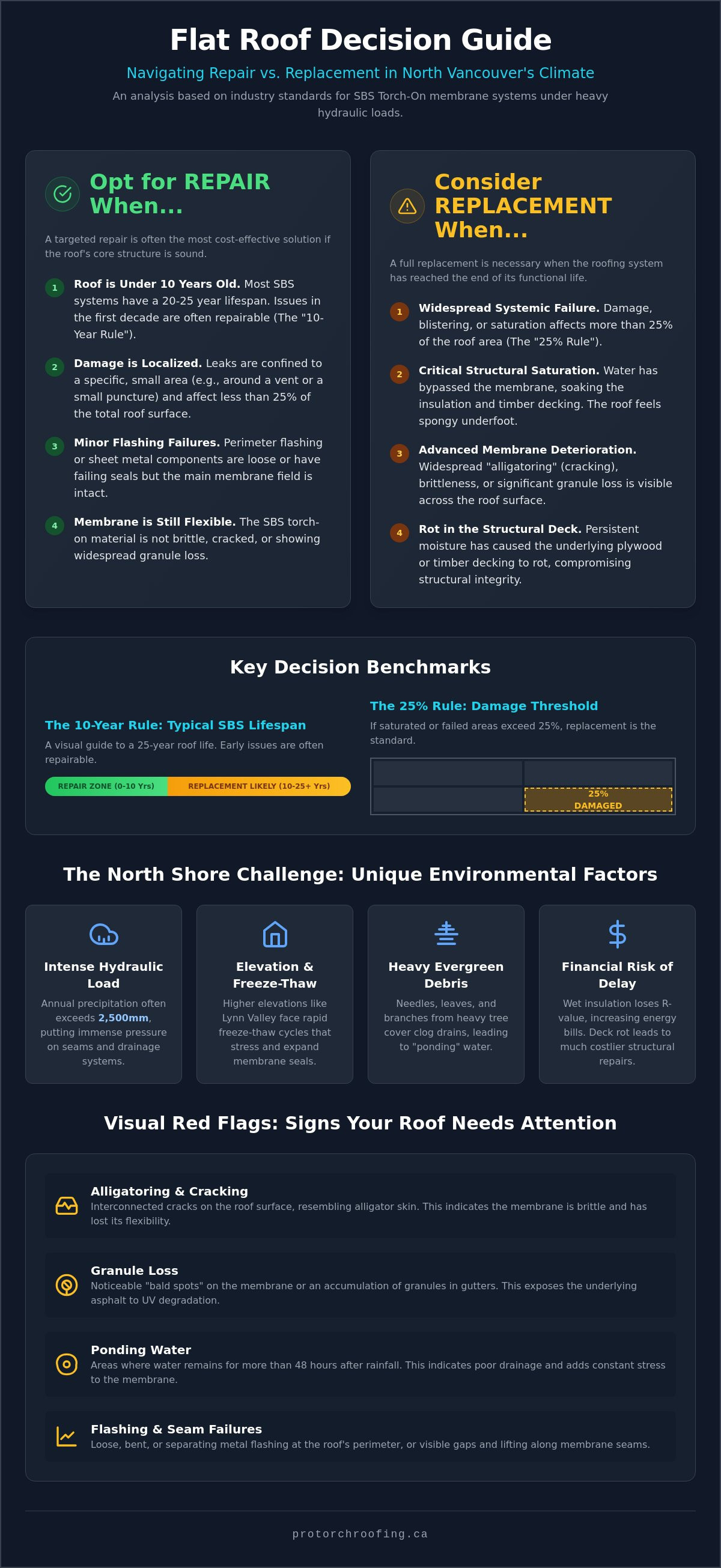
North Vancouver Microclimates: The Environmental Factor
North Vancouver's geography creates a set of environmental pressures that simply don't exist in the flatter parts of the Lower Mainland. When evaluating flat roof repair vs replacement North Vancouver, we must consider how your specific neighborhood influences material wear. A property in Upper Lonsdale deals with significantly higher snow loads and more frequent freeze-thaw cycles than one near the Lonsdale Quay. These conditions force membrane seams to expand and contract at a much higher rate, which can lead to premature seal failure if the system wasn't designed for mountain-slope thermal stress. The higher you go, the more the elements test your roof's integrity.
Moisture also lingers much longer on the North Shore. The proximity to the mountains creates a cooler, more humid environment where a damp roof may never fully dry out between autumn storms. This persistent wetness accelerates the growth of moss and algae, which can trap even more moisture against the SBS membrane. In contrast to properties in Burnaby or Vancouver, North Vancouver roofs require robust custom sheet metal solutions to combat wind-driven rain that pushes water uphill and under standard flashing. We focus on these regional details to ensure your roof survives the local microclimate rather than just meeting basic building codes.
Managing Debris and Drainage
The "Tree Canopy Effect" is a primary cause of flat roof failure in neighborhoods like Lynn Valley and Deep Cove. Hemlock and cedar needles are small enough to bypass standard drain covers, creating dense, peat-like blockages in your plumbing. Because of this, North Van flat roofs often require oversized drains and scuppers to handle both the volume of water and the inevitable debris load. We custom-fabricate perimeter flashing and drainage components to ensure heavy run-off is managed efficiently, preventing the ponding water that leads to structural damage. Keeping these pathways clear is vital for the safety of your building.
Elevation and Thermal Stress
Elevation changes the physics of roofing. On the mountain slopes, rapid temperature swings stress the molecular bonds of your roofing material. SBS (Styrene-Butadiene-Styrene) membranes are the superior choice here because of their exceptional thermal flexibility; they remain elastic even when temperatures drop below freezing. High-elevation roofs also face more intense UV exposure, which can bake the oils out of a membrane and cause it to become brittle. Selecting a system with superior UV protection and thermal resilience is essential for long-term security. If your roof is struggling under these environmental loads, you can schedule a professional site assessment to determine the best path forward for your property.
The Pro Torch Approach: Trusted Flat Roofing in North Vancouver
ProTorch Roofing brings a disciplined, methodical approach to every project we undertake on the North Shore. We understand that the decision regarding flat roof repair vs replacement North Vancouver is a significant financial commitment that impacts the long-term safety of your property. Our team draws on over 25 years of experience serving the Lower Mainland to provide property owners with the technical clarity they need. As a family-owned roofing contractor in Burnaby, we operate with a deep sense of accountability and community trust. We move away from high-pressure sales tactics, focusing instead on a peace of mind approach that prioritizes the structural integrity and security of your home or business.
Our commitment to transparent communication means we provide you with the facts first. We believe that a well-informed client is a confident client. By blending specialized industry knowledge of SBS membranes and custom sheet metal with accessible, benefit-driven advice, we ensure you understand exactly why a specific remedy is recommended. This local British Columbia expertise allows us to address the unique hydraulic loads and environmental stresses discussed throughout this guide, ensuring your roof is prepared for the specific microclimates of the North Shore mountain slopes.
Our Inspection and Diagnostic Process
We utilize a rigorous diagnostic process to remove the guesswork from your roofing decision. This often includes core sampling, a technical method where we extract a small section of the roofing assembly to check for hidden moisture within the insulation or rot in the plywood decking. This evidence-based approach allows us to provide a detailed report that helps you choose the most cost-effective path forward. Whether we are reinforcing your perimeter flashing or installing a new 2-ply torch-on system, our craftsmanship is backed by the Pro Torch guarantee. We focus on the fine details of torch-on roofing to ensure every seam is fused perfectly, providing a waterproof barrier that stands up to the heaviest Lynn Valley downpours.
Ready to Protect Your Property?
Taking the next step to secure your property is simple and stress-free. When you book a professional North Vancouver assessment, our experts arrive ready to conduct a thorough review of your roof's current health and drainage efficiency. We understand that roofing projects can be disruptive, so we have refined our operational flow to minimize noise and mess for both our commercial and residential clients. Our goal is to provide a seamless experience from the initial inspection to the final walkthrough. Your property deserves the highest standard of protection, and we are here to provide the dependable service and professional craftsmanship required to keep your building dry and secure for years to come.
Secure Your Property Against the North Shore Elements
Deciding on flat roof repair vs replacement North Vancouver is a choice that defines your building's resilience for the next decade. Whether you are managing the heavy debris of Lynn Valley or the intense thermal stress of Upper Lonsdale, your roof requires a technical solution tailored to its specific condition. We've explored how identifying structural saturation early can save your decking from rot, while timely SBS membrane repairs can extend the longevity of a fundamentally sound system. Understanding these distinctions is the first step toward maintaining the safety and structural integrity of your investment.
Our family-owned and operated team brings over 25 years of local experience to every inspection. We specialize in high-durability SBS torch-on systems designed to withstand the unique hydraulic loads of British Columbia. You don't have to face the next rainy season with uncertainty. Get Your Professional North Vancouver Flat Roof Assessment today to ensure your home or business remains dry and secure. We are committed to providing the disciplined craftsmanship and transparent communication you need to feel confident in your roof's protection.
Frequently Asked Questions
How long does a torch-on flat roof typically last in North Vancouver?
A high-quality SBS torch-on system typically lasts between 20 and 25 years in the North Vancouver climate. This longevity depends heavily on your property's elevation and proximity to the mountain slopes. Regular maintenance is vital to ensure your system reaches its full potential. Without consistent care, the intense rainfall and freeze-thaw cycles can shorten the functional life of even the best membranes.
Can I just patch a flat roof leak myself using store-bought sealant?
DIY liquid sealants are generally not effective for North Shore properties. High humidity levels and frequent rainfall often prevent retail products from curing properly. A professional torch-applied SBS patch provides an immediate, thermally fused bond that integrates with your existing system. This method ensures a permanent, waterproof seal that can withstand the local hydraulic load and provide long-term security.
What is ponding water, and is it always a sign I need a new roof?
Ponding water refers to standing water that remains on a roof surface for more than 48 hours after precipitation. While it isn't always an immediate sign for a new roof, it indicates a drainage problem that needs attention. Persistent ponding exerts constant pressure on membrane seams and can eventually lead to structural saturation if left unaddressed by a professional assessment.
How much more does a roof replacement cost in North Vancouver compared to Burnaby?
Projects in North Vancouver often involve different logistical requirements than those in Burnaby. While we don't provide specific pricing here, permit fees in the City of North Vancouver are calculated based on construction value. The varied terrain and stricter environmental considerations on the North Shore can influence the technical scope of a project. We provide detailed assessments to help you evaluate flat roof repair vs replacement North Vancouver based on your property's specific needs.
Does North Vancouver have specific bylaws for flat roof drainage?
North Vancouver adheres to the BC Building Code and local municipal bylaws regarding water management. All flat roofing must be installed with a minimum 2% slope to prevent standing water. This standard ensures that runoff is directed into approved drainage systems rather than accumulating on the structure. Proper installation of scuppers and drains is required to meet these technical standards and protect the building's integrity.
How does heavy tree cover affect my flat roof warranty?
Heavy tree cover requires more frequent maintenance to keep your warranty in good standing. While the trees themselves don't void coverage, damage caused by neglected debris blockages might not be covered by manufacturers. Clearing hemlock and cedar needles regularly ensures that water moves freely toward drains, protecting the longevity and craftsmanship of your roofing system throughout its service life.
Is it possible to install a new torch-on roof over an existing one?
Installing a new torch-on membrane over an existing one is technically possible if the original system is dry and stable. We use core sampling to verify that the underlying insulation isn't holding moisture. If saturation is present, an overlay will trap water and lead to rot. A full tear-off is generally recommended to ensure the long-term health and security of your property.
What should I do if my flat roof starts leaking during a major storm?
If a leak occurs during a storm, focus on protecting your interior assets and do not attempt to access the roof until conditions are safe. Once the weather clears, a professional inspection is required to determine the cause of the failure. We help property owners decide between flat roof repair vs replacement North Vancouver by identifying if the leak is a localized seal issue or a sign of systemic membrane failure.
