

Common Roofing Problems in the Lower Mainland: A 2026 Property Owner's Guide
Is your roof simply aging, or is it a victim of "Coastal Fatigue"? In our unique corner of British Columbia, the combination of persistent moisture and rapid temperature shifts creates a specific set of challenges that go far beyond standard wear and tear. If you've noticed green moss creeping across your shingles or felt the anxiety of a potential leak during a heavy November downpour, you aren't alone. These are the most common roofing problems in the Lower Mainland, and they require a specialized local approach to ensure your property's long-term health.
We understand that your home or business is your most significant investment, and protecting its structural integrity is our primary mission. You deserve the peace of mind that comes from knowing your shelter can withstand our demanding coastal climate. This guide identifies the vulnerabilities specific to our region, from compromised perimeter flashing to the biology of moss growth. We will provide actionable signs to look for during a DIY inspection and explain how modern solutions like high-quality SBS membranes and professional torch-on systems offer superior protection. By the end of this article, you'll have the confidence to address these issues before they turn into costly emergency repairs.
Key Takeaways
• Learn how high humidity and 160+ annual rainy days contribute to "Coastal Fatigue" on standard roofing materials.
• Identify common roofing problems in the Lower Mainland, from wind-damaged shingles to the structural risks posed by moss and algae growth.
• Discover the primary enemies of flat roofs, including ponding water and membrane punctures that often go unnoticed until it's too late.
• Gain a clear checklist for DIY inspections that helps you spot hidden leaks in your attic or damage from the safety of the ground.
• Understand why proactive maintenance from a local expert is the most effective way to ensure the long-term safety and security of your property.
The Coastal Challenge: Why Lower Mainland Roofs Face Unique Stress
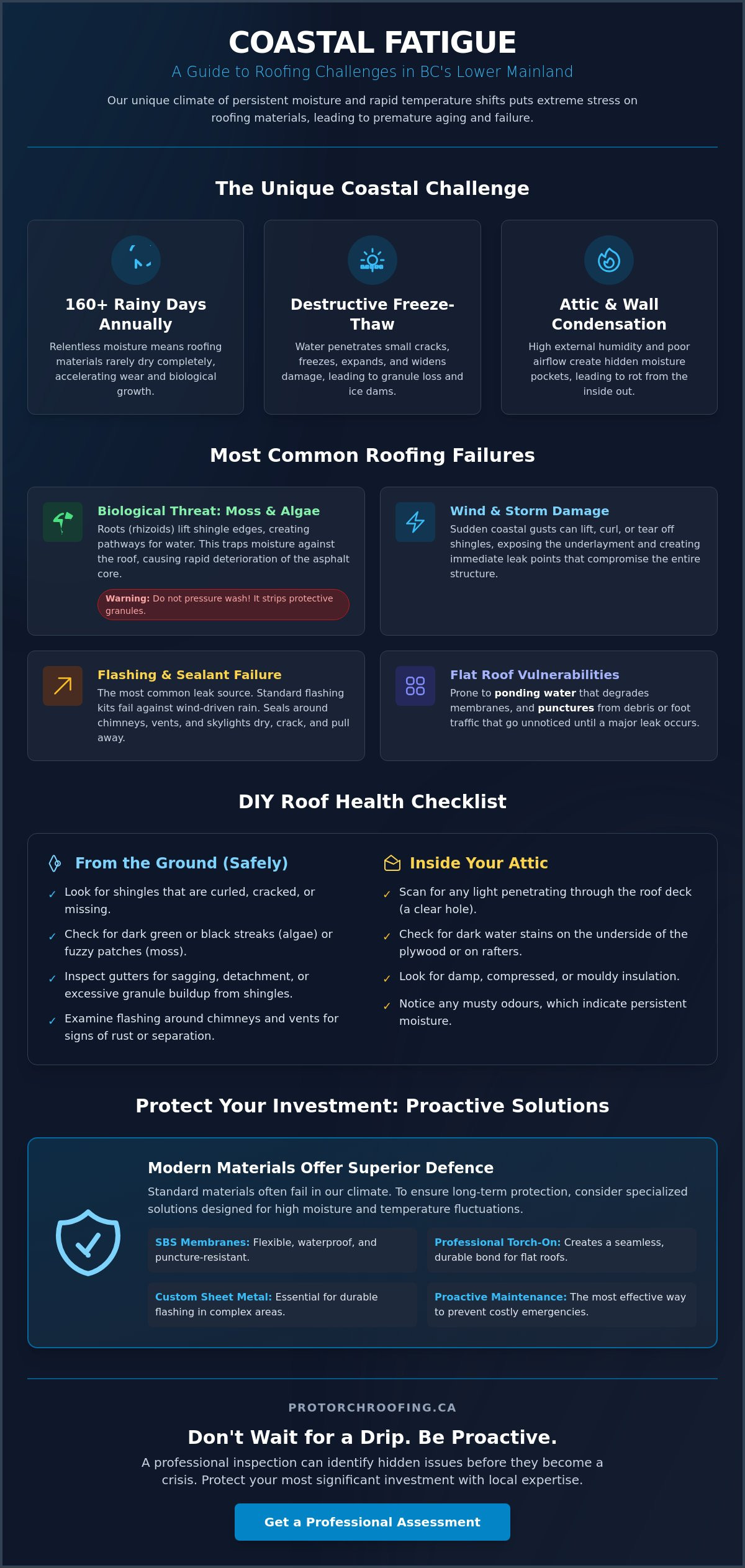
Living in the Lower Mainland means accepting that water is a constant neighbor. With over 160 rainy days per year, your roof is under a relentless siege that most standard building materials aren't designed to handle. This isn't just about the volume of water; it's about the lack of recovery time. High humidity levels mean that even between storms, roofing materials rarely dry out completely. This persistent dampness is a primary driver of common roofing problems in the Lower Mainland, leading to premature aging and what we call "Coastal Fatigue."
For properties in Vancouver or Burnaby, the "North Shore Effect" adds another layer of complexity. Heavy snow loads on the mountains often translate to rapid melt events and heavy slush on residential roofs at lower elevations. Simultaneously, coastal salt air acts as a silent corrosive agent. Unless your home utilizes custom sheet metal or specialized perimeter flashing, non-specialized metal components will rust and fail long before the roofing membrane itself reaches the end of its lifespan. Protecting your property requires materials that can breathe while remaining completely watertight.
The Freeze-Thaw Cycle in British Columbia
Our winters are notoriously unpredictable. A mild afternoon can quickly turn into a freezing night, creating a destructive cycle for common types of roof shingles. When water enters small cracks or pores during the day and freezes at night, it expands, forcing those cracks wider. This process often leads to ice damming, where frozen water blocks the eaves and forces liquid water back under the shingles. Gutters and downspouts also take a beating, often sagging or detaching under the weight of trapped ice and fluctuating temperatures. This cycle makes regular roof maintenance essential for preventing structural damage.
Humidity and the 'Micro-Climate' of Your Attic
Roofing health is as much about what happens underneath as what happens on top. The high external humidity creates a challenging micro-climate in your attic. When warm, moist air from the home meets the cold underside of the roof deck, it causes condensation. In the rainy season, poor airflow can turn this moisture into structural rot. Many property owners find that standard ventilation systems designed for drier climates simply fail here. Without specialized attention to ensure proper attic circulation, this hidden moisture becomes one of the most common roofing problems in the Lower Mainland, quietly compromising your home's security from the inside out.
Most Frequent Residential Roofing Issues in Vancouver and Burnaby
Vancouver and Burnaby often experience sudden wind gusts that challenge even the best-installed asphalt shingles. When shingles curl or blow off, they leave your home vulnerable to the common roofing problems in the Lower Mainland that stem from water ingress. This vulnerability is compounded by the technical moisture problems in roofing systems often documented in Canadian building research. Identifying these issues early is the key to maintaining your property's structural integrity and avoiding the high cost of emergency repairs.
The Biological Threat: Moss and Algae
Moss thrives in the damp, shaded lots common in North Burnaby and East Vancouver. It's more than an aesthetic nuisance. Moss roots, known as rhizoids, physically lift the edges of shingles, allowing water to travel upward through capillary action. Many homeowners try to solve this with a pressure washer, but this is a mistake. High-pressure water strips the protective mineral granules off shingles, leaving the asphalt core exposed to UV damage and rapid deterioration. Safe removal requires a methodical, professional approach that preserves the shingle's integrity.
Flashing and Custom Sheet Metal Failures
Flashing is the unsung hero of your roof. In our region, horizontal rain can bypass standard, store-bought flashing kits around chimneys and vents. We often find that custom sheet metal is necessary to create the precise, durable barriers needed for complex roof geometries. If you notice staining on the ceiling near a skylight or chimney, it's a clear sign your flashing has failed. These joins are high-risk areas that demand disciplined craftsmanship to remain watertight during a typical coastal winter.
Gutter System Synergy
Your roof and gutters work as a single unit. When gutters clog with needles and debris, water backs up and feeds under the roof edge. In Burnaby homes, this often leads to fascia rot that can spread into the rafters. Relying on expert gutter repair ensures that your drainage system protects your foundation rather than undermining it. In 2026, seamless gutter systems are the preferred choice for local property owners because they minimize leak points. A quick check of your roof's perimeter can save you from a major structural headache. You can find more information on securing your home's exterior at protorchroofing.ca.
Flat Roof and Torch-On Specific Vulnerabilities
Ponding water is the most persistent threat to flat roof systems in Vancouver. While sloped roofs shed water quickly, flat surfaces rely on precise grading and functional drainage to prevent standing water. If water remains on the surface for more than 48 hours after a storm, it creates hydrostatic pressure that can force moisture through even the smallest membrane imperfections. This is one of the most technical and common roofing problems in the Lower Mainland, often leading to structural deck rot if left unaddressed. Environmental blistering, caused by trapped moisture expanding under the summer sun, further compromises the roof's security.
Flat roofs also face unique challenges from debris accumulation. In our heavily forested neighborhoods, needles and leaves frequently clog internal drainage systems. When water can't escape through the intended channels, it pools around seams and penetrations, accelerating the degradation of the entire system. Maintaining a clear path for water is the simplest way to ensure the longevity of your investment.
Understanding Torch-On Membrane Failures
Modern torch-on roofing utilizes SBS (Styrene-Butadiene-Styrene) membranes, which offer excellent flexibility in our fluctuating climate. However, improper "torching" during the initial installation can lead to weak seams that separate over time. During dry, hot summers, UV degradation can cause the membrane to lose its elasticity. You should look for "alligatoring," a pattern of cracks that resembles reptile skin. This is a critical sign that the bitumen has hardened and can no longer protect your property from the next rainy season.
Drainage and Perimeter Flashing in Commercial Builds
Commercial properties often feature complex drainage needs, including scuppers and internal drains that must handle massive volumes of water during November downpours. BC Housing's guide to roof assemblies emphasizes the importance of moisture management and durability in these high-stakes environments. Perimeter flashing is equally vital, as it protects the building's envelope from wind-driven rain that hits the vertical edges of the roof. Because of these complexities, commercial roofing requires a more frequent and disciplined inspection cadence than standard residential homes. Identifying a puncture or a failing seam early can mean the difference between a simple patch and a full-scale membrane replacement.
Warning Signs: How to Spot Roof Damage Before It Becomes a Crisis
You don't always need a ladder to identify common roofing problems in the Lower Mainland. Many of the most serious issues leave subtle clues that you can spot from the safety of the ground or inside your attic. Developing a disciplined eye for these warning signs allows you to act before a minor leak evolves into a structural emergency. Protecting your home's integrity starts with a methodical walk-around of your property at least twice a year. Early detection is your best defense against the high costs of neglect.
Structural sagging is perhaps the most urgent sign of trouble. If you notice a dip in the roofline or a shift in how the shingles sit against one another, the underlying wood deck may be compromised. This often happens when long-term moisture ingress softens the rafters. Similarly, a quick check of your downspouts can reveal the results of the "Granule Test." Finding heavy deposits of sand-like grit in your gutters indicates that your shingles are shedding their protective coating. This loss of granules leaves the asphalt core vulnerable to UV damage and rapid deterioration.
Ground-Level Visual Cues
Start your inspection from the street. Look for "shadowing" or dark patches on your shingles, which often signal moisture retention or biological growth. Keep an eye out for detached perimeter flashing or gutter segments that appear to be sagging. If you can see the metal drip edge pulling away from the roofline, your home's first line of defense against horizontal rain is already failing. These visible gaps are invitations for water to bypass your shingles and reach the sensitive wooden components of your structure.
The Interior Checklist
The most reliable evidence of a problem is often found inside your home. Yellowish rings, bubbling paint, or damp spots on top-floor ceilings are clear indicators of water ingress. However, don't wait for these to appear. Visit your attic crawlspace on a rainy day with a powerful flashlight. Look for dark stains on the underside of the roof deck or musty odors that suggest mold growth. If you can see pinpricks of daylight through the boards, you have a direct path for moisture and pests to enter your living space.
When to Call a Professional
There's a significant difference between a simple shingle replacement and a full-scale structural repair. Waiting for a visible drip in your living room usually means the water has already saturated your insulation and drywall. Professional intervention is necessary the moment you spot sagging or persistent dampness in the attic. If you're unsure about the state of your shelter, it's best to Book a comprehensive roof inspection in Burnaby. A methodical assessment from a local expert ensures your peace of mind and the long-term health of your property. For a dependable review of your roof's current condition, contact the team at ProTorch Roofing today.
Professional Maintenance: Protecting Your Investment in BC’s Climate
Proactive care is the only reliable way to combat the cumulative effects of our coastal environment. While identifying common roofing problems in the Lower Mainland is a vital first step, preventing those issues from taking root is where property owners find true peace of mind. The return on investment for scheduled roof maintenance is significant when compared to the high cost and stress of an emergency mid-winter replacement. By addressing minor vulnerabilities before the storm season begins, you can effectively extend the lifespan of your roofing system and ensure your property remains a secure sanctuary.
As we look toward the 2026 weather forecast, regional patterns suggest continued heavy rainfall and rapid temperature fluctuations. This makes a customized maintenance plan essential for both residential and commercial properties. A reputable quote should always be transparent and detailed, outlining exactly which technical remedies are required to maintain your roof's structural integrity. We believe in clear communication and methodical execution, moving away from high-pressure sales in favor of a disciplined, expert assessment of your home or business's unique needs.
What a Professional Maintenance Visit Includes
A professional visit is far more than a quick glance from the driveway. It is a comprehensive health check designed to find the "invisible" issues that standard inspections often miss. Our maintenance process focuses on the specific vulnerabilities of the BC coast. A typical visit includes:
Debris removal
Clearing leaves and needles from critical drainage points, valleys, and internal scuppers to prevent ponding water and backup.
Component resealing
Inspecting and resealing minor flashing gaps, vent boots, and chimney joins where horizontal rain often penetrates.
Health reporting
Providing a detailed status report on the membrane or shingle condition, including signs of granule loss or seam separation.
The Pro Torch Difference
For over 25 years, we've operated as a local British Columbia business deeply committed to quality and craftsmanship. Our family-owned values mean we treat every property as if it were our own, emphasizing protection and security above all else. We bring specialized expertise to both residential asphalt shingles and commercial torch-on systems, ensuring that every project benefits from our deep regional knowledge. Our commitment to expert roof repair in Burnaby has helped countless owners resolve common roofing problems in the Lower Mainland before they become crises. When you choose ProTorch Roofing, you're choosing a disciplined partner dedicated to the long-term health and safety of your property.
Securing Your Property Against the Coastal Elements
Understanding the unique stresses of our climate is the first step toward long-term security. From the relentless rain that causes "Coastal Fatigue" to the biological threat of moss growth, your roof requires specialized care to remain watertight. We've explored how identifying technical vulnerabilities like failing seams or compromised flashing can prevent minor leaks from becoming structural crises. By staying vigilant with ground-level and attic inspections, you protect the structural integrity of your home or business and avoid the high costs of neglect.
Don't leave your investment to chance as another rainy season approaches. ProTorch Roofing is a family-owned and operated business in Burnaby with over 25 years of local experience. We are specialists in torch-on systems and custom sheet metal, providing the disciplined craftsmanship needed to resolve common roofing problems in the Lower Mainland. Our goal is to provide the peace of mind that comes from a healthy, dependable roof. Secure your property with a professional roof assessment from Pro Torch Roofing and enjoy the confidence of knowing your shelter is built to last. We're here to help you protect what matters most.
Frequently Asked Questions
How often should I have my roof inspected in the Lower Mainland?
You should schedule a professional inspection at least twice a year, ideally in the spring and fall. In our coastal climate, these visits ensure your system is prepared for heavy November rains and identify any damage caused by winter freeze-thaw cycles. Regular assessments help you catch common roofing problems in the Lower Mainland before they compromise your structural integrity. It's a small investment that provides peace of mind and long-term security for your property.
Is moss on my roof actually dangerous or just ugly?
Moss is a significant structural threat rather than just an aesthetic issue. It acts like a sponge, holding moisture against your shingles and lifting their edges with root-like rhizoids. This allows water to penetrate the roof deck, leading to wood rot and mold. Because of the high humidity here, moss can quickly shorten the lifespan of your roof if it isn't professionally managed. Never use a pressure washer, as it strips away protective granules.
Why is my flat roof ponding water after a typical Vancouver rainstorm?
Ponding water usually indicates a failure in your drainage system or a shift in the roof's grading. On flat roofs, water should clear within 48 hours. If it remains, it creates hydrostatic pressure that can force moisture through seams. This is one of the most common roofing problems in the Lower Mainland for commercial and residential flat roofs alike. It often stems from clogged internal drains or scuppers that require immediate clearing to prevent membrane damage.
Can a single leaky shingle be repaired without replacing the whole roof?
Yes, a localized repair is often possible if the surrounding materials are still in good condition. Replacing a single damaged shingle or patching a small puncture in an SBS membrane can save you from a full replacement. However, it's vital to have a professional assess why the shingle failed. If the issue is widespread granule loss or brittle asphalt, a repair might only be a temporary fix for a larger problem that requires a more comprehensive solution.
What is the average lifespan of a torch-on roof in Burnaby?
A properly installed torch-on roof typically lasts between 20 and 25 years in Burnaby. The longevity of these systems depends heavily on the quality of the SBS membranes and the skill of the initial installation. Because our region faces intense moisture and UV exposure, regular maintenance is the deciding factor in how long your roof remains watertight. Consistent inspections of the perimeter flashing and seams are essential to reaching that 25-year milestone with confidence.
How do I know if my roof ventilation is sufficient for the BC climate?
Signs of insufficient ventilation include excessive heat in your attic during summer or condensation on the underside of the roof deck in winter. In the BC climate, poor airflow causes moisture to build up, which leads to mold and structural rot. If you notice ice dams forming at the eaves during a cold snap, it's a strong indicator that warm air is trapped in your attic. A professional can verify if your intake and exhaust vents are balanced correctly.
Does my homeowners insurance cover common roofing problems caused by rain?
Most homeowners insurance policies cover sudden and accidental damage, such as a tree limb falling during a storm, but they rarely cover issues caused by neglect. Problems like slow leaks from aging shingles or moss damage are considered maintenance responsibilities. If you haven't kept up with repairs, your claim for interior water damage might be denied. Keeping detailed records of your professional maintenance visits is the best way to support a future insurance claim if an emergency occurs.
What should I do if I find shingles in my yard after a windstorm?
You should contact a local expert for a repair assessment immediately. Finding shingles on the ground means a portion of your roof deck is now exposed to the elements. Even if you don't see a leak inside yet, the waterproof barrier is compromised. In our windy coastal environment, one missing shingle can easily lead to a chain reaction where others peel away. Prompt action prevents a minor wind event from turning into a major interior renovation project.
