

Best Time of Year for Roof Replacement in Vancouver (2026 Guide)
Waiting for a perfectly cloudless July day to schedule your project might actually be the most difficult way to secure your home's protection. Most Vancouver property owners rightfully worry about rain damage during a tear-off or the long wait times associated with reputable local contractors. You want the peace of mind that comes with knowing your SBS membranes or asphalt shingles were installed under the right conditions to ensure long-term structural integrity. Finding the best time of year for roof replacement in Vancouver involves more than just checking the forecast; it requires a strategic look at contractor availability and specific material temperature requirements.
In this 2026 guide, you'll discover the ideal seasonal windows to replace your roof while avoiding the peak summer rush. We'll explain how the latest BC Building Code updates regarding ventilation and insulation ratios impact your project timing. You'll also learn the specific pros and cons of each season, from the dry heat of August to the cost-effective opportunities found in early spring. We'll provide the local expertise you need to understand how weather patterns and labor shortages affect your timeline. By the end, you'll know exactly when to book your professional assessment to guarantee a leak-free installation and lasting security for your property.
Key Takeaways
• Identify why late June through September is the best time of year for roof replacement in Vancouver to ensure your home remains protected from unexpected rain.
• Compare the advantages of summer's weather stability against the potential availability benefits of booking your project during the spring or fall shoulder seasons.
• Learn how different materials, like torch-on membranes or asphalt shingles, have specific temperature thresholds that must be met for a lasting seal.
• Follow a proactive 2026 scheduling timeline to avoid long wait times and secure your spot with a disciplined local expert.
• Gain insights into how proper timing and specialized craftsmanship in custom sheet metal and perimeter flashing contribute to your roof's overall longevity.
Understanding Vancouver’s Roofing Window: Why Timing Matters
Vancouver property owners know all too well that our "Rain City" reputation isn't just a nickname; it's a significant logistical hurdle for home maintenance. Determining the best time of year for roof replacement in Vancouver usually leads to a specific window between late June and September. While homeowners in Burnaby might see clear skies, those on the North Shore could be facing localized drizzle that halts a project. This micro-climate variance makes timing critical because we must ensure the roof deck is bone-dry before any new materials are applied. A disciplined approach to scheduling ensures that your home remains secure throughout the entire process.
When we talk about timing, we're really talking about protection and security. Installing a new system during a stretch of predictable dry weather isn't just about convenience for the crew. It's about the long-term health of your home. A moisture-free installation preserves your manufacturer warranty and protects the structural integrity of your building. If water gets trapped during the tear-off or application phase, you're essentially sealing a problem into your home's envelope. Proper timing isn't a luxury; it's a technical requirement for a successful build.
The Impact of Coastal Moisture on Installation
Coastal moisture is a silent threat to any roofing project in British Columbia. Even if it isn't actively raining, high humidity levels in the Lower Mainland can saturate the wood of your roof deck. Trapped moisture under a fresh layer of SBS membranes or asphalt shingles can lead to premature rot and mould growth within your attic space. A fundamental part of understanding roof construction is recognizing that the deck must be stable and dry to support the layers above. We use professional assessments to check moisture content because guessing isn't an option when your home's safety is on the line. Humidity also impacts how certain sealants and perimeter flashing components cure; if the air is too damp, the bond may never reach its full strength.
Temperature Requirements for Modern Roofing Materials
Adhesion is the second major factor dictated by the calendar. Most modern roofing membranes and shingles rely on thermal sealing to create a waterproof barrier. Vancouver’s fluctuating spring temperatures often create "hit or miss" conditions where adhesives don't activate properly. This is especially true for specialized torch-on systems and high-quality SBS membranes that require consistent warmth to bond correctly to the substrate. We track these patterns closely to ensure every component of your roof achieves maximum longevity.
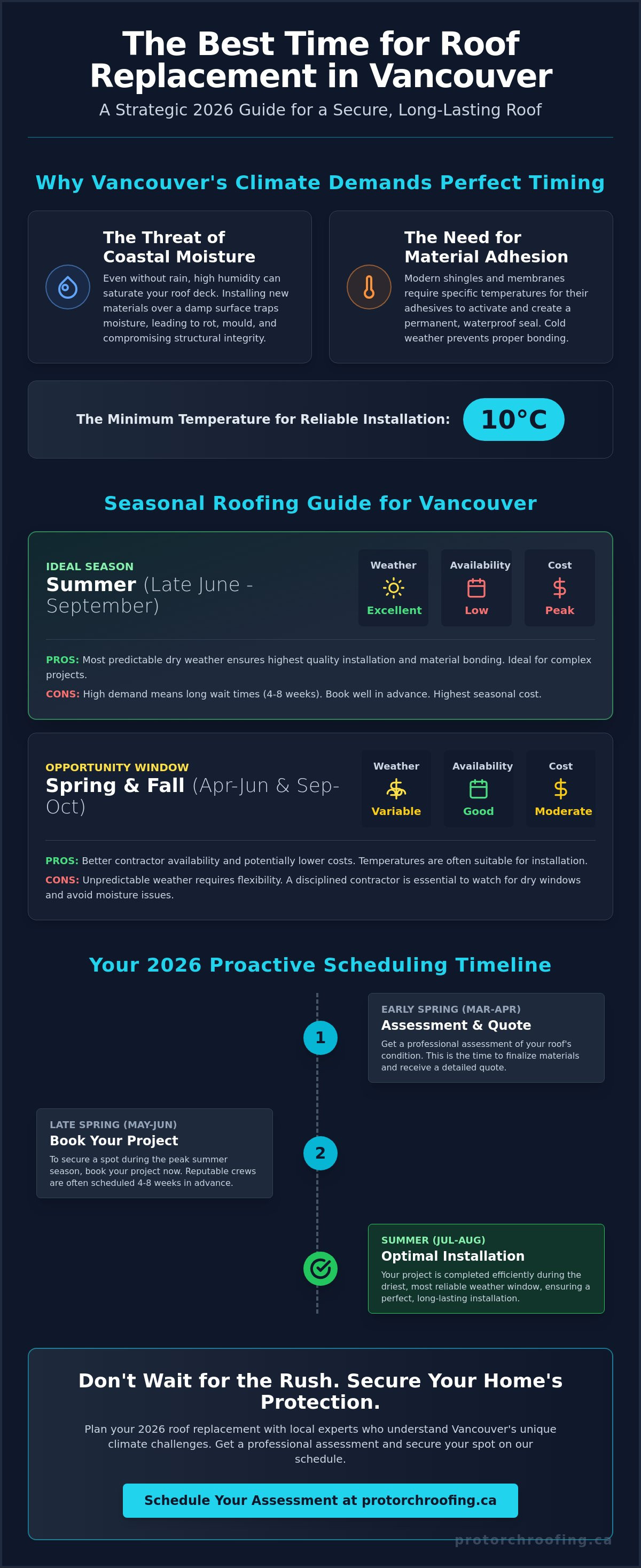
To ensure a reliable seal and optimal material performance, 10 degrees Celsius is often the magic number for starting most professional roofing installations in our region.
Seasonal Breakdown: Pros and Cons for Vancouver Homeowners
Selecting the best time of year for roof replacement in Vancouver requires a strategic look at the local climate and the construction industry's seasonal rhythm. Every season in British Columbia brings a unique set of variables that can affect your project's timeline and the long-term health of your home. While weather is the primary driver, factors like labor shortages and the 2026 BC Building Code updates for insulation and ventilation also play a role in how we schedule our work to ensure your peace of mind.
Summer: The High-Demand Peak Season
July and August are traditionally the most popular months for roofing in the Lower Mainland. The consistent dry spells provide the most predictable environment for complex installations, such as custom sheet metal work and intricate architectural details. These conditions are also ideal for homeowners looking into energy-efficient roofing options that help manage indoor temperatures during our increasingly warm summers.
The main challenge of the "Summer Rush" is the significant demand for qualified trades. In 2026, reputable Vancouver roofing contractors often have lead times ranging from 4 to 8 weeks. Booking early is essential if you want to secure a spot during this peak window. Despite the wait, the benefit of having multiple crews working in stable weather means faster project completion and reduced risk of moisture exposure.
Spring and Fall: The Strategic Shoulder Seasons
Late May and early October often serve as the "Goldilocks" windows for savvy property owners. During these months, the intense summer heat has either not yet arrived or has begun to fade, which can be beneficial for the curing process of certain sealants and SBS membranes. Scheduling your project during these shoulder seasons can offer several advantages:
• Increased contractor availability compared to the mid-summer peak.
• More competitive scheduling opportunities as the seasonal rush tapers off.
• Mild temperatures that are easier on both the roofing materials and the installation crews.
The trade-off is a higher degree of weather volatility. We maintain a disciplined approach by monitoring 7-day forecasts to avoid unexpected coastal rain. This is also an excellent time to invest in professional roof maintenance to identify potential issues before the heavy precipitation of November arrives.
Winter: Emergency Repairs and Preparation
Full roof replacements are rarely planned for Vancouver’s wet and dark winters. The persistent rainfall in areas like North Vancouver and Burnaby makes it difficult to keep the roof deck dry during a tear-off. However, winter is when hidden vulnerabilities often reveal themselves through leaks and wind damage. Our focus during these months shifts to emergency repairs and waterproofing to keep your home secure until the weather breaks. We also use this time to conduct detailed inspections and provide quotes, helping you prepare for a prioritized spring start.
Material Matters: How Your Roof Type Dictates the Schedule
The best time of year for roof replacement in Vancouver isn't a single date on the calendar that applies to every home. Instead, the ideal window is often dictated by the specific technical requirements of the materials we use to protect your structure. While a slope-roofed home in Burnaby might have a slightly wider installation window, a flat-roofed commercial building or modern residence requires much stricter environmental controls. Choosing the right material for the season can prevent costly delays and ensure that your manufacturer's warranty remains fully intact.
Torch-On Roofing (Flat Roofs) and Dry Weather Needs
Flat roofs are the most sensitive to Vancouver’s coastal moisture. Professional torch on roofing systems utilize SBS membranes that require a 100% dry substrate to achieve a permanent bond. If even a light drizzle occurs during the application process, we must halt work immediately. This is because moisture trapped between the layers of the membrane will turn into steam during the heat-application process, leading to "blistering." These blisters compromise the structural integrity of the waterproof barrier and can cause premature failure. For this reason, flat roof replacements are almost exclusively scheduled during the peak dry months of July and August.
Asphalt Shingles and Thermal Sealing
Asphalt shingles remain the most common choice for residential properties, accounting for approximately 75% of Canadian installations as of 2026. However, these shingles rely on a "thermal seal" strip, which is a factory-applied adhesive that requires solar heat to bond the shingles together. If you install shingles in the middle of a cold Vancouver winter, that seal may never activate. This leaves the roof vulnerable to wind blow-offs during our heavy winter storms. We typically recommend late-summer or early-fall installations for shingles to ensure the warmth of the sun creates a weather-tight, permanent seal before the wind picks up in November.
Metal Roofing: The All-Weather Exception?
Metal roofing is increasingly popular in British Columbia due to its 40 to 70-year lifespan. Unlike shingles or torch-on systems, metal panels don't rely on chemical adhesives or solar heat to create a seal. This allows for more flexibility, as we can often install metal in cooler or damper weather. The critical component here is the custom sheet metal flashing and perimeter details that keep the seams watertight. While the material is more forgiving of the cold, safety is our priority. Rain makes metal surfaces incredibly slick, so our disciplined crews monitor the forecast to ensure we only work when conditions allow for safe craftsmanship and precise installation of every fastener.
Planning Your 2026 Replacement: Scheduling and Preparation
Securing the best time of year for roof replacement in Vancouver requires much more than a last minute call when the sun finally emerges in June. For a successful 2026 project, planning is paramount. While the actual installation might only take a few days, the administrative and logistical groundwork should ideally begin four to five months earlier. A disciplined approach to scheduling ensures you aren't left waiting during the peak season when labor shortages often stretch contractor timelines. In 2026, the Canadian construction industry continues to face a scarcity of skilled trades, which makes early booking the most effective way to guarantee your home's protection.
It is vital to understand the progression from a professional assessment to a confirmed start date. A quote provides a cost estimate, but a signed contract secures your place in the queue. However, even a contract is subject to the "rain delay" reality of the Pacific Northwest. We prioritize transparent communication throughout this process, ensuring you understand how weather patterns might shift your specific window. By starting the conversation early, you gain the advantage of being first on the list for the very first dry spell of the season.
Booking Lead Times in the Lower Mainland
We recommend that property owners start requesting quotes in February or March. This timing allows you to review your options without the pressure of an active leak. It also places you ahead of the "Summer Rush" that typically sees reputable Vancouver roofing contractors booked four to eight weeks in advance. If your current system shows signs of failure during the wet winter months, you don't have to wait in fear. Utilizing professional emergency roof repair can stabilize your home and provide security until the optimal weather window for a full replacement opens up.
Property Preparation and Access
Once your slot is secured, preparing your property is the next step toward a seamless installation. Clear access is essential for material delivery trucks and debris bins. We suggest moving vehicles, patio furniture, and potted plants away from the perimeter of the home. This protects your landscaping and ensures our crews can work efficiently. During the waiting period, ongoing roof maintenance such as gutter cleaning and debris removal remains critical. These small steps prevent secondary damage while you wait for your scheduled start date.
To ensure your project is handled with the precision and specialized regional knowledge it deserves, you should schedule a professional assessment well before the rainy season returns.
Secure Your Home with Pro Torch Roofing’s Expert Timing
Pro Torch Roofing brings over 25 years of specialized experience to the Lower Mainland, providing property owners with a disciplined approach to home protection. We understand that identifying the best time of year for roof replacement in Vancouver is only the first step; the true value lies in the execution. Our deep expertise in torch-on systems and SBS membranes ensures that your flat roof is installed during the precise weather window required for a perfect, long-lasting seal. We move away from high-pressure tactics, focusing instead on a peace of mind approach that emphasizes the safety and structural integrity of your home.
As a family-owned local business, we prioritize transparent communication above all else. We keep you informed of every weather-related schedule shift, ensuring you are never left in the dark about the status of your project. This commitment to clarity fosters community trust and ensures that every installation meets our rigorous standards for craftsmanship. Whether we are installing asphalt shingles or complex custom sheet metal, our goal is to provide a dependable solution that preserves your building’s health for decades.
Our Weather-Safe Installation Process
Our installation process is built around the concept of security. We utilize advanced forecasting tools and protective measures to keep your interior bone-dry throughout the job. Our crews follow a methodical rhythm, and we maintain a strict commitment to never leaving a roof "open" when rain is imminent. If the coastal weather shifts unexpectedly, we employ high-grade temporary waterproofing and perimeter flashing to seal the structure immediately. This disciplined strategy minimizes risk and ensures that the longevity of your new roof is never compromised by trapped moisture or premature exposure.
Why Local Knowledge Matters
Local knowledge is essential for navigating the unique micro-climates of British Columbia. We understand the specific drainage challenges faced by homes in North Vancouver compared to the different requirements for properties in the flatlands of Burnaby. Our specialized focus includes both residential systems and commercial roofing vancouver projects, where durable flat roof systems are a necessity. By choosing a local expert, you benefit from regional specialized knowledge that generic contractors simply cannot provide. We invite you to reach out for a professional assessment to ensure your next roofing project is timed perfectly for maximum protection and long-term security.
Protect Your Investment with Strategic Planning
Choosing the best time of year for roof replacement in Vancouver is a critical decision that directly affects your property's longevity and your own peace of mind. We have seen how the dry window between late June and September offers the most predictable conditions, particularly for sensitive SBS membranes and torch-on systems. By matching your project to the technical requirements of your materials, you ensure a secure, weather-tight seal that protects your home's structural integrity. Planning for 2026 requires a proactive approach to navigate seasonal demand and secure a slot with a trusted local expert before the summer rush begins.
As a family-owned and operated business in Burnaby with over 25 years of local experience, Pro Torch Roofing is committed to providing transparent communication and superior craftsmanship. We are specialists in torch-on systems and SBS membranes, ensuring that every detail, from perimeter flashing to custom sheet metal, is handled with precision. Don't wait for a leak to reveal itself during a heavy winter storm. Take the first step toward long-term security by booking your consultation early in the year.
Get a Professional Roof Assessment and 2026 Quote Today
We look forward to helping you safeguard your home with a roof built to last for decades through every West Coast season.
Frequently Asked Questions
Can you replace a roof in the rain in Vancouver?
You cannot safely replace a roof during active rainfall because moisture compromises the structural integrity of the installation. For specialized systems like torch-on roofing or SBS membranes, a perfectly dry substrate is mandatory for the material to bond correctly to the deck. If water is trapped within the building envelope during the tear-off phase, it can lead to immediate rot or mould issues. We monitor local forecasts closely to ensure we only open your roof when a dry window is guaranteed.
How long does a typical roof replacement take in the Lower Mainland?
Most residential roof replacements in the Lower Mainland take between two and five days to complete. The exact timeline depends on the size of your home, the complexity of the architectural details, and the chosen material. While asphalt shingles are relatively quick to install, projects involving custom sheet metal work or multi-layer torch-on systems may require additional time to ensure every perimeter flashing detail is executed with precision and care.
Is it cheaper to replace a roof in the winter?
Winter is rarely the most cost-effective time for a full replacement due to the high risk of weather delays and the specialized labor required for winter waterproofing. While some contractors might offer off-season incentives, the potential for water damage during a wet-weather tear-off often outweighs any minor savings. Instead, the best time of year for roof replacement in Vancouver is during the drier months when crews can work efficiently without constant interruptions from coastal storms.
What is the minimum temperature for installing asphalt shingles?
Most manufacturers recommend a minimum temperature of 4 to 10 degrees Celsius for asphalt shingle installation. This warmth is necessary for the factory-applied thermal sealing strip to activate and bond the shingles together. If temperatures are too low, the shingles can become brittle and may not seal properly, leaving your home vulnerable to wind blow-offs. We prioritize scheduling these projects when consistent daytime warmth ensures a permanent, weather-tight seal for your property.
How long is the wait time for a roofing contractor in Burnaby?
During the peak summer months, reputable roofing contractors in Burnaby typically have wait times ranging from four to eight weeks. This backlog is caused by high demand for dry-weather windows and ongoing labor shortages in the skilled trades across British Columbia. To secure your preferred dates, we suggest starting the assessment process in early spring. This proactive approach ensures your home is protected before the heavy rainy season returns in the fall.
What happens if it rains during my roof installation?
If unexpected rain occurs, our crews immediately stop work and secure the exposed sections of your home with high-grade waterproof tarps or temporary membranes. We never leave a roof open to the elements when moisture is imminent. Our disciplined, methodical approach focuses on protecting your home's interior at every stage. Once the weather clears and the substrate is completely dry, we resume the installation to ensure proper material adhesion and long-term craftsmanship.
Do I need a permit for roof replacement in Vancouver or Burnaby?
Yes, a permit is generally required in both Vancouver and Burnaby for a complete roof replacement, structural alterations, or a change in roofing materials. Local bylaws ensure that new installations meet the 2026 BC Building Code standards for ventilation and insulation. We recommend checking with your local municipality or a professional consultant to confirm the specific requirements for your property before the project begins. This step is vital for maintaining the safety and legality of your structure.
How often should I have my roof inspected in the PNW climate?
We recommend a professional roof inspection at least twice a year, ideally in the spring and fall. The Pacific Northwest climate is particularly harsh on roofing systems due to heavy rainfall and wind. Regular assessments allow us to identify minor issues with perimeter flashing or debris buildup before they escalate into costly leaks. Identifying the best time of year for roof replacement in Vancouver often starts with these routine maintenance checks to track the aging process of your roof.
