

West Vancouver Roof Repair: Navigating Storm Damage & Coastal Exposure in 2026
Did you know that a series of atmospheric rivers in British Columbia caused $90 million in insured damages in December 2025 alone? For homeowners on the North Shore, these storms aren't just news headlines; they're a direct threat to the structural integrity of your property. When the clouds finally clear, the search for West Vancouver roof repair for storm damage often reveals a stressful reality of high maintenance costs and a shortage of experts who truly understand steep-slope coastal detailing. You deserve to feel secure in your home, knowing your roof can withstand the relentless combination of salt-laden air and high-velocity winds.
We understand the pressure of finding a contractor who prioritizes long-term protection over high-pressure sales. This article will teach you how to identify the subtle signs of wind uplift and mitigate damage before it compromises your interior. We'll walk through the professional assessment process required to satisfy insurance requirements and explain how upgraded materials, such as custom sheet metal and SBS membranes, provide the durability your coastal home requires. You'll learn how to navigate the technical remedies that ensure your property remains a safe, dry sanctuary regardless of the season.
Key Takeaways
• Learn why West Vancouver's coastal microclimate and salt air exposure require specialized fastener protection to prevent premature corrosion.
• Discover the critical visual cues for storm damage on both asphalt shingles and flat roofs, from lifted tabs to subtle membrane punctures.
• Understand the "25% rule" to determine if a West Vancouver roof repair for storm damage is a viable fix or if a replacement is more cost-effective.
• Gain a step-by-step guide for safely documenting damage to streamline insurance claims and protect your home's structural integrity.
• Find out how custom-fabricated sheet metal and perimeter flashing can reinforce your roof against the high winds of the Burrard Inlet.
Why West Vancouver Storm Damage Requires a Specialized Approach
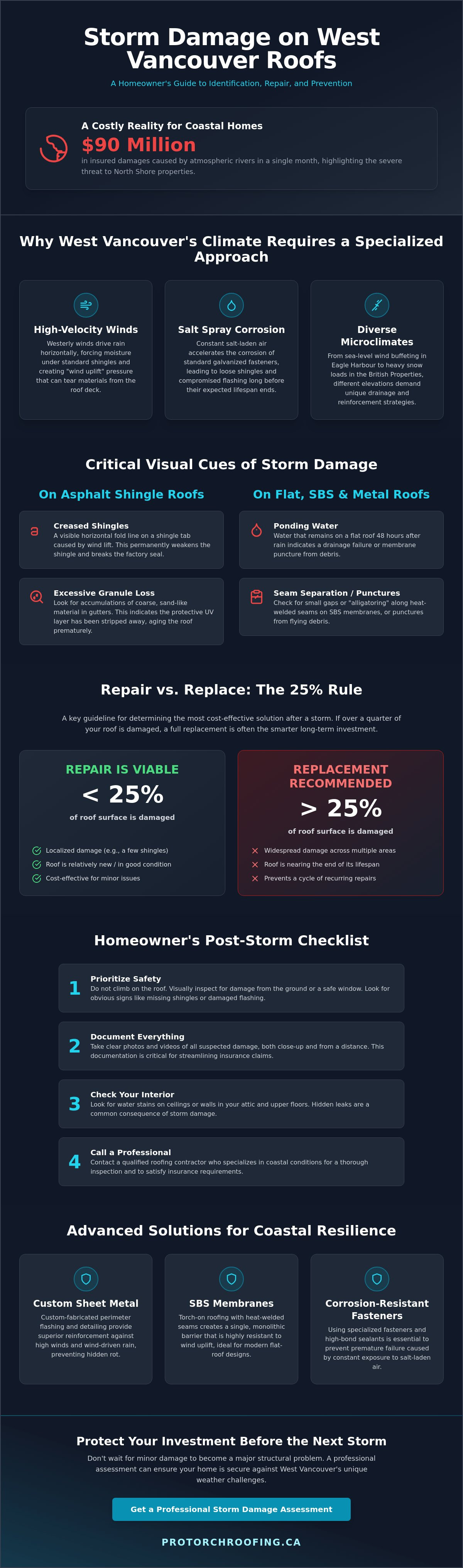
Pacific Storm Damage in West Vancouver is more than just a leaky ceiling. It is a unique intersection of high-velocity winds, saturated coastal air, and intense pressure differentials that test the structural integrity of every fastener and seam on your property. Unlike inland weather, North Shore storms involve specific effects of wind on buildings along the Burrard Inlet that can lift shingles and compromise membranes in minutes. By 2026, the standard for coastal resilience has shifted. It is no longer enough to simply patch a hole; homeowners now require integrated waterproofing systems that treat the roof as a single, impenetrable shield against the elements.
The "Western Exposure" Problem
High winds from the west drive rain horizontally, forcing moisture under standard asphalt shingle underlayments that would stay dry in calmer regions. In neighborhoods like Ambleside and Dundarave, salt spray acts as a constant catalyst for corrosion. Standard galvanized nails often deteriorate prematurely here, leading to loose shingles and "vertical lift" during winter gales. When you are looking for West Vancouver roof repair for storm damage, it is vital to ensure your contractor uses corrosion-resistant fasteners and high-bond sealants. These specialized components prevent shingle tabs from creasing or blowing off entirely when the next storm hits.
Microclimates: From Waterfront to British Properties
West Vancouver's geography creates distinct microclimates that demand different technical remedies. Properties in Eagle Harbour face constant salt-air exposure and high-wind buffeting at sea level. Conversely, homes in the British Properties or near Cypress Mountain must manage significant snow loads and rapid melt cycles. These higher-elevation homes require robust drainage systems to handle rain intensity that often exceeds regional averages. Effective West Vancouver roof repair for storm damage must account for these variables. A solution for a flat roof on the waterfront won't necessarily protect a steep-slope cedar home in the uplands.
Perimeter flashing is the silent guardian of your attic space during these events. During heavy storms, wind can force water upward and over the edge of your roof. Custom-fabricated metal detailing ensures that water is shed away from the fascia and structure, preventing the hidden rot that often follows a major weather event. True craftsmanship in 2026 means moving beyond basic repairs to implement solutions like SBS membranes and custom sheet metal that offer genuine peace of mind for the long term.
Common Signs of Storm Damage on West Van Roofs
Identifying damage early prevents the high cost of structural decay. On shingle roofs, look for "creased" shingles. This specific failure occurs when heavy winds lift the tab, creating a permanent horizontal fold that weakens the asphalt and breaks the factory seal. You might also notice excessive granule loss in your gutters, which looks like coarse sand. This indicates the protective UV layer of your roof has been stripped away by high-speed winds or hail, leaving the underlying bitumen vulnerable to the sun. If you spot these signs, scheduling a West Vancouver roof repair for storm damage can prevent a minor issue from becoming a full-scale replacement.
Flat Roof & SBS Membrane Failures
Modern West Vancouver estates often feature complex flat-roof designs that require specialized care. For these properties, torch on roofing is the preferred standard because the heat-welded seams resist wind uplift far better than loose-laid or ballasted systems. After a major weather event, check for ponding water that remains 48 hours after the rain stops. This suggests a failure in the drainage slope or a membrane puncture from flying debris. Seam separation is another critical sign; it often appears as small gaps or "alligatoring" along the edges where extreme temperature fluctuations have stressed the SBS membrane bonds. Diagnostic checks on these modern estates should always include a close look at the perimeter flashing to ensure the seal remains watertight.
Metal & Flashing Failures
Standard, off-the-shelf flashing often fails in high-wind corridors like Caulfeild or the British Properties. Because these areas experience intense coastal vibration, standard fasteners can "back out" over time, creating small gaps where salt spray enters and accelerates corrosion. Look for orange rust streaks along metal valleys or gutters. This is a clear sign of salt-accelerated failure that compromises the drainage system. Custom sheet metal is essential for tight terminations around chimneys and skylights, especially on the complex rooflines common to the North Shore. If you notice any metal components pulling away from the fascia, it's wise to request a professional roof assessment to verify the integrity of your terminations before the next rainy season begins.
Hidden dangers often lurk where the roof meets vertical surfaces. Flashing failure around skylights is a frequent culprit for interior leaks that don't appear until hours after a storm has passed. When West Vancouver roof repair for storm damage is performed correctly, it involves inspecting these transition points for "pinhole" leaks caused by salt air pitting. Ensuring these details are handled with custom-fabricated metal rather than generic sealant is the key to long-term structural integrity in our unique coastal environment.
The West Vancouver Repair vs. Replace Calculus
Deciding between a targeted fix and a full overhaul requires a methodical assessment of your roof's current health and future longevity. We often apply the "25% rule" as a baseline for West Van estates. If the cost of West Vancouver roof repair for storm damage exceeds 25% of a total replacement, the investment in a new system typically offers better long-term value. This is especially true for asphalt roofs approaching the 15-year mark. At this age, the bitumen loses its flexibility and its ability to shed water effectively in our coastal climate, making repairs less reliable over time.
Storms often act as a diagnostic tool for your home. When we peel back damaged sections, we sometimes find saturated plywood or mold growth caused by poor attic ventilation. If the structural decking is compromised, a simple repair won't hold the weight or provide a secure surface for new fasteners. Replacing the roof allows us to correct these ventilation flaws and replace rotted wood, ensuring your new system remains stable for decades. For West Vancouver estates, the insurance process is also a critical factor. If a storm causes significant damage across multiple facets of the roof, insurance providers may cover a full replacement. We provide the technical documentation needed to show where systemic failure has occurred, making a replacement the most logical and insured path forward.
When a Repair is Sufficient
A targeted repair is often the most sensible path when the damage is localized and the structural integrity remains intact. Isolated shingle loss from a single wind event or minor leaks around a chimney can be resolved without a full tear-off. These minor interventions preserve your existing roof while addressing immediate vulnerabilities before the next rainy season. If the storm only affected your drainage system, you can often restore protection through expert gutter repair. This ensures water is directed away from your foundation and fascia without the need for a total roof overhaul.
When Replacement is the Logical Choice
Systemic issues require a more comprehensive solution. When you notice widespread granule loss or leaks appearing on multiple roof planes, it suggests the underlayment has failed across the entire structure. In these cases, a patch is merely a temporary bandage. Many homeowners in 2026 choose to upgrade to metal roofing or high-performance SBS membranes during this process. These systems offer superior resistance to wind-driven rain and require much less maintenance than traditional materials. Upgrading during a replacement provides a higher return on investment and greater peace of mind for high-value coastal properties.
Immediate Steps After a Storm: A Homeowner’s Guide
Once the high winds subside, your priority is safety and documentation. Never attempt to walk on a wet or damaged roof yourself. Storm-weakened structures and slick surfaces create significant fall risks, especially on the steep slopes common in West Vancouver. Instead, perform a visual inspection from the ground using binoculars. Take clear photos of missing shingles, twisted flashing, or fallen debris. Note the date of the storm and the specific locations of any interior ceiling stains. These records are essential for a successful insurance claim and help us prioritize your West Vancouver roof repair for storm damage.
If you can safely reach your gutters from a ladder, ensure they are clear of needles and branches. Clogged drains lead to ponding water, which adds thousands of pounds of weight to a compromised roof deck. Inside the home, use buckets to catch active drips and move furniture away from damp areas to prevent secondary mold growth. During the post-storm rush, avoid out-of-town contractors who lack a permanent local presence. A reliable expert should have a deep understanding of North Shore microclimates and the specific coastal building standards required for long-term protection.
The Emergency Inspection Process
A roof repair burnaby specialist or West Vancouver expert focuses on immediate stabilization to prevent further loss. During an emergency assessment, we look beyond obvious holes to find compromised seams in your SBS membrane or fasteners that have "backed out" due to coastal vibration. A temporary patch might stop a leak for a few days, but a permanent repair in a coastal zone requires heat-welded seals or custom sheet metal terminations. We provide a detailed diagnostic report that outlines the health of your decking and the technical remedies needed to restore structural integrity.
Navigating Insurance Claims
Communicating with insurance adjusters requires technical precision. West Vancouver labor rates and material costs often exceed national averages due to the complexity of steep-slope estates and specialized coastal requirements. While adjusters often suggest a "like-for-like" replacement, this may not provide the resilience needed for the increasing frequency of atmospheric rivers. We advocate for upgrades that improve your home's durability, such as reinforced perimeter flashing. Hiring a local expert with over 25 years of experience ensures your claim is backed by professional documentation. If you suspect your home has sustained structural issues, schedule a professional assessment to secure your property before the next storm cycle begins.
The Pro Torch Advantage: Storm-Proofing with Custom Metal
With over 25 years of dedicated service across West Vancouver and the Lower Mainland, we understand that protecting a home on the North Shore requires more than off-the-shelf solutions. Our team specializes in the intersection of technical precision and local expertise. We maintain an in-house sheet metal shop specifically to address the failures common in our coastal environment. By fabricating our own components, we ensure that every termination and transition is perfectly suited to the unique architecture of your property. This disciplined approach to West Vancouver roof repair for storm damage allows us to provide a level of security that generic contractors simply cannot match.
For flat and low-slope estates, we utilize high-performance SBS torch-on membranes. These systems are heat-welded to create a seamless, waterproof barrier that remains flexible even during the rapid temperature shifts of a Pacific storm. Unlike traditional layered systems, our torch-on applications are engineered for longevity and structural integrity. We combine these advanced materials with transparent communication, keeping you informed at every stage of the repair process. Our goal is to move away from temporary fixes in favor of a peace of mind approach that secures your investment for the long term.
Custom Fabrication for Coastal Resilience
Standard flashing often fails in high-wind corridors because it is not designed for the specific pressures of the Burrard Inlet. We solve this through custom-bent perimeter flashing, which provides superior resistance to wind uplift. In West West Bay and other waterfront neighborhoods, we utilize marine-grade materials that specifically prevent salt-air corrosion. Our precision-engineered valleys and gutters are built to manage the heavy runoff typical of North Shore winters, ensuring that water is shed efficiently without compromising your fascia or foundation. This bespoke metalwork is the "weak-link" insurance every coastal home needs.
Expert Installation & Peace of Mind
As a family-owned, local British Columbia business, we take immense pride in the craftsmanship we deliver to our neighbors. We believe that a successful repair is only the beginning of a home's protection cycle. Consistent roof maintenance is the most effective way to prevent future storm failures and extend the life of your roofing system. Our methodical assessment process identifies potential vulnerabilities before they become emergency leaks, allowing for proactive care rather than reactive stress. If your property has been affected by recent weather events, don't wait for the next atmospheric river to test your home's defenses. Schedule a professional storm damage assessment today to ensure your roof is prepared for whatever the 2026 season brings.
Securing Your North Shore Home Against the Next Storm
The unique coastal climate of West Vancouver demands more than standard roofing practices; it requires a disciplined approach to waterproofing and structural integrity. By identifying visual cues like creased shingles early and prioritizing custom-fabricated metal detailing, you can prevent minor storm impacts from becoming costly structural failures. Addressing these vulnerabilities now ensures your property remains a secure sanctuary throughout the rainy season.
At Pro Torch Roofing, we bring over 25 years of local expertise to every project. As a family-owned and operated business in British Columbia, we specialize in high-performance torch-on systems and bespoke sheet metal solutions designed specifically for our region's high-wind corridors. Don't leave your home's safety to chance. If you suspect you need West Vancouver roof repair for storm damage, our team is ready to provide a thorough, transparent evaluation of your roof's health.
Book Your West Vancouver Storm Damage Assessment today and experience the peace of mind that comes with professional craftsmanship and specialized coastal protection.
Frequently Asked Questions
How much does roof repair cost in West Vancouver after a storm?
Repair costs depend on the extent of the damage and the specific materials required for your roof type. Minor shingle replacements are generally less expensive than complex repairs involving custom sheet metal or structural decking restoration. While industry data shows a wide range for storm-related fixes, West Vancouver properties often require specialized coastal detailing that influences the final scope. We provide a professional assessment to determine the exact requirements for your home's protection.
Can I repair just one section of my roof after wind damage?
Yes, you can repair a single section if the surrounding materials are in good condition and the damage is localized. This is a common approach for West Vancouver roof repair for storm damage when a single gust lifts a few shingle tabs or damages a specific piece of perimeter flashing. If the rest of the roof is nearing its functional end-of-life, we'll help you evaluate if a targeted fix offers genuine long-term value.
Does home insurance cover roof leaks caused by rain?
Most home insurance policies cover roof leaks if they result from a sudden, accidental event like a windstorm or a fallen tree branch. However, leaks caused by gradual wear and tear or a lack of maintenance are typically excluded. It's essential to document the storm event with photos and professional reports to support your claim. We can assist by providing the technical documentation your adjuster needs to verify storm-related failure points.
What is the best roofing material for West Vancouver’s high winds?
Metal roofing and SBS torch-on membranes are the most resilient options for high-wind coastal zones. These materials offer superior resistance to wind uplift because they are either mechanically fastened with high-grip fasteners or heat-welded at the seams. For steep-slope homes, high-impact asphalt shingles with reinforced seal strips also perform well when installed with coastal-grade fasteners that resist salt-air corrosion and vibration.
How long does a typical storm damage repair take to complete?
Most minor repairs are completed within a single day; however, more extensive restoration projects can take three to five days. The timeline depends on current weather conditions, the complexity of your roofline, and whether custom sheet metal components need to be fabricated in our shop. We prioritize stabilizing your home immediately with a temporary seal to prevent interior damage while the permanent materials are prepared for installation.
Should I clear my own gutters after a storm event?
You should only clear your own gutters if you can do so safely from a stable ladder and have the proper safety equipment. If the storm has left the ground saturated or the roof is still wet, the risk of a fall is significantly higher. Many homeowners prefer a professional assessment because we check for hidden damage to the gutter hangers and fascia that might not be visible from the ground.
What is the difference between an emergency patch and a permanent repair?
An emergency patch is a temporary measure designed to stop active leaks immediately using tarps or specialized sealants. It's a short-term fix to protect your interior until the weather clears. A permanent West Vancouver roof repair for storm damage involves replacing damaged materials with new shingles, SBS membranes, or custom flashing that meets current building standards. This ensures the structural integrity of your home is fully restored for years to come.
How do I know if my flat roof needs a torch-on membrane upgrade?
Your flat roof likely needs an upgrade if you notice recurring leaks, significant ponding water, or seams that are starting to pull apart. If your current system is a loose-laid or ballasted roof, it's more susceptible to wind displacement during North Shore storms. Upgrading to a torch-on system provides a heat-welded, waterproof barrier that is much better suited for the intense rain and wind exposure of the Burrard Inlet.
