

How Much to Replace a Roof in Vancouver 2026: A Local Pricing Guide
What if the most expensive part of your 2026 renovation isn't the materials, but the cost of waiting through one more rainy season? With the Lower Mainland averaging 161 days of precipitation each year, property owners are right to ask how much to replace a roof in Vancouver 2026 before minor leaks turn into structural emergencies. You likely already feel the strain of the high cost of living in BC, and the last thing you need is a quote that changes halfway through the job. We believe in providing the peace of mind that comes from technical expertise and honest, transparent communication.
This guide delivers a detailed breakdown of 2026 roofing costs in Vancouver and Burnaby, from the durability of SBS membranes to the precision of perimeter flashing. You will learn how to navigate recent BC Building Code updates and choose materials that offer the best longevity for our unique coastal climate. We provide a clear roadmap for your project so you can secure a leak-proof roof and a professional assessment that protects your investment for the long term.
Key Takeaways
• Discover the current market variables and average price ranges to understand how much to replace a roof in Vancouver 2026 based on your home's unique footprint.
• Compare the long-term structural integrity and 25-year value of asphalt shingles against specialized SBS membrane and torch-on systems.
• Navigate the specific municipal permit requirements and waste disposal regulations that differentiate roofing projects in Burnaby from those in Vancouver.
• Learn the technical indicators that determine whether a tactical repair can extend your roof's life or if a full replacement is required for total home security.
• Identify the red flags of "lowball" estimates and learn which essential components must be included in a transparent, professional roofing quote.
Understanding Roof Replacement Costs in Vancouver for 2026
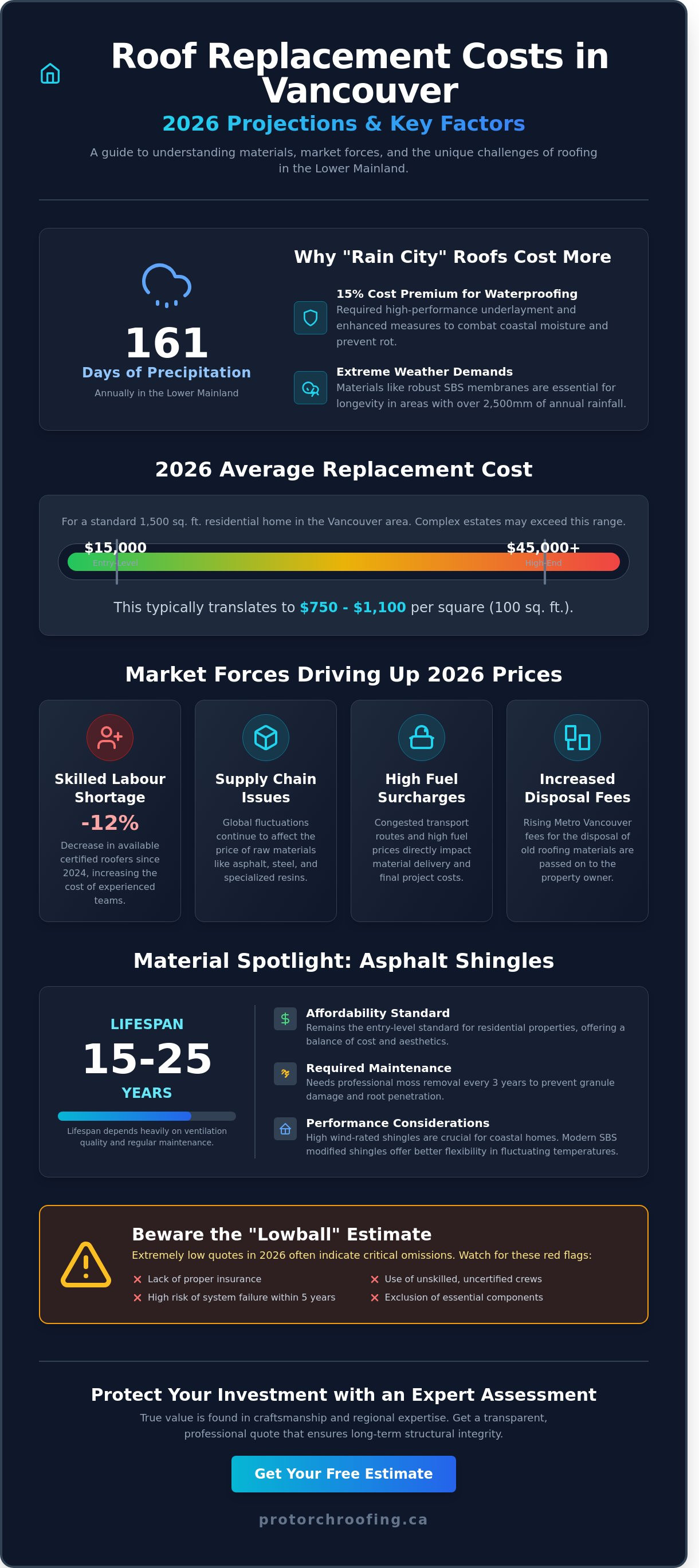
Homeowners frequently ask how much to replace a roof in Vancouver 2026 as they prepare for essential property maintenance in a shifting economic climate. In the Lower Mainland, the average range for a residential roof replacement currently sits between $15,000 and $45,000. Large or complex estates often exceed these figures. This pricing reflects the specialized requirements of our coastal environment and the rising operational costs faced by local contractors. High fuel surcharges for material delivery and increased Metro Vancouver disposal fees for old shingles directly impact your final quote. While a low bid might seem attractive, cheap quotes in 2026 often indicate a lack of proper insurance or the use of unskilled crews. This frequently leads to system failures within the first five years. Investing in skilled labour ensures your home remains a secure, dry sanctuary.
The 2026 Vancouver Market Landscape
Global supply chain fluctuations continue to dictate the price of raw materials like asphalt, steel, and specialized resins. Vancouver's labour market remains exceptionally tight; industry data shows a 12% decrease in available certified roofing technicians compared to 2024. This scarcity drives up the cost of experienced teams who understand local building codes. For a standard 1,500 square foot Vancouver bungalow in 2026, the average cost per square (a 10x10 foot area) typically ranges from $750 to $1,100 depending on the selected system. This figure includes the removal of old materials, professional installation, and structural protection.
Why Vancouver Quotes Differ from the Rest of Canada
Vancouver's unique climate necessitates construction standards that are far more rigorous than those in the Prairies or Ontario. Our "Rain City" status requires high-performance underlayment and enhanced waterproofing measures that typically add a 15% cost premium to local projects. When you consult a comprehensive list of roofing materials, it's vital to recognize that coastal moisture demands specific SBS membranes and robust perimeter flashing to prevent structural rot. Logistics also play a major role in pricing. Transporting heavy pallets through the Port of Vancouver and across congested bridges adds significant transport time. These regional factors ensure that a Vancouver roof is built for longevity and extreme weather resistance, providing the peace of mind that a standard "dry climate" roof simply cannot offer.
Understanding how much to replace a roof in Vancouver 2026 involves looking beyond the initial sticker price. True value is found in the craftsmanship and the specific regional expertise of a local British Columbia business. We focus on structural integrity and long-term protection, ensuring your investment stands up to the heavy rainfall and seasonal shifts of the Pacific Northwest.
Cost Breakdown by Roofing Material: What Fits Your Home?
When calculating how much to replace a roof in Vancouver 2026, your material choice is the most significant variable in the final estimate. It isn't just about the initial invoice. You must consider the 25 year value. A lower upfront cost often leads to higher maintenance expenses in the Lower Mainland's specific climate. We see many homeowners prioritize structural integrity over the lowest bid to avoid the cycle of frequent repairs.
The complexity of your roof also dictates the labor investment. A simple up and over gable roof costs less to install than a custom design with multiple valleys, dormers, or skylights. These features require specialized perimeter flashing and meticulous detailing to remain watertight. In areas like North Vancouver, where annual rainfall can exceed 2,500mm, these technical details are the difference between a dry home and a costly leak.
Asphalt Shingle Roof Replacement Costs
Architectural shingles remain the entry level standard for residential properties in 2026. They provide a balance of affordability and aesthetic variety. However, they face specific challenges in high wind coastal areas. If your home is near the water, you'll need shingles with high wind speed ratings to prevent blow-offs during winter storms.
Lifespan
Typically 15 to 25 years depending on ventilation quality.
Maintenance
Requires professional moss removal every 3 years to prevent root penetration into the granules.
Performance
Modern SBS modified shingles offer better flexibility in the fluctuating temperatures of Burnaby and Coquitlam.
Metal Roofing: The Lifetime Investment
Metal systems are trending upward in West Vancouver and North Vancouver. Homeowners increasingly view metal as a permanent solution rather than a temporary fix. Standing seam panels are the preferred choice for modern builds, while metal shingles can mimic the look of slate or wood shakes. These systems align with the BC Step Code by reflecting solar heat and improving overall energy efficiency. While the initial cost is higher than asphalt, the 50 year lifespan means you won't be asking how much to replace a roof in Vancouver 2026 ever again.
Torch-On Systems: The Flat Roof Standard
For flat or low slope roofs, torch-on systems are the industry benchmark. These utilize SBS membranes that are heat welded to create a seamless, waterproof barrier. ProTorch specializes in these applications for both modern residential designs and commercial buildings. This material is particularly effective for Vancouver's rainy season because it doesn't rely on gravity to shed water like shingles do. For a deep dive into these specific technical requirements, see our Torch-On Roofing in Vancouver & Burnaby: The Ultimate 2026 Guide.
Micro-climates in the region should influence your decision. A home in Burnaby deals with higher humidity and shade, which encourages rapid moss growth on organic materials. Conversely, a North Vancouver property faces heavy snow loads and intense rain. If you're debating which material provides the best protection for your specific neighborhood, a professional assessment can help you weigh the long term benefits against your immediate budget.
Regional Factors Influencing Your Vancouver Roofing Quote
Estimating how much to replace a roof in Vancouver 2026 requires more than just a calculation of square footage. Local logistics, municipal requirements, and geographic challenges play a significant role in the final investment. Vancouver is a unique environment where the weather, density, and provincial regulations create specific cost drivers that don't exist in other parts of British Columbia. Our team evaluates these variables to ensure your quote reflects the technical reality of your property.
Municipal Permits and Disposal Fees
Permit structures vary significantly across the Lower Mainland. In the City of Vancouver, a roofing permit for a standard residential project typically ranges from $250 to $600, depending on the declared value of the work. Burnaby operates on a different fee schedule, often resulting in slightly lower administrative costs but requiring rigorous inspections for specific roof types. We never recommend skipping these permits. Unlicensed contractors who bypass the city hall process put homeowners at risk of stop-work orders and insurance claim denials.
Waste management is another critical cost factor. Metro Vancouver has strict regulations regarding the disposal of old roofing materials. Asphalt shingles must be diverted to specialized recycling facilities, which currently charge between $95 and $115 per tonne. A standard home may produce three to five tonnes of debris. When you factor in bin rentals and transportation, disposal costs can account for 5% to 8% of your total project budget. We prioritize responsible waste diversion to maintain the environmental health of our local community.
BC Building Code Compliance in 2026
The 2026 BC Building Code updates have introduced stricter standards for energy efficiency and moisture management. These regulations directly impact how much to replace a roof in Vancouver 2026 by mandating higher performance standards for the entire roof assembly. Key updates include:
R-Value Requirements
New standards often require attic insulation to reach R-40 to R-60 levels to reduce thermal bridging.
Mandatory Ventilation
Upgraded intake and exhaust systems are required to prevent attic mould and ensure the longevity of SBS membranes.
Air Barriers
Enhanced sealing at the roof-to-wall junction is now a priority to meet provincial energy step code targets.
While these requirements add to the upfront labor and material costs, they provide a measurable return. Proper insulation and ventilation can reduce annual heating and cooling costs by approximately 15% while protecting the structural integrity of your home from the damp Pacific Northwest climate.
Accessibility and Site Logistics
The physical location of your home influences the complexity of the installation. Narrow streets in neighborhoods like Kitsilano or Commercial Drive often require specialized parking permits for debris bins and material delivery trucks. On the North Shore, steep lot grades and limited access points may require the use of cranes to lift torch-on rolls and perimeter flashing safely to the roof deck. These logistical challenges can increase labor hours by 20% compared to a flat, easily accessible lot. Our disciplined approach ensures we account for these site-specific needs during our initial professional assessment.
Evaluating Roof Repair vs. Full Replacement in 2026
Every homeowner faces the same dilemma when a leak appears: can I just patch this? It's a logical question when you're calculating how much to replace a roof in Vancouver 2026. While a quick fix feels like a budget-saver, the decision depends entirely on the age and structural health of your current system. A tactical repair is often the best move if the damage is isolated to a specific area, such as a compromised pipe boot or a loose piece of perimeter flashing. These targeted interventions protect your property without the high cost of a total overhaul.
When a Repair is the Right Move
Repairs are effective when the surrounding materials still have several years of service life remaining. If your SBS membrane or asphalt shingles are flexible and intact, utilizing Expert Roof Repair in Burnaby can extend your roof's lifespan by another five to seven years. In 2026, standard service calls for minor repairs in the Lower Mainland typically range from $350 to $650. This is a small price to pay to maintain your home's structural integrity and prevent moisture from reaching the decking.
You hit the point of no return when the cost of maintenance begins to snowball. If you've already paid for two significant repairs in the last three years, a third repair is usually a poor investment. Signs of a compromised system include widespread granule loss, brittle membranes that crack when touched, or sagging areas in the roofline that indicate rot in the plywood. At this stage, the underlying components are failing. Patching a failing roof is like painting over rust; the problem will continue to spread regardless of the surface fix.
The ROI of a Full Replacement
A full replacement offers financial benefits that go beyond simple leak prevention. In the competitive Vancouver real estate market, a new roof can increase a home's resale value by 5% to 8% based on recent appraisal data. Most insurance providers also offer premium discounts ranging from 10% to 20% for homes that install modern, impact-resistant materials. This helps offset the initial investment over time. While a standard 15-year asphalt shingle system has a lower upfront cost, a 40-year metal roof provides a significantly lower cost-per-year because it eliminates the need for a full replacement for nearly half a century.
Determining how much to replace a roof in Vancouver 2026 requires looking at the total cost of ownership rather than just the immediate invoice. If your roof is over 20 years old, the peace of mind that comes with a new, warrantied system is often more valuable than the temporary savings of a patch. We recommend a professional inspection to determine if your system is a candidate for a tactical save or if it's time for a fresh start.
Getting an Accurate Estimate from a Local Burnaby Expert
Securing a precise figure for how much to replace a roof in Vancouver 2026 requires more than a digital calculator or a rough over-the-phone guess. A professional estimate serves as a binding roadmap for your property's safety. In the local market, "lowball" estimates often mask significant risks. These bottom-tier quotes usually suggest that a contractor is cutting corners on WorkSafeBC premiums, using unskilled labor, or omitting critical components like high-grade perimeter flashing and premium SBS membranes. Choosing the lowest bid often leads to premature system failure, which costs significantly more in emergency repairs within five years.
Pro Torch Roofing prioritizes transparency by providing a comprehensive breakdown of every technical stage. We don't believe in high-pressure sales. Instead, we provide a detailed assessment that respects your budget while ensuring the structural integrity of your building. Our process eliminates surprises, giving you a firm price that accounts for 2026 material costs and specialized labor requirements in the Lower Mainland.
What to Look for in a Roofing Contract
A legitimate roofing contract is a legal safeguard for the property owner. You must verify that the document includes active WorkSafeBC coverage and at least $5 million in commercial general liability insurance. This protects you from financial responsibility if an accident occurs on your site. A professional quote should always specify:
• The exact brand and series of materials, such as IKO or Soprema products.
• Comprehensive manufacturer and workmanship warranty terms.
• Disposal fees and site cleanup protocols.
• A structured plan for roof maintenance to keep your warranty valid.
The Pro Torch Roofing Difference
We've built our reputation over 25 years of specialized service across Burnaby and the surrounding regions. As a family-owned business, we treat every project as a long-term commitment to our neighbors. We specialize in high-performance torch-on systems designed to withstand the specific humidity and rainfall patterns of British Columbia. Our expertise in SBS membrane application ensures a watertight seal that lasts decades, not just seasons. When you work with a local expert, your warranty isn't just a piece of paper; it's backed by a team that lives and works in your community.
The final step in determining how much to replace a roof in Vancouver 2026 is a physical site inspection. We examine the current decking, drainage efficiency, and ventilation health to provide a quote that stays accurate from start to finish. Contact Pro Torch Roofing today to schedule your professional assessment and secure your property's future.
Secure Your Vancouver Property for the Years Ahead
Investing in your home's structural integrity requires a clear understanding of how much to replace a roof in Vancouver 2026. You've learned that selecting high-quality SBS membranes and specialized torch-on systems provides the best protection against British Columbia's coastal weather. We've also highlighted why local labor trends and 2026 building standards make early planning essential for maintaining your property's value. Pro Torch Roofing brings over 25 years of local experience to every project. We specialize in flat roof systems that prioritize long-term safety over quick fixes. Our team delivers A+ rated craftsmanship across Burnaby and Vancouver; we ensure your peace of mind through transparent communication and technical expertise. Don't leave your shelter to chance when expert guidance is just a click away. Our disciplined approach focuses on the longevity of your investment and the safety of your family. Reach out today to start your project with a team that values quality above all else.
Get a Transparent Roof Replacement Quote from Pro Torch Roofing
We're ready to help you build a more secure future for your home.
Frequently Asked Questions
How much does it cost to replace a 2,000 sq. ft. roof in Vancouver in 2026?
Replacing a 2,000 sq. ft. roof in Vancouver in 2026 requires a budget that accounts for local labor rates and the steady rise in material costs. According to the 2024 Altus Group Construction Cost Guide, Vancouver remains one of the most expensive markets in Canada for residential construction. Property owners should plan for a 3 percent to 5 percent annual increase in costs leading up to 2026 to ensure their project maintains high standards of craftsmanship and structural integrity.
Is a metal roof worth the extra cost for a home in Burnaby?
Metal roofing provides a strong return on investment in Burnaby because it offers a lifespan of 50 years or more, which is double the 25 year average of standard shingles. This durability is vital for the Lower Mainland's climate, where Burnaby typically receives over 1,100 millimeters of annual precipitation. While the initial investment is higher, the long-term health of your home is better protected against heavy rain and wind.
Does home insurance in BC cover roof replacement due to age?
Most home insurance policies in British Columbia don't cover roof replacement when the cause is simply age or general wear. Providers like BCAA or Westland Insurance specify that their policies protect against sudden, accidental perils like windstorms or fallen trees rather than predictable deterioration. Maintaining your SBS membranes and perimeter flashing is essential because insurers may deny claims if they determine the roof reached its life expectancy before the damage occurred.
How long does a typical roof replacement take in the Lower Mainland?
A typical roof replacement in the Lower Mainland takes between 2 and 5 days to complete, depending on the weather and the complexity of the structure. Our crews prioritize a methodical rhythm to ensure your home remains secure throughout the entire process. Factors like steep pitches or the removal of multiple layers of old material can extend the timeline by 24 to 48 hours, but we always aim for a technical remedy that minimizes disruption.
What is the best time of year to replace a roof in Vancouver?
The best time to schedule your project is between late June and September when Vancouver experiences its lowest average monthly rainfall. Securing a spot during these months ensures the installation of your new system happens under dry conditions, which is crucial for the proper adhesion of materials. Since this is peak season, we recommend booking your professional assessment 3 to 4 months in advance to lock in your preferred dates for 2026.
Can I stay in my house while the roof is being replaced?
You can stay in your house during the installation, though you should prepare for high noise levels between 8:00 AM and 5:00 PM. Our team focuses on transparent communication to keep you informed of the daily progress and safety protocols. It's helpful to move vehicles out of the driveway and keep pets indoors to ensure the safety and security of everyone on the property during the construction process.
Are there any government rebates for energy-efficient roofing in 2026?
As of 2026, homeowners should check the CleanBC Better Homes program for available rebates on insulation upgrades that coincide with roof replacements. While direct rebates for roofing materials vary, improving your attic's insulation to an R-60 value can often qualify for provincial incentives. Understanding how much to replace a roof in Vancouver 2026 involves looking at these potential savings to offset the total cost of improving your home's thermal performance.
Why are torch-on roofs more expensive than asphalt shingles?
Torch-on roofing costs more than asphalt shingles because it utilizes high-quality SBS membranes that require specialized equipment and certified craftsmanship to install. These systems are designed specifically for flat or low-slope roofs where water shedding is a challenge, providing a superior waterproof seal that shingles can't match. The investment reflects the specialized technical remedy required to prevent leaks and ensure the long-term structural integrity of your building.
