

Gutter Systems in Vancouver & Burnaby: The Homeowner’s 2026 Guide
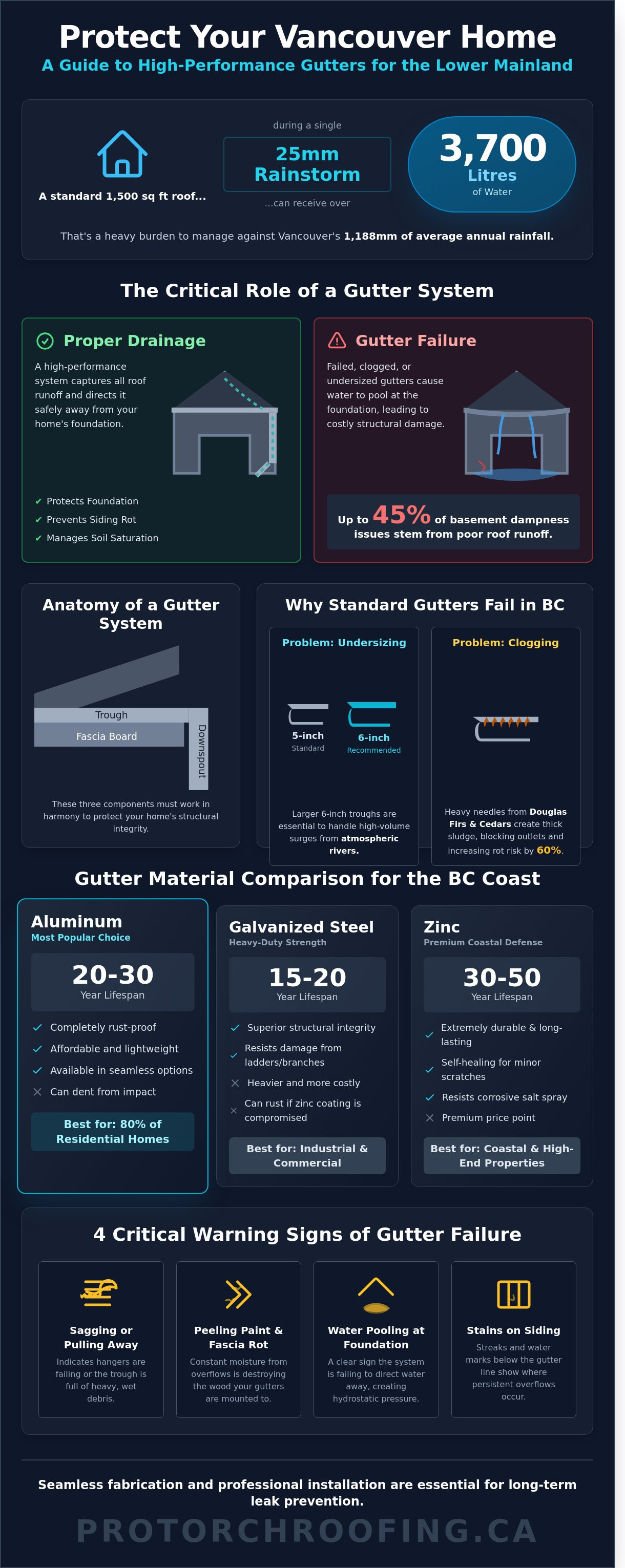
Did you know that a single 25 millimetre rainstorm can dump over 3,700 litres of water onto a standard 1,500 square foot Vancouver roof? If your gutter system isn't functioning perfectly, that massive volume of water ends up exactly where you don't want it; pooling against your foundation or leaking into your crawlspace. It's a heavy burden for any home to carry without the right drainage in place to manage our coastal climate.
You've likely spent your share of wet weekends on a ladder clearing out stubborn hemlock needles or worrying about damp spots in the basement after a heavy Burnaby downpour. We understand that your home is your most significant investment and keeping it dry shouldn't be a constant source of stress. This 2026 guide promises to show you how to choose, maintain, and repair high performance systems built specifically for the Lower Mainland. You'll get a clear look at needle resistant guards, durable perimeter flashing, and professional installation steps that ensure your property stays secure and maintenance remains minimal for the next 20 years.
Key Takeaways
• Learn which high-performance materials, from versatile aluminum to premium copper, best protect your Lower Mainland property from the coastal elements.
• Determine whether a 5-inch or 6-inch gutter system is necessary to manage the heavy precipitation volumes common in Vancouver and Burnaby.
• Identify critical warning signs of failure, such as fascia rot or sagging, to prevent costly structural damage and maintain your home's integrity.
• Discover why seamless fabrication and professional integration with your roofing system are essential for long-term leak prevention in British Columbia.
Understanding the Role of Your Gutter System in Vancouver
Protecting a property in British Columbia starts with managing the 1,188mm of average annual rainfall that hits our coast. Understanding the role of a rain gutter is the first step in protecting your property's structural integrity. At its core, this system is a narrow channel designed to intercept water at the roof edge. Without it, thousands of litres of water would pour directly onto your siding and pool at your foundation. For local homeowners, maintaining gutter health isn't just a chore. It's a critical defensive strategy against the relentless moisture of the Pacific Northwest.
In Burnaby, where many homes sit on sloped terrain or have finished basements, the stakes are high. Local data suggests that up to 45% of basement dampness issues stem from poorly managed roof runoff. When your system fails, water saturates the soil immediately adjacent to your foundation walls. This creates hydrostatic pressure that forces moisture through concrete pores and cracks. This water doesn't just disappear. It relies on your perimeter drainage system, often called a French drain, to carry it away from the house. If your roof runoff isn't directed properly into these drains via downspouts, the entire underground network becomes overwhelmed, leading to costly floods.
The Anatomy of a Modern Gutter System
A functional system consists of three primary components that must work in perfect harmony to ensure protection. The trough is the horizontal run that collects water directly from the shingles or SBS membranes. Next, downspouts serve as the vertical pipes that direct that volume away from the foundation. Finally, the fascia boards provide the structural support where your system is mounted. If the fascia rots due to overflow, the entire assembly can pull away from the home, compromising your structural integrity.
Why "Standard" Gutters Often Fail in the Lower Mainland
Many retail systems sold at big-box stores aren't built for the extreme weather events now common in BC. During the November 2021 atmospheric river, Vancouver saw record-breaking rainfall that overwhelmed standard 5-inch troughs in minutes. We recommend 6-inch continuous aluminum options to handle these high-volume surges. Clogging is another major factor. The heavy needles from Douglas Firs and Cedars common in North Vancouver create a thick, acidic sludge that blocks outlets faster than deciduous leaves. An eavestrough is the primary water diversion tool for BC structures. When these channels fail, the risk of rot in your roof deck and fascia increases by 60% within a single rainy season. Pro Torch Roofing emphasizes that a disciplined maintenance schedule is the only way to ensure these components continue to safeguard your investment.
Comparing Gutter Materials for the BC Coast
Selecting the right material for a home in British Columbia requires a deep understanding of local weather patterns. Vancouver receives an average of 161 rainy days per year, putting immense pressure on drainage infrastructure. Property owners must balance upfront costs with the long-term protection of their building's foundation. Four specific options dominate the local landscape due to their ability to handle heavy Pacific Northwest saturation.
Aluminum remains the standard for 80% of residential installations across the Lower Mainland. It's affordable and completely resistant to rust, which is vital in a city that sees over 1,100mm of precipitation annually. Most homeowners choose seamless options to eliminate the joints where leaks typically begin. While it performs well, aluminum is softer than other metals. A heavy ladder or a falling branch during a November windstorm can cause visible dents. You can expect a high-quality system to last 20 to 30 years if you keep it clear of debris.
For industrial zones in Burnaby or heavy-duty commercial buildings, galvanized steel is the preferred choice. It offers superior structural integrity compared to aluminum, though it requires a zinc coating to prevent oxidation. Without consistent maintenance, steel can begin to rust after 15 years, especially in areas with high humidity. Zinc provides a more durable alternative for coastal properties in Richmond or Delta. This material is self-healing, meaning small scratches eventually disappear through a natural chemical reaction with the air. It's particularly effective at resisting the corrosive effects of salt spray from the Salish Sea.
To better understand how these systems fit into your overall property care, Metro Vancouver's stormwater guide provides technical details on managing runoff effectively. This resource is essential for homeowners looking to protect their landscaping and perimeter drains from the impacts of heavy rainfall events.
Aluminum Gutters: The Practical Vancouver Choice
This metal is the go-to for homeowners in Kitsilano and East Vancouver. It's lightweight and comes in over 20 different factory-finished colours to match any soffit or fascia. The primary benefit is its resistance to the constant dampness of the BC coast. You won't see the red rust associated with iron-based metals. However, the 0.027-inch thickness typical of residential grades can bend under extreme snow loads. We recommend a heavier 0.032-inch gauge for homes near the North Shore mountains where wet snow adds significant weight.
Premium Materials: Copper and Zinc
In West Vancouver and the British Properties, copper is the definitive choice for luxury estates. It's an investment that lasts 70 to 100 years, often outliving the roof itself. Copper develops a distinct green patina over 15 to 20 years. This oxidation layer acts as a protective barrier, preventing further corrosion of the underlying metal. Zinc offers a similar lifespan of 60 to 80 years and appeals to modern architectural designs in North Vancouver. While the initial cost is 3 to 4 times higher than aluminum, the lack of replacement needs provides long-term financial security. If you're unsure which material fits your current roofline, a professional assessment can clarify your options.
Sizing and Custom Fabrication for Heavy Rainfall
Vancouver homeowners can't rely on a one size fits all approach to drainage. The geographic diversity of the Lower Mainland means a home in Tsawwassen faces different hydraulic loads than a property nestled against the mountains in North Vancouver. When we assess your roof, we calculate the exact volume of water your gutter system must move during peak weather events. This calculation relies on two primary factors: the total surface area of the roof and its pitch. A steep 10/12 pitch roof sheds water much faster than a shallow 4/12 slope, meaning the trough must be deep enough to catch high velocity runoff without overshooting the edge.
Capacity issues often lead to structural damage. If your drainage system isn't sized for the 2,500mm of annual rainfall seen in parts of the North Shore, water will back up. This overflow saturates your fascia boards and can even compromise your foundation. We look at the specific microclimate of your neighborhood to ensure your home remains dry and secure through the darkest months of the year.
The Science of Rain Capacity
The North Shore requires significantly different drainage specs than the Fraser Valley. While parts of the valley might see 1,100mm of rain annually, mountain-adjacent homes deal with double that volume. During peak November rainfall, which often exceeds 200mm in a single month, undersized downspouts become a major liability. If the downspout can't evacuate water as fast as the clouds deliver it, the trough fills and spills over. We recommend 6-inch gutters for most modern Vancouver homes because 6-inch gutters can handle nearly 50% more water than 5-inch versions. This extra volume provides a vital buffer during atmospheric river events. We typically install downspouts every 20 to 30 feet of gutter length to ensure the weight of the water doesn't pull the hangers away from your home's structure.
Custom Sheet Metal: The Pro Torch Advantage
Off-the-shelf components rarely provide the level of protection a British Columbia home requires. We utilize in-house fabrication to create custom sheet metal flashing and components that fit your specific roof line. This is especially important for complex roof geometries or homes with unique architectural details. Custom-fit perimeter flashing acts as a secondary barrier, preventing water from wicking behind the trough and rotting your roof deck or fascia.
Precision matters in every corner. We prefer custom-fabricated miters over pre-made plastic or thin aluminum corners. Factory corners are notorious weak points where leaks start after just a few freeze-thaw cycles. By hand-crafting these joints, we reduce the risk of corner leaks and ensure the structural integrity of the entire run. Our team focuses on creating a seamless transition between your torch-on membrane or shingles and the drainage system. This methodical approach to craftsmanship ensures your property stays protected from the ground up, giving you peace of mind when the next storm hits the coast.
7 Signs Your Burnaby Home Needs Gutter Repair
Burnaby homeowners face unique challenges due to the 1,400mm of average annual rainfall in the Lower Mainland. This consistent moisture puts a heavy burden on your drainage system. When your gutter system begins to fail, it rarely happens all at once. Instead, small warning signs indicate that the structural integrity of your home is at risk. Identifying these issues early can prevent the need for a C$15,000 foundation remediation project later.
Peeling paint or rotting wood
Look closely at your fascia boards. If you notice bubbling paint or soft spots in the wood, water is likely overflowing or leaking behind the channel. This constant saturation destroys the protective finish on your home's exterior.
Visible sagging
A functional system should maintain a precise slope toward the downspouts. If you see sections pulling away from the roofline or dipping in the middle, the fasteners have likely failed under the weight of wet debris.
Foundation pooling and tiger stripping
Water collecting at the base of your home is a primary cause of basement flooding. Additionally, dark vertical streaks on the outside of your gutter, known as tiger stripping, indicate that water is frequently overflowing the front lip because of internal blockages.
Frequent clogs
If you find yourself clearing debris every 60 days despite regular maintenance, your system may have improper pitch or undersized outlets that can't handle BC's heavy downpours.
Identifying Subtle Water Damage
Subtle signs often precede total system failure. Check your interior ceilings for faint brown rings or moisture near the corners. These marks suggest that water is backing up under the perimeter flashing and entering your attic space. In our coastal climate, moss and algae growth on the exterior of the troughs also signal a problem. These organisms trap moisture against the metal, accelerating corrosion. If you spot rusted fasteners or silver screws backed out of the wood, the system's attachment points are compromised and require professional attention.
Gutter Repair vs. Full Replacement
Deciding between a patch and a full overhaul depends on the extent of the damage. A simple gutter repair is often sufficient for localized leaks at the miters or a single loose bracket. However, if 30% or more of the system shows signs of warping or systemic rust, a replacement is more cost-effective. Many homeowners choose to modernize their drainage during a roof replacement. This integration ensures the new SBS membranes and flashing work seamlessly with the troughs, often increasing drainage efficiency by 20% compared to older, 4-inch systems.
Protect your home from the next Burnaby storm with a professional assessment of your drainage system. Contact ProTorch Roofing for a comprehensive inspection to ensure your property remains dry and secure.
Professional Gutter Installation in Greater Vancouver
Living in the Lower Mainland means managing over 1,153 millimeters of annual rainfall. For homeowners in Vancouver and Burnaby, a high-performing drainage system isn't a luxury; it's a fundamental requirement for protecting your foundation. Seamless aluminum gutter systems have become the industry standard because they eliminate the weak points found in traditional sectional designs. By extruding a single continuous piece of metal on-site, we remove the seams where leaks and corrosion typically begin. This custom-fit approach ensures that your home remains dry even during the atmospheric rivers that frequently hit the coast.
The Pro Torch approach goes beyond simply hanging metal troughs. We view your drainage as a critical extension of your entire roofing system. Our technicians ensure that your perimeter flashing and SBS membranes integrate perfectly with the new installation. This prevents water from backing up under your shingles or torch-on layers, which is a common cause of roof deck rot. We use heavy-gauge 0.032-inch aluminum to provide maximum durability against the weight of heavy slush and debris. Our commitment to quality means your home receives a system designed for the specific meteorological challenges of British Columbia.
Investing in a professional installation provides long-term peace of mind that DIY kits cannot match. We back our work with a comprehensive 10-year workmanship warranty, ensuring your investment is protected. When you consider that water damage repairs in Metro Vancouver can easily exceed C$15,000, the value of a precision-installed system becomes clear. Our team prioritizes transparent communication, providing you with a clear timeline and a fixed quote before any work begins. We focus on structural integrity and craftsmanship to ensure your home stays secure for decades.
The Installation Process Step-by-Step
Our process begins with the careful removal of your old, failing system. We don't just pull brackets; we conduct a detailed inspection of the wood fascia boards to identify hidden rot or pest damage. If the wood is compromised, we replace it immediately to ensure a solid foundation. We then utilize precision leveling to create a specific slope, typically 1/4 inch for every 10 feet of run. This directs water efficiently toward the downspouts. To handle high wind loads, we use heavy-duty internal hangers spaced every 18 inches, providing superior strength compared to standard retail fasteners.
Maintaining Your New Gutter System
We recommend a professional maintenance check twice a year, specifically in March and November. Property owners in North Vancouver deal with unique challenges due to the dense canopy of Douglas firs and Western Red Cedars. In these high-foliage areas, we often recommend installing stainless steel micro-mesh guards. These guards can reduce your cleaning frequency by up to 75 percent while preventing clogs that lead to basement flooding. Regular maintenance keeps your warranty valid and ensures your home is ready for the next heavy downpour. Protect your home from the next storm; Get a professional gutter assessment from Pro Torch Roofing.
Secure Your Home Against the 2026 Storm Season
Your home’s primary defense against the Lower Mainland’s 1,188mm of average annual rainfall starts with a high-performance gutter system designed specifically for the BC coast. We’ve explored how custom sheet metal fabrication and precise sizing prevent the perimeter flashing failures that often cause structural rot. As we move into 2026, relying on standard retail solutions isn't enough for the intense atmospheric rivers hitting Vancouver and Burnaby. ProTorch Roofing brings 25+ years of specialized Lower Mainland expertise to every project. We're a family-owned and operated team that understands how integrated torch-on systems and custom drainage work together to ensure long-term structural integrity. Our technicians provide transparent communication and disciplined craftsmanship rooted in local BC knowledge. We focus on technical remedies that offer lasting security rather than temporary fixes. You can trust our methodical approach to protect your property from the ground up.
Request a Free Gutter & Roof Inspection in Burnaby or Vancouver
Take the first step toward total peace of mind today and ensure your residence remains dry and safe for many years to come.
Frequently Asked Questions
How much does gutter replacement cost in Vancouver?
Gutter replacement in Vancouver typically costs between C$10 and C$25 per linear foot depending on the material you choose. For a standard 2,000 square foot detached home, homeowners should budget between C$2,500 and C$5,000 for a professional installation. These figures include the removal of old systems and the installation of new aluminum or steel components. Prices fluctuate based on the complexity of your roofline and current market rates for raw metals in British Columbia.
How often should I clean my gutters in Burnaby?
You should clean your gutters in Burnaby at least twice per year to handle the heavy coastal rainfall. Schedule these cleanings for late November after the deciduous leaves fall and again in May to remove spring organic debris. Properties located within 50 metres of dense evergreen canopies often require a third cleaning in late summer. Regular maintenance ensures your perimeter flashing remains dry and prevents water from compromising your home's structural integrity.
What are seamless gutters and are they worth it?
Seamless gutters are custom-extruded from a single piece of metal on-site to fit the exact dimensions of your roofline. They're worth the investment because they eliminate mid-run joints where 85% of leaks typically occur. By reducing the number of seams, you significantly lower the risk of water damage to your fascia boards. This design provides superior longevity and a cleaner aesthetic compared to sectional systems found in big-box hardware stores.
Can I install my own gutters or should I hire a pro?
You should hire a professional for gutter installation to ensure proper slope and secure attachment to the fascia. Professionals use specialized equipment to maintain a precise 1:500 slope ratio, which is vital for effective drainage in our wet climate. While DIY kits exist, they lack the structural integrity of professional-grade 5-inch or 6-inch continuous systems. Hiring an expert also provides you with a multi-year workmanship warranty that protects your investment against future leaks.
Why are my gutters overflowing even when they aren’t clogged?
Gutters often overflow due to an incorrect pitch or undersized downspouts that can't handle heavy B.C. rainstorms. If the trough is level or tilting away from the outlet, water pools and spills over the edge even if no debris is present. A standard 2x3 inch downspout may fail during a 20mm rainfall event; upgrading to 3x4 inch outlets often solves this issue. Our team can recalibrate the slope to ensure gravity works with your drainage system.
Do I need gutter guards for my Vancouver home?
Gutter guards are highly recommended for Vancouver homes located near large trees like Douglas firs or Bigleaf maples. High-quality micro-mesh systems can block 98% of small debris while still allowing water to flow during heavy atmospheric rivers. While they don't eliminate maintenance entirely, they reduce cleaning frequency by 70% and prevent internal clogs. This protection is a proactive step to secure your home's foundation from water saturation and soil erosion.
What is the best gutter material for coastal homes in West Vancouver?
Aluminum is the best material for West Vancouver homes because it's naturally resistant to corrosion from salty coastal air. It won't rust like galvanized steel and offers a lifespan of 20 to 30 years in maritime environments. For premium properties, copper provides even greater durability, often lasting over 50 years while developing a protective patina. Both materials maintain their structural integrity against the high humidity levels common in the Lower Mainland.
How long does a typical gutter installation take?
A typical gutter installation for a standard residential property takes between 4 and 8 hours to complete. Larger homes with multiple stories or complex rooflines might require 2 full working days for a crew of two technicians. The process includes removing the old system, inspecting the wood fascia for rot, and extruding new troughs on-site. We aim for a methodical pace that ensures every bracket is secured every 18 to 24 inches for maximum stability.
